

What Is the Difference Between Bullion and Numismatic Coins for Wealth Protection?
Bullion coins and numismatic coins aren’t the same thing.
Bullion coins are valued by their metal. Their price tracks the spot price of gold plus a small premium — typically 1% to 5% over the metal’s market price. You buy them for the metal. You sell them for the metal. The valuation is straightforward.
Numismatic coins are collectibles. Their value comes from rarity, condition, historical significance, and collector demand — not the metal inside. That value can be many times the actual melt value. But it’s subjective. And it’s unpredictable.
For wealth protection, the distinction matters.
Bullion offers transparent ownership. You know what it’s worth at any moment. The market is global. Selling is simple. Numismatic coins introduce complexity. Selling requires finding a specialized dealer or collector willing to pay the premium. The market is smaller. Less liquid. More opaque.
IRA rules differ too. Gold bullion must have a minimum fineness of .995 (99.5% pure) to qualify for a self-directed IRA. Numismatic coins are generally considered collectibles by the IRS — different tax treatment, restrictions on retirement account eligibility.
The choice isn’t about better or worse. It’s about purpose. Bullion functions like currency. Numismatics function like art. For Americans protecting retirement savings, bullion aligns with stability. Numismatics align with the collector market — a market most wealth protectors don’t want exposure to.
- The Core Distinction: Value Drivers and Market Purpose
- IRA Eligibility and Regulatory Compliance
- Liquidity and the Reality of Selling
- Why Some Dealers Push Numismatics
- Frequently Asked Questions
- Are numismatic coins a better investment than bullion for wealth protection?
- How are bullion coins valued compared to their melt value?
- Are all numismatic coins eligible for a Precious Metals IRA?
- What are the liquidity differences when selling bullion vs. numismatic coins?
- Why do some dealers aggressively promote numismatic coins over standard bullion?
- The Bottom Line
The Core Distinction: Value Drivers and Market Purpose
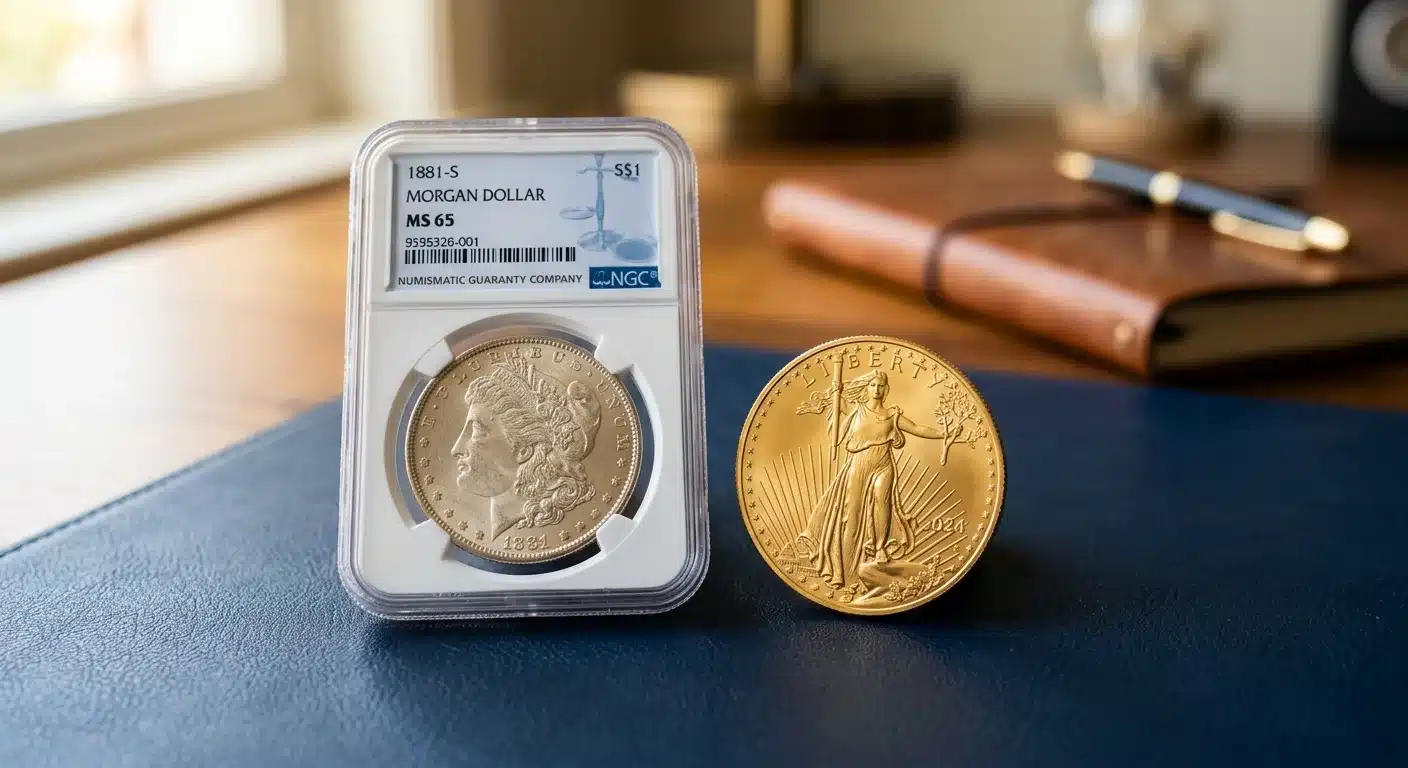
The distinction starts with one question: what determines the coin’s value?
Bullion coins are valued for their metal content. Numismatic coins are valued for their collectibility. That difference drives everything — price, liquidity, purpose, and whether the coin belongs in a wealth protection strategy or a collector’s portfolio.
Understanding how each type is valued means understanding which one aligns with your goals. If you’re focused on protecting retirement savings, the answer isn’t about preference. It’s about function.
How Bullion Coins Are Valued
A bullion coin’s value follows a simple formula: the spot price of its metal content plus a small premium. Premiums run 1% to 5% over market price. The calculation ties directly to international commodity markets — no guesswork, no interpretation.
That simplicity is the point. When gold’s spot price moves, the value of your bullion moves with it. There’s no subjective grading. No waiting for the right collector to come along. No debate about condition or rarity.
You know what you own. You know what it’s worth. And you know that value is recognized globally — not just by specialists. Bullion functions like currency in physical form. Straightforward, liquid, and accepted anywhere the metal itself is valued.
How Numismatic Coins Are Valued
Numismatic values work differently. Rarity, condition, historical significance, and collector demand all shape the price. A numismatic coin can sell for many times its melt value — the metal inside matters less than the story attached to it. Condition gets graded on the 1-to-70 Sheldon scale by third-party services like the Professional Coin Grading Service (PCGS). That grading system exists because value turns on opinion, not weight and purity.
That grading system exists because value depends on opinion, not weight and purity. A coin graded MS-65 sells for a different price than the same coin graded MS-63. The metal didn’t change. The perception of condition, scarcity, and desirability did.
For someone focused on wealth protection, that introduces complexity most dealers skip in the pitch. You’re not holding a commodity. You’re holding a collectible whose value depends on a smaller, less predictable market. That’s the core difference — and it’s why official definitions from the U.S. Mint draw such a clear line between the two.
| Coin Type | Primary Value Driver | Market Pricing Transparency | Typical Premium Over Melt |
|---|---|---|---|
| Bullion Coins | Spot price of precious metal content | Transparent — tied directly to international commodity markets | Low (typically 1–5% over melt value) |
| Numismatic Coins | Rarity, condition, historical significance, and collector demand | Opaque — subjective grading and smaller specialist market | High (often many multiples of melt value) |
IRA Eligibility and Regulatory Compliance

Valuation matters, but the IRS requirements for IRA-eligible metals are the real gatekeeper. Not every coin qualifies for tax-deferred ownership.
The distinction between bullion and numismatics isn’t academic when you’re moving precious metals into a self-directed IRA. The IRS draws a hard line. Bullion coins that meet specific purity standards are eligible. Most numismatic coins aren’t.
You need to know which coins qualify — and why — before you roll over retirement savings. The rules exist to separate tangible assets from collectibles. Brighton Gold works with customers to understand these requirements clearly. Every acquisition aligns with both IRS standards and long-term stability goals.
Bullion Meets IRS Standards for Precious Metals IRAs
To qualify for a self-directed IRA, gold bullion must have a minimum fineness of .995 (99.5% pure). That requirement is outlined in Section 408(m) of the Internal Revenue Code. The standard is straightforward and objective. Either the coin meets the purity threshold or it doesn’t.
Certain coins, like American Gold Eagles, are explicitly permitted even if they don’t meet the fineness standard. These exceptions are listed by name in the tax code. The U.S. Mint produces coins that fit these rules by design. No grading needed. No collector market required.
That’s the advantage of best gold coins for wealth preservation over collectibles. You’re acquiring something the IRS explicitly recognizes as a retirement-eligible asset. No subjective evaluation. No third-party certification. No risk that a future audit questions the eligibility of what you hold.
Numismatics and the Collectibles Trap
Numismatic coins are generally considered collectibles by the IRS. That means different tax treatment and restrictions on what you can hold in retirement accounts. Long-term capital gains on collectibles are taxed at a maximum rate of 28%. Bullion tax treatment can vary, but isn’t subject to the higher collectibles tax rate.
Here’s what that means in practice. If you hold numismatic coins outside an IRA and sell them at a gain, you face the collectibles tax. If you try to hold them inside a self-directed IRA without meeting narrow exceptions, you risk prohibited transaction penalties. Those penalties can disqualify the entire account.
Dealers who aggressively promote numismatics for retirement protection are either misinformed or pushing customers into a regulatory gray zone. The clearer path is bullion. It fits the IRS definition. It avoids the collectibles designation. And it lets you hold physical metals in a tax-deferred account without second-guessing whether your custodian will accept it.
| Product Type | IRS Classification | IRA Eligibility | Minimum Fineness Requirement |
|---|---|---|---|
| Gold Bullion (U.S. Mint coins meeting purity standards) | Tangible Asset | Eligible | .995 (99.5% pure) |
| American Gold Eagle (explicit IRS exception) | Tangible Asset | Eligible | Does not meet .995 standard but explicitly permitted |
| Numismatic Coins | Collectible | Generally Ineligible (narrow exceptions exist) | Not applicable — valued for rarity and condition, not purity |
| Numismatic Coins (held outside IRA) | Collectible | N/A — taxed as collectible upon sale | N/A — capital gains taxed at 28% maximum rate |
Liquidity and the Reality of Selling

Eligibility and valuation mean nothing if you can’t sell when you need to.
Liquidity is the test of real ownership. It’s the difference between holding something you control and holding something you hope someone else wants.
And here’s where the gap between bullion and numismatics becomes clearest. One can be sold almost anywhere, anytime. The other requires patience, expertise, and the right buyer at the right moment.
Bullion Liquidity Is Global and Transparent
Bullion coins sell fast. You can walk into a global network of dealers across the country — or internationally — and get prices close to the spot price. The market is large and transparent. No waiting. No specialist required.
The narrow bid-ask spread keeps it simple. The difference between what dealers pay and what they charge is small. You’re not selling someone on the coin’s story. You’re trading metal for currency.
This is why bullion fits the stability model customers are after. When you need cash — estate planning, rebalancing, unforeseen expenses, whatever comes up — bullion converts to currency without auction timelines or collector interest. It’s accessible when it needs to be.
Numismatic Liquidity Depends on Finding the Right Collector
Selling numismatics is a different animal. You need a specialized dealer or auction house. Someone has to find a specific collector willing to pay the premium price — and that someone usually isn’t standing outside your door. The market is smaller and less liquid. It’s a slower process.
There are higher commissions or consignment fees. Timing matters, and you can’t control it. The right buyer has to exist, know about the coin, and have the capital available at the moment you need to sell. That’s not wealth protection. That’s speculation with a grading certificate attached.
So if the goal is protecting retirement savings — not building a collection — liquidity isn’t a feature. It’s the entire point.
| Coin Type | Market Size | Average Sale Timeline | Bid-Ask Spread | Buyer Requirements |
|---|---|---|---|---|
| Standard Bullion (Gold American Eagle, Gold Buffalo) | Large, global network of dealers | Same day to within a few business days | Narrow — typically tied closely to spot price | Any dealer who buys precious metals based on weight and purity |
| Numismatic Coins (Graded collectibles, rare mintages) | Small, specialist-driven market | Weeks to months, depending on rarity and buyer availability | Wide — premiums vary significantly based on demand and condition | Specialized collector or auction house familiar with the specific coin’s grading and provenance |
Why Some Dealers Push Numismatics
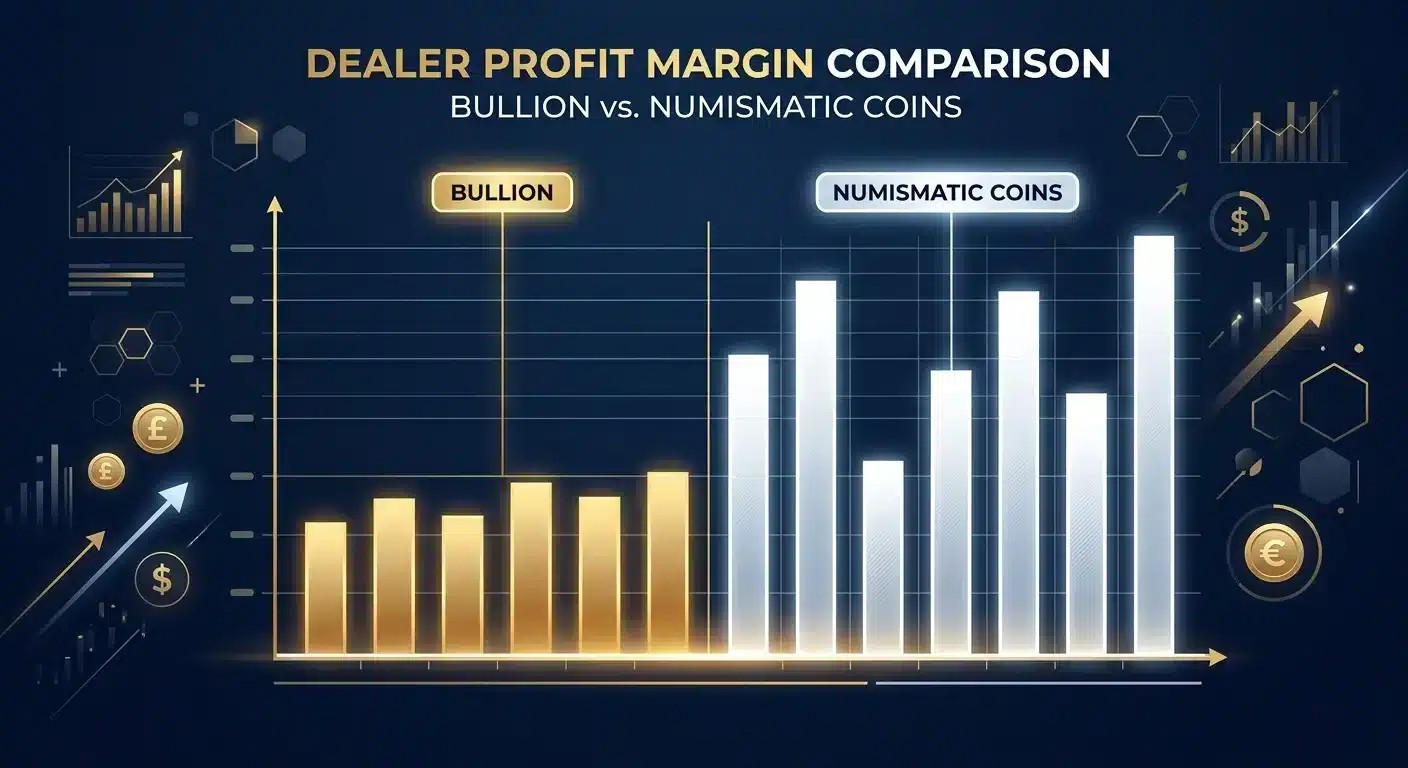
Why do dealers push numismatics over bullion? Follow the money.
Bullion premiums sit between 1% to 5% over spot. Narrow. Transparent. Hard to mark up without getting caught.
Numismatic values are subjective — driven by rarity, condition, historical significance, and collector demand. A coin’s price can run many times the actual melt value. That gap between what the metal is worth and what the dealer charges? That’s where the profit lives.
Dealers who steer you toward numismatics are choosing the side of the equation that pays them more — not the side that serves your goal of straightforward wealth protection.
This isn’t conspiracy. It’s business.
But if you’re protecting retirement savings, you need to know what’s driving the recommendation. Especially when the pitch leans on urgency, scarcity, and complexity.
Brighton Enterprises, Inc. doesn’t operate that way. The concierge model means supporting customers through the process of acquiring physical metals that align with stability — not pushing them toward higher-margin products that introduce unnecessary risk.
Higher Margins on Numismatic Sales
Dealers earn higher margins on numismatics than on bullion. The subjective nature of numismatic valuation creates room for wider spreads between what the dealer pays and what you pay.
Bullion is transparent. Spot price is public. The premium is narrow. You can compare prices across dealers in minutes.
That transparency limits profit margins — and keeps the transaction straightforward.
Numismatics don’t have that constraint. There’s no single reference price. Condition grading, rarity claims, historical significance — all subjective inputs that vary dealer to dealer.
So a dealer buys a coin at one price, assigns it a higher grade or rarity designation, and sells it at a significant markup.
You have no easy way to verify whether the premium is justified or inflated.
That’s the business model. And it’s why customers who ask about bullion get redirected toward numismatics with phrases like ‘greater upside potential’ or ‘better long-term appreciation.’
The recommendation isn’t driven by your need for stability. It’s driven by the dealer’s need for margin.
The ‘Scarcity’ Pitch and Emotional Leverage
Scarcity is a powerful selling tool. Dealers promoting numismatics use it aggressively.
The pitch follows a pattern. The coin is rare. The mint date is significant. Only a limited number were produced. Once they’re gone, you’ll never see this opportunity again.
The language is designed to trigger urgency and override rational evaluation.
But scarcity doesn’t automatically create value. Value requires demand.
And demand in the numismatic market is smaller and less predictable than demand for bullion.
So when a dealer tells you a specific coin is scarce, the unspoken question is: scarce to whom? Is there a collector willing to pay the premium when it’s time to sell? Will that collector exist in five years? In ten?
Bullion doesn’t rely on scarcity to hold value. It relies on weight and purity. The U.S. Mint produces Gold American Eagles every year. They’re not scarce. They’re standardized, globally recognized, and liquid.
That’s the advantage for wealth protection. You’re not betting on future collector demand. You’re holding a tangible asset tied to a global commodity market.
Grading Complexity as a Sales Barrier
Grading complexity creates dependence. And dependence creates control.
Condition is formally graded on the 1-to-70 Sheldon scale by third-party services like the Professional Coin Grading Service (PCGS) and the Numismatic Guaranty Corporation (NGC). The difference between an MS-64 and an MS-65 grade can mean thousands of dollars in value.
Most customers don’t understand that scale. They don’t know how grading decisions are made. They don’t know whether the grade assigned to the coin they’re buying is accurate, generous, or inflated.
So they rely on the dealer to interpret it for them.
The dealer explains why this particular coin, at this particular grade, is worth the premium. You have no independent frame of reference. The complexity becomes a sales barrier — not a protection mechanism.
Bullion doesn’t require grading. A Gold American Eagle is a Gold American Eagle. The value is the metal content plus a narrow premium.
There’s no MS-65 versus MS-63 debate. No third-party certification needed. No room for a dealer to add layers of interpretation that justify a higher price.
That simplicity is exactly what retirement savers protecting wealth need. And exactly what dealers promoting numismatics work to obscure.
Frequently Asked Questions
You know the structural difference now.
But here’s what customers actually ask.
IRA eligibility. Liquidity when you sell. Valuation differences. Why dealers push numismatics hard.
These aren’t abstract. They’re the points that determine whether a purchase protects what you’ve built.
Are numismatic coins a better investment than bullion for wealth protection?
No.
Numismatic coins introduce subjective valuation and illiquidity. Both work against wealth protection.
Bullion offers transparent pricing tied to metal content. It sells quickly at predictable prices. Numismatics depend on finding a collector willing to pay your premium.
That’s speculation, not stability.
How are bullion coins valued compared to their melt value?
Bullion coins are valued at metal content plus a small premium. The market for standard bullion is large and transparent. Selling happens fast with a narrow bid-ask spread.
You’re not paying for rarity or condition. You’re paying for weight and purity.
Valuation stays simple. And selling doesn’t require a specialist.
Are all numismatic coins eligible for a Precious Metals IRA?
No.
To be IRA-eligible, gold bullion must have minimum fineness of .995. Specific coins like American Gold Eagles are explicitly permitted.
Most numismatic coins are considered collectibles by the IRS. Long-term capital gains on collectibles are taxed at a maximum rate of 28%.
Numismatics face higher tax rates. And most don’t qualify for self-directed IRAs.
What are the liquidity differences when selling bullion vs. numismatic coins?
Bullion coins can be bought and sold through a global network of dealers at prices close to spot. The market is transparent. Selling is fast.
Numismatics require specialized dealers or auction houses to find collectors. The market is smaller and less liquid. Selling takes longer.
Commissions are higher. And timing depends on whether the right buyer exists.
Why do some dealers aggressively promote numismatic coins over standard bullion?
Dealers earn higher margins on numismatic coins than on bullion. Subjective valuation creates room for wider spreads.
There’s no public reference price for numismatics. That lack of transparency lets dealers justify premiums that benefit them, not the customer.
The recommendation isn’t driven by stability. It’s driven by margin.
The Bottom Line
The distinction between bullion and numismatic coins isn’t about which is better.
It’s about which serves the purpose you actually have.
Bullion functions like currency. Numismatics function like art.
One ties to weight, purity, and a transparent global market. The other ties to rarity, condition, and the collector willing to pay the premium. One is built for straightforward ownership and liquidity. The other is built for speculation and subjective valuation.
For Americans protecting retirement savings, that difference is everything.
Bullion offers what most retirement savers need.
Clarity. Liquidity. A value you can verify in real time.
You’re not betting on future collector demand. You’re not dependent on a dealer to interpret grading scales. You’re not waiting for an auction to find the right buyer.
You’re holding a tangible asset that can be sold quickly, at a price tied to the metal itself—not someone’s opinion of it.
That’s stability. And stability is the point.
Numismatics have a place.
But that place is with collectors who understand the risks, accept the illiquidity, and have the expertise to price subjective assets.
For someone holding metals as part of a retirement protection strategy, numismatics introduce complexity that works against the goal. They require specialized knowledge to sell. They depend on a smaller, less predictable market. And they’re often promoted by dealers who profit more from the confusion than from the customer’s clarity.
Brighton Gold doesn’t operate that way. The concierge model means helping customers Buy Gold—specifically U.S.-minted products that align with their purpose—not upselling them into a collector’s market they didn’t ask for.
If protecting wealth is the priority, bullion is the answer.
If collecting coins is the hobby, numismatics make sense.
But don’t let a dealer blur that line for their benefit. The choice isn’t complicated once you’re clear on what you’re trying to accomplish.
Bullion gives you ownership you can use. Numismatics give you ownership you have to explain.
For most Americans holding gold to protect what they’ve built, that’s not a hard call.
You understand the distinction. Bullion functions like currency. Numismatics function like art. If you’re focused on protecting retirement savings with straightforward ownership — without the collector’s market pitch — Brighton Gold offers a complimentary consultation to walk you through your options. No upselling. No speculative framing. Just clarity on what aligns with stability — including how the No Fee IRA for the lifetime of the account works and whether you qualify. The window to act is open. Not because there’s pressure. Because the time spent waiting is time you’re holding nothing at all.