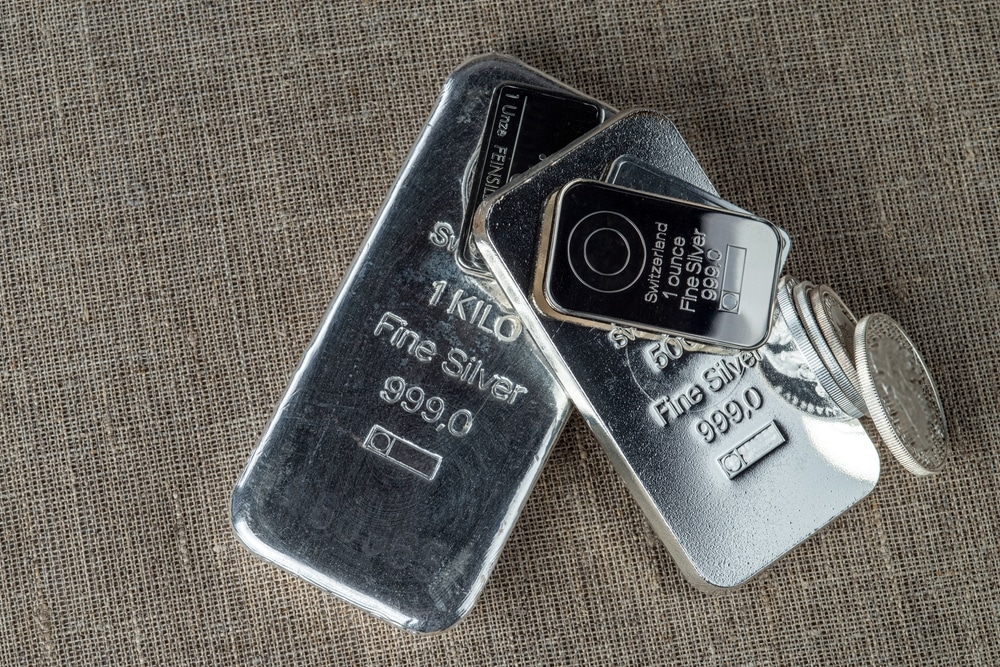
Markets just ran a pressure test—and the results matter more than most realize. Gold and silver didn’t break… but they didn’t surge either. That tension tells you something critical: the next move won’t be random—it will be decided by policy, inflation, and confidence in the system itself.
Weekly Market Recap: A Tug-of-War Between Risk and Reality
Monday (4.20.26):
Gold and silver moved lower but stabilized off session lows as markets began shifting focus away from traditional safe-haven demand and toward the economic consequences of prolonged geopolitical tension. With conflict risks tied to the Strait of Hormuz and global growth forecasts softening, investors are beginning to price in a more complex environment—slower growth paired with persistent inflation pressures. Even if tensions ease, the economic aftershocks may linger.
Tuesday (4.21.26):
A stronger U.S. dollar and rising Treasury yields pressured metals significantly. Despite stronger-than-expected retail sales—driven largely by rising fuel costs—markets remained focused on macro headwinds. The takeaway: when monetary forces tighten, metals often face short-term resistance, regardless of underlying demand.
Wednesday (4.22.26):
A modest rebound emerged as oil prices strengthened and yields eased slightly. Some investors stepped in to buy the dip, but conviction remained limited. The move felt more like stabilization than a decisive shift in trend.
Thursday (4.23.26):
Markets continued to trade sideways. Gold held steady while silver lagged, reflecting uncertainty rather than direction. Investors are watching closely for clarity on geopolitical developments and monetary policy before making larger commitments.
Friday (4.24.26):
The week closed with muted movement. Metals paused as markets processed mixed signals—rising geopolitical tension alongside pockets of easing global sentiment. Inflation pressures tied to energy remain a key concern, but for now, investors are waiting for a clearer macro signal.
Gold Remains a Strategic Asset as Markets Reassess Risk
The big picture
Gold’s recent pullback has not changed its long-term role as a store of value in uncertain financial environments.
Driving the news
Central bank demand—particularly from China—remains strong, suggesting that institutional players continue to accumulate despite short-term volatility.
By the numbers
- ~19.2% — pullback from highs
• ~$4,700 — key support level
• ~0.01 — long-term correlation to equities
• Highest since Jan 2025 — China’s gold purchases
Why it matters
Markets may not yet fully reflect underlying risks tied to debt, energy, and global instability. When those risks become more visible, gold often regains momentum.
What to watch
- Central bank accumulation trends
• Inflation expectations
• Equity market stability
• U.S. debt trajectory
• Renewed safe-haven demand
The bottom line
Gold’s pause may represent consolidation—not weakness. Strategic investors often use these periods to build positions rather than retreat.
Federal Reserve Signals Could Redefine Market Direction
The big picture
Potential leadership and policy shifts at the Federal Reserve could reshape how markets interpret interest rates and inflation strategy.
Driving the news
Recent discussions around policy direction highlight growing tension between economic conditions and political influence.
By the numbers
- 3.50%–3.75% — current Fed rate
• 2.15% — ECB rate
• 0.75% — Bank of Japan rate
• May 15 — potential transition timeline
Why it matters
Changes in Fed communication or policy approach can significantly influence the dollar, yields, and ultimately precious metals pricing.
What to watch
- Policy tone following the FOMC meeting
• Market reaction to forward guidance
• Signals of rate cuts vs. tightening
• Broader global rate alignment
The bottom line
Monetary policy remains one of the most powerful drivers of metals markets—and the next move may set the tone for the remainder of the year.
Macro Pressures Continue to Support Long-Term Gold Demand
The big picture
Rising debt, energy constraints, and geopolitical instability are reinforcing gold’s role as a hedge.
Driving the news
Historical comparisons to past oil shocks highlight how supply disruptions can ripple through inflation and financial markets.
By the numbers
- ~13% — estimated oil supply decline
• ~$40T — U.S. debt level
• ~4.6%–4.8% — key yield range
Why it matters
When borrowing costs rise alongside inflation pressures, traditional financial systems face strain—conditions where gold has historically performed well.
What to watch
- Energy markets
• Bond yields
• Inflation data
• Global trade disruptions
The bottom line
Gold’s relevance increases when economic systems are under pressure—making it a valuable long-term component of a diversified strategy.
Silver Supply Tightening Adds New Layer to Market Dynamics
The big picture
Silver markets are entering a period of tightening supply with shifting demand patterns.
Driving the news
Ongoing deficits and rising investment demand are offsetting weaker industrial usage.
By the numbers
- ~46M oz — projected deficit
• ~6 years — consecutive deficits
• ~18% — rise in investment demand
Why it matters
Supply constraints can amplify price sensitivity, especially if investment demand accelerates.
What to watch
- Physical demand trends
• Industrial recovery
• Mining output
• Price behavior
The bottom line
Silver’s dual role—industrial and monetary—creates unique opportunities during periods of market transition.
Energy Markets Add Another Layer of Complexity
The big picture
Global oil dynamics remain volatile, influencing inflation and broader economic stability.
Driving the news
Supply disruptions and stockpiling behavior are tightening availability and increasing price volatility.
By the numbers
- ~$101 — oil price level
• ~20% — global oil trade through Hormuz
• 400M barrels — emergency reserves released
Why it matters
Energy costs feed directly into inflation—one of the primary drivers of precious metals demand.
What to watch
- Oil supply flows
• Government policy actions
• Inflation trends
• Economic impact
The bottom line
Energy remains a key variable in the inflation equation—and by extension, the long-term outlook for gold and silver.
NEXT WEEK’S KEY EVENTS
Economic Calendar: April 27 – May 1, 2026 (ET)
Monday, April 27
• No major events scheduled
Tuesday, April 28
• 9:00 am — Home Price Index
• 10:00 am — Consumer Confidence
Wednesday, April 29
• 2:00 pm — FOMC Rate Decision
• 2:30 pm — Powell Press Conference
Thursday, April 30
• 8:30 am — Jobless Claims
• 8:30 am — GDP
• 8:30 am — PCE Index
Friday, May 1
• No major events scheduled
Impact on Precious Metals Markets
Housing Data
• Strong housing → economic resilience → bearish for metals
• Weak housing → slowdown signals → bullish
Consumer Confidence
• High confidence → risk-on sentiment → bearish
• Low confidence → uncertainty → bullish
FOMC Decision
• Hawkish stance → stronger dollar → bearish
• Dovish stance → weaker dollar → bullish
GDP
• Strong growth → less demand for hedges
• Weak growth → increased demand for metals
PCE Inflation
• Rising inflation → supports gold and silver
• Falling inflation → reduces urgency
Final Takeaway
We are not in a market driven by a single narrative—we are in a convergence of forces: policy decisions, geopolitical uncertainty, inflation pressures, and shifting global demand. In environments like this, discipline matters more than reaction.
Gold and silver are not just trades—they are strategic assets designed to preserve purchasing power across cycles.
Take the Next Step
If you’re looking to better understand how physical gold and silver can fit into your long-term wealth strategy, we invite you to continue your research with us.
Visit brightongold.com or speak directly with a Brighton specialist at 844-459-0042 to explore your options with clarity and confidence.
Disclaimer:
We are not financial advisors. This content is for informational purposes only and should not be construed as financial advice. Please consult with a licensed professional for personalized guidance. This publication adheres to all SEC laws, rules, and guidelines.