
What Is "Junk Silver" and Why Do Retirees Use It for Crisis Protection?
Pre-1965 U.S. dimes, quarters, and half dollars are real silver coins — 90% silver and 10% copper by weight. The term "junk silver" has nothing to do with quality. It means no collectible premium above metal content. These coins trade close to the spot price of silver, which makes them one of the most accessible forms of physical silver ownership available to ordinary Americans.
The history is straightforward. On July 23, 1965, the Coinage Act of 1965 was signed into law. Silver was eliminated entirely from dimes and quarters. Half dollars dropped from 90% silver to 40%. From that point forward, circulating coins became clad — copper cores bonded with copper-nickel outer layers. The pre-1965 coins already in private hands became something else: a store of real metal in a world moving toward paper.
That dime still contains the same silver it always did.
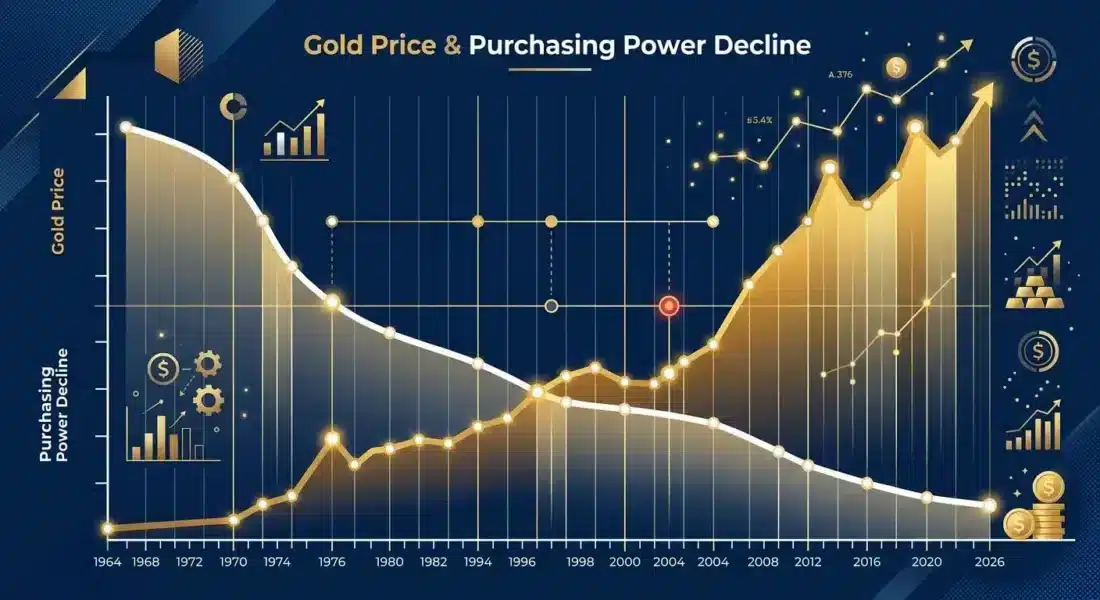
Each dollar of face value in circulated pre-1965 coinage holds approximately 0.715 troy ounces of pure silver. A dollar bill from 1964 carries the equivalent purchasing power decline of over $10 in 2026 — a cumulative decline of over 90%. The coin from that same era has lost none of its silver.
Retirees use these coins for a specific reason. A pre-1965 dime is recognizable, divisible, and denominated in familiar American units. Most Americans over sixty can identify one on sight. It is not an abstract financial instrument. It is a coin that once bought a loaf of bread.
But junk silver is not a retirement account strategy. It is a Home-Safe Liquidity tool — physical metal held at home for local, tangible utility. Long-term retirement wealth preservation belongs on a different track: Institutional Wealth Preservation through IRA-eligible products like U.S.-minted American Silver Eagles. Understanding which track serves which purpose is the foundation of a sound physical silver approach.
- What "Junk Silver" Actually Means — And What It Doesn't
- Why Most People Get This Wrong (And What That Costs Them)
- The 1965 Turning Point: When U.S. Coins Lost Their Silver
- How Retirees Actually Use Junk Silver for Crisis Protection
- Junk Silver vs. American Silver Eagles: Knowing Which Belongs Where
-
Frequently Asked Questions About Junk Silver and Crisis Protection
- What exact coins are classified as junk silver?
- Why do retirees prefer pre-1965 U.S. coins over modern silver bullion rounds?
- How does the pricing of 90% silver coins work compared to spot price?
- Can I hold junk silver inside a self-directed precious metals IRA?
- What are the storage and liquidity advantages of 90% silver coins during a systemic crisis?
- Is junk silver a good acquisition for someone who has never owned physical silver before?
- The Clearest Path Forward for Retirees Who Want Real Protection
What "Junk Silver" Actually Means — And What It Doesn't
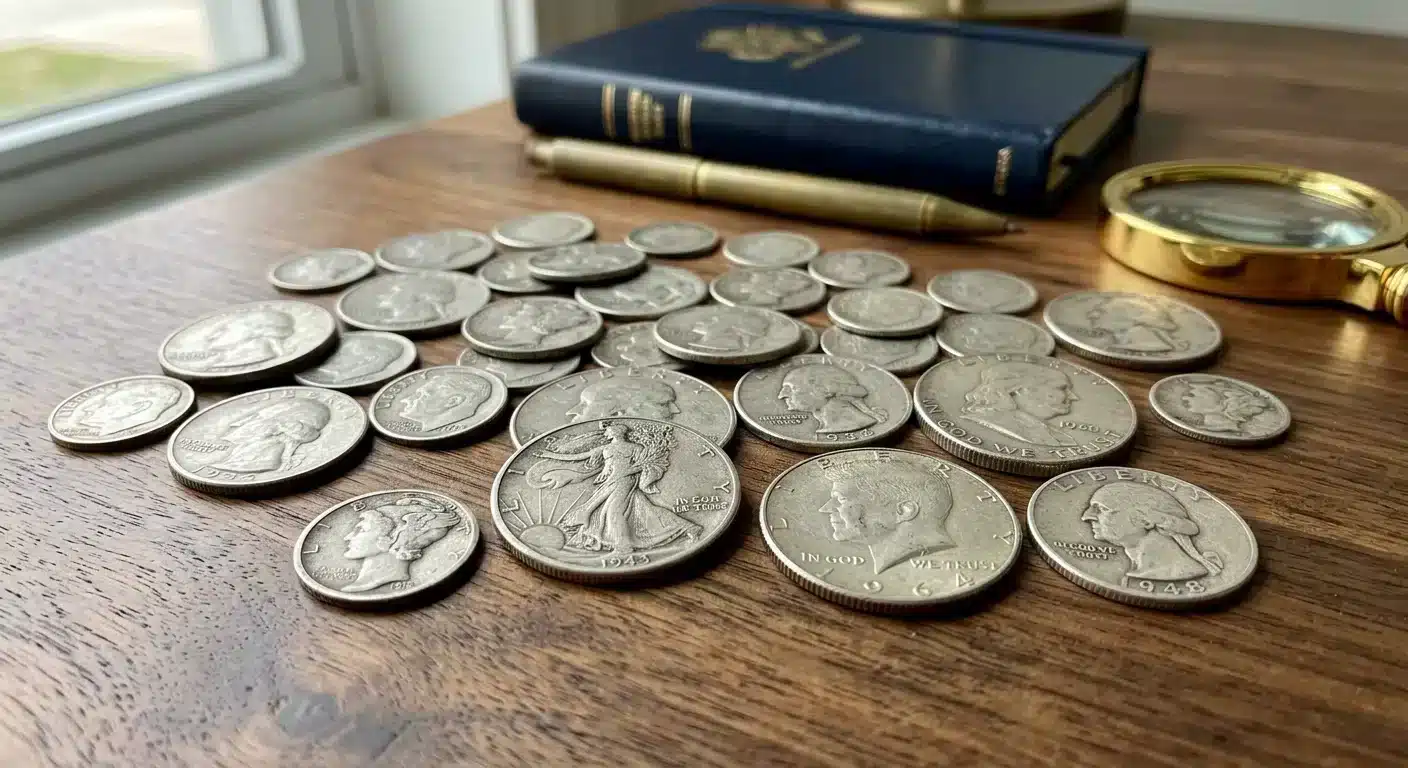
That name is a trap. "Junk silver" sounds like something you'd toss — but it's one of the most practical physical assets a serious owner can hold.
Pre-1965 U.S. dimes, quarters, and half dollars. Struck from 90% silver and 10% copper — right up until Congress changed the composition of American money. "Junk" just means no collectible premium above metal content. That's the whole definition.
That one distinction changes every buying decision. No numismatic premium means the coin trades close to the silver spot price — which makes it more accessible and far more practical for everyday physical ownership than collector-grade silver. Knowing what junk silver actually is puts buyers in a position to make clear decisions about which coins belong where.
The Origin of the Term
Dealers needed shorthand. Worn, non-collectible coins with no premium above melt value needed a category name. "Junk" was it — a trade term, never a quality judgment.
But "junk" crossed over into everyday language — and the confusion it creates is real. Buyers hear the word and assume damaged goods or low quality. What they're actually looking at is standardized, government-issued U.S. coinage. Every piece carries the same statutory silver content, defined by U.S. Code Title 31, and recognizable to anyone who's handled American money.
Which Coins Qualify — and Why the List Stops at 1964
The 1964 cutoff isn't arbitrary — it's a date set by Congress. The Coinage Act of 1965, signed on July 23, 1965, pulled silver from dimes and quarters entirely and cut the silver content of half dollars from 90% to 40%. Coins dated 1964 or earlier were struck under the old composition. Coins dated 1965 or later are clad — copper cores, copper-nickel outer layers, no silver at all.
So the qualifying coins are specific: Roosevelt dimes (1946–1964), Washington quarters (1932–1964), Franklin half dollars (1948–1963), Kennedy half dollars (1964 only), and Mercury dimes (1916–1945). Each is 90% silver and 10% copper by statutory composition. Each dollar of face value in circulated form holds approximately 0.715 troy ounces of pure silver.
That pre-1965 dime sitting in an old coin jar still carries the same silver it always did. The paper dollars that replaced it in everyday commerce have lost purchasing power with every passing decade. That contrast is exactly where physical silver's role in retirement protection begins to matter.
Why 'Junk' Is a Misnomer That Misleads Buyers
Calling these coins "junk" does buyers a disservice — especially buyers stacking them against modern bullion and walking away with the wrong takeaway. A 1963 Roosevelt dime and a modern American Silver Eagle both contain real silver. The difference is IRA eligibility, premium structure, and intended use. Not metal quality.
Brighton Gold's view is straightforward. Junk silver belongs in the Home-Safe Liquidity track — physical coins held at home for tangible, local utility. It is not an IRA-eligible product. The name misleads. The metal doesn't.
| Coin Type | Years Qualifying | Silver Content | Face Value per Coin | Approx. Troy Oz Silver per $1 Face Value |
|---|---|---|---|---|
| Roosevelt Dime | 1946–1964 | 90% silver, 10% copper | $0.10 | ~0.715 troy oz per $1 face value |
| Washington Quarter | 1932–1964 | 90% silver, 10% copper | $0.25 | ~0.715 troy oz per $1 face value |
| Franklin Half Dollar | 1948–1963 | 90% silver, 10% copper | $0.50 | ~0.715 troy oz per $1 face value |
| Kennedy Half Dollar (silver) | 1964 only | 90% silver, 10% copper | $0.50 | ~0.715 troy oz per $1 face value |
| Kennedy Half Dollar (40% silver) | 1965–1970 | 40% silver | $0.50 | Not classified as 90% junk silver |
| Mercury Dime | 1916–1945 | 90% silver, 10% copper | $0.10 | ~0.715 troy oz per $1 face value |
Why Most People Get This Wrong (And What That Costs Them)
Most people who ask about junk silver already want it. What they haven't worked out is what kind of move it actually is — and whether it fits their situation at all.
That gap doesn't stay empty. Dealers fill it — and when the line between Home-Safe Liquidity coins and IRA-eligible metals gets blurred, the customer pays. Sometimes in compliance penalties. Sometimes just in a strategy that was never built to work.
So here are the two most common mistakes — named plainly, before anything else.
First: buying junk silver because a dealer framed it as a crisis acquisition. Second: letting junk silver get placed inside a retirement account where it has no business being. Both mistakes trace to the same root — a market that profits when buyers stay confused.
The Fear-Based Sales Pitch That Distorts the Market
The precious metals space has a fear problem. Not the measured acknowledgment that paper currencies lose purchasing power — that's documented and real. The problem is what certain dealers do with that fact.
Build the pitch around collapse scenarios and apocalyptic timelines, and you pull in buyers making reactive decisions. Those buyers overpay — junk silver bags marked up well above spot, priced on urgency the market doesn't support.
The coin hasn't changed. The premium has.
Brighton Gold's position is direct: fear-based framing isn't a public service. It's a sales mechanism.
That pre-1965 dime is a practical, low-premium tool for Home-Safe Liquidity. It isn't a speculative instrument. And it doesn't get more valuable because a dealer layered urgency onto the pitch. Calm information serves the customer. Manufactured pressure serves the dealer.
The IRA Compliance Trap: When Dealers Slip Non-Eligible Coins Into Retirement Accounts
Here's where it turns serious. Some dealers present junk silver — pre-1965 90% silver coins — as eligible for a self-directed precious metals IRA. They aren't. The IRS sets specific purity and product standards for IRA-eligible metals. Circulated pre-1965 coins don't clear that bar.
The consequences aren't theoretical. A disqualified asset inside a retirement account can trigger distribution penalties, tax liability, and compliance problems that take real time and money to unwind.
The customer who thought they were protecting their retirement may find they've disrupted it instead. Knowing which products belong in which track isn't a technicality — it's the whole point. And junk silver belongs outside the IRA entirely.
Institutional Wealth Preservation inside a retirement account requires IRA-eligible products. U.S.-minted American Silver Eagles meet the statutory purity threshold. They were designed precisely for this purpose.
Junk silver wasn't. That distinction isn't a technicality — it's the difference between a structured retirement approach and a compliance problem waiting to surface.
Who This Approach Is Not For
Brighton Gold isn't the right fit for every buyer in this space. That's worth saying directly — and early.
If the goal is short-term price trading — buying junk silver today with a plan to sell when silver moves — this isn't the relationship. Brighton Gold doesn't forecast prices, time the market, or treat precious metals as trading instruments.
The Brighton Gold learning center exists to inform, not to pitch a market view. If a price forecast is what you need, we're not your source.
And if the appeal is the panic pitch — the dealer promising that junk silver is your last line of defense before the system collapses — that's not a fit either.
Brighton Gold's customers want clear information and a calm process. They're not buying because someone scared them into it. They've thought it through. They want to hold something real. That's a different buyer. And a very different conversation.
| Common Misconception | What Actually Happens | The Real Cost to the Retiree |
|---|---|---|
| Junk silver is a crisis 'investment' that will hold value when paper money collapses | Buyers overpay on premium spreads inflated by fear-based urgency framing — and hold coins priced above what the market supports | Capital tied up in overpriced coins that could have been acquired at lower premiums through a calm, informed purchase process |
| Pre-1965 90% silver coins can be placed inside a self-directed precious metals IRA | Circulated junk silver does not meet IRS purity and product standards for IRA-eligible metals — the asset is disqualified | Potential distribution penalties, tax liability, and compliance complications that directly disrupt the retirement account the buyer was trying to protect |
| All physical silver serves the same purpose — Home-Safe Liquidity and Institutional Wealth Preservation are interchangeable | The two tracks have entirely different product requirements, storage contexts, and strategic roles — conflating them produces a plan that serves neither goal | A retirement strategy with no proper IRA-eligible anchor, and a home-safe position that may be over-allocated without the buyer realizing it |
| The cheapest silver option is automatically the best one for any situation | Low premium matters for Home-Safe Liquidity coins — but IRA-eligible American Silver Eagles require a different evaluation entirely, where compliance and purity standards are the deciding factors | Buyers who optimize purely on price end up with the wrong product in the wrong track, creating either a compliance problem or a missed opportunity for structured retirement protection |
| Junk silver bags are a standardized product — any bag sold by any dealer is equivalent | Coin condition, face value composition, and dealer premium structure vary — a buyer without clear information can pay meaningfully more than the silver content warrants | Reduced purchasing efficiency and a weaker Home-Safe Liquidity position than the dollar amount spent should have produced |
| Holding junk silver at home and holding IRA-eligible silver in a retirement account are the same kind of protection | They are structurally distinct — one is a tangible, local barter utility; the other is a long-term institutional wealth preservation strategy governed by custodian and IRS requirements | Buyers who don't distinguish the two tracks often under-protect on one side while doubling up unnecessarily on the other |
The 1965 Turning Point: When U.S. Coins Lost Their Silver
That pre-1965 dime didn't lose its silver by accident. Congress took it. One act, one date, and the line between real metal coinage and paper-backed currency was redrawn permanently.
The Coinage Act of 1965 isn't a history lesson for its own sake. It's the legislative origin of the 1964 cutoff — the line that separates 90% silver coins from the clad coins that replaced them. That date appears on every reputable junk silver listing today for a reason.
That's the real story behind 1965. It's not just that silver left the coins. It's that the definition of money quietly changed — from something with intrinsic weight to something backed by a promise.
What the Coinage Act of 1965 Actually Did
Signed into law on July 23, 1965, the Coinage Act of 1965 made one decisive change: silver left everyday circulation. Dimes and quarters lost their silver content entirely. Half dollars dropped from 90% silver to 40%.
The replacement was clad coinage — copper cores wrapped in copper-nickel outer layers, as specified in Statute 79 page 254. Dimes and quarters transitioned to 75% copper and 25% nickel outer clad. The official rationale was conservation of national silver reserves. The government needed the metal elsewhere.
The moment that Act took effect, coins dated 1964 and earlier became their own class. Not a collector's designation. A statutory one. The last generation of U.S. circulating coinage struck from real silver — and the reason learning how to acquire physical silver for long-term purposes starts with understanding what that cutoff actually means.
The Purchasing Power Collapse That Followed
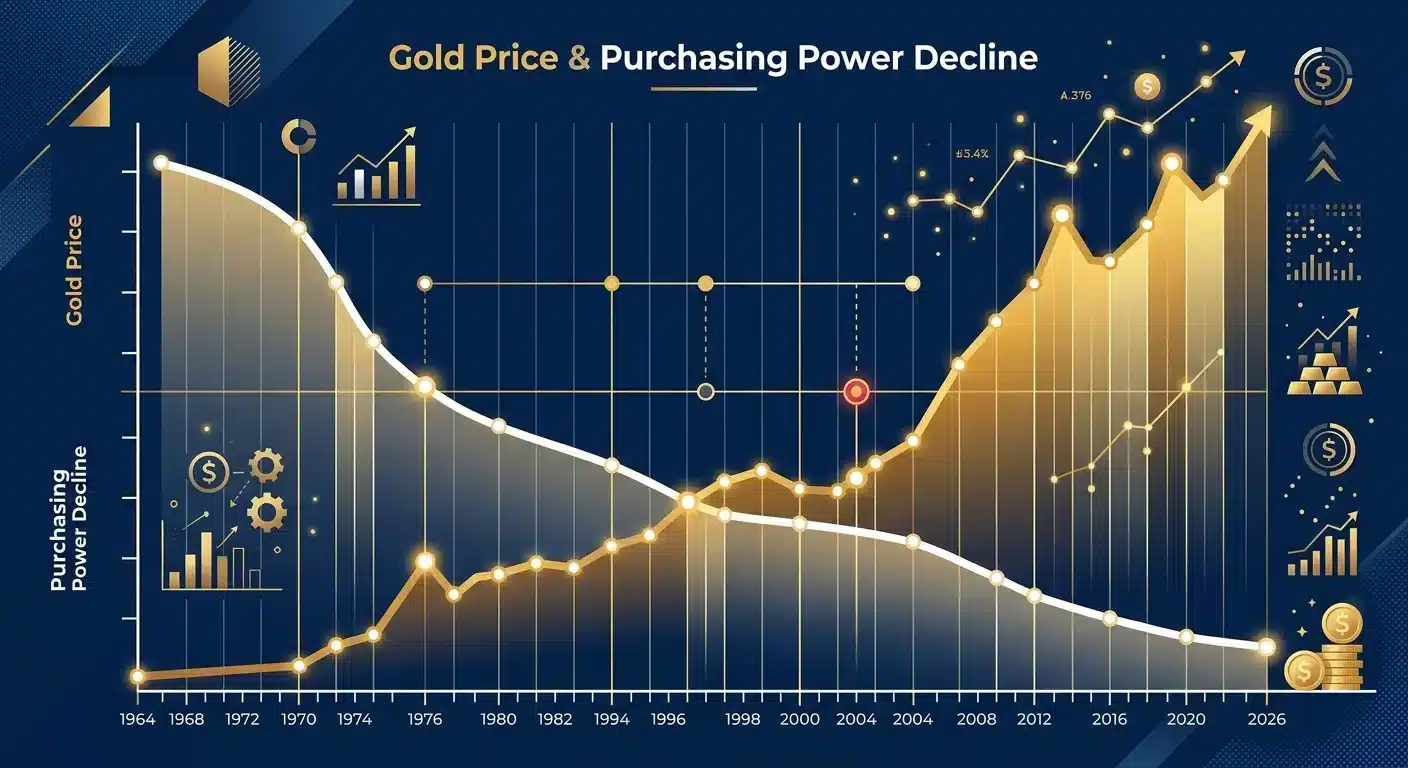
Here's what the paper side of that equation looks like. A dollar in 1964 carries the equivalent purchasing power of over $10 in 2026 — a cumulative decline of over 90% for paper currency, tracked and calculable through the Bureau of Labor Statistics' purchasing power decline data. The silver in a pre-1965 dime didn't follow that curve. Its value stays tied to the metal — not to what a government decides to print.
And it didn't happen in a vacuum. The Federal Reserve's money stock measures show M2 money supply growing exponentially since the mid-1960s — over $20 trillion in circulation as of 2026, none of it backed by metallic reserves. More paper chasing the same goods. That's the arithmetic. Physical silver ownership means something different today precisely because the other side of the ledger has been expanding for sixty years.
Why the Pre-1965 Cutoff Still Matters in 2026
So the 1964 cutoff isn't numismatic trivia. It's a live line. Coins dated 1964 or earlier carry 90% silver by statutory composition. Coins dated 1965 or later carry none. That single distinction drives melt value, premium structure, and which coins actually belong in your home safe.
That pre-1965 dime still carries the same silver it was minted with. The clad dime that replaced it in 1965 carries none. Both came from the U.S. government. Only one is a Home-Safe Liquidity asset. The cutoff is 1964 — and in 2026, that date is as functional as it was the day the Act was signed.
| Era | Coin Composition | Silver Backing | Purchasing Power Benchmark | Key Legislative Driver |
|---|---|---|---|---|
| 1965 (Coinage Act Enacted) | Dimes and quarters: 0% silver; half dollars: reduced from 90% to 40% silver | Silver eliminated from most circulating coinage | Paper dollar begins decoupling from metallic value | Coinage Act of 1965, signed July 23, 1965 |
| 1965 Onward (Clad Era) | Dimes and quarters: 75% copper, 25% nickel outer clad over copper core | No silver backing — base metal only | Purchasing power of paper currency begins sustained decline | 79 Stat. 254 — clad composition specifications |
| 1964 vs. 2026 (Purchasing Power) | Paper dollar unchanged in denomination; pre-1965 silver coin unchanged in metal content | Paper currency: over 90% purchasing power decline since silver standard ended | A $1 bill in 1964 has the equivalent purchasing power of over $10 in 2026 | Bureau of Labor Statistics inflation data |
| 2026 (Current Money Supply) | Fiat currency — no metallic composition standard | Zero metallic backing — fully paper-based monetary system | Over $20 trillion in circulation, completely unbacked by metallic reserves | Federal Reserve M2 money stock reporting |
How Retirees Actually Use Junk Silver for Crisis Protection
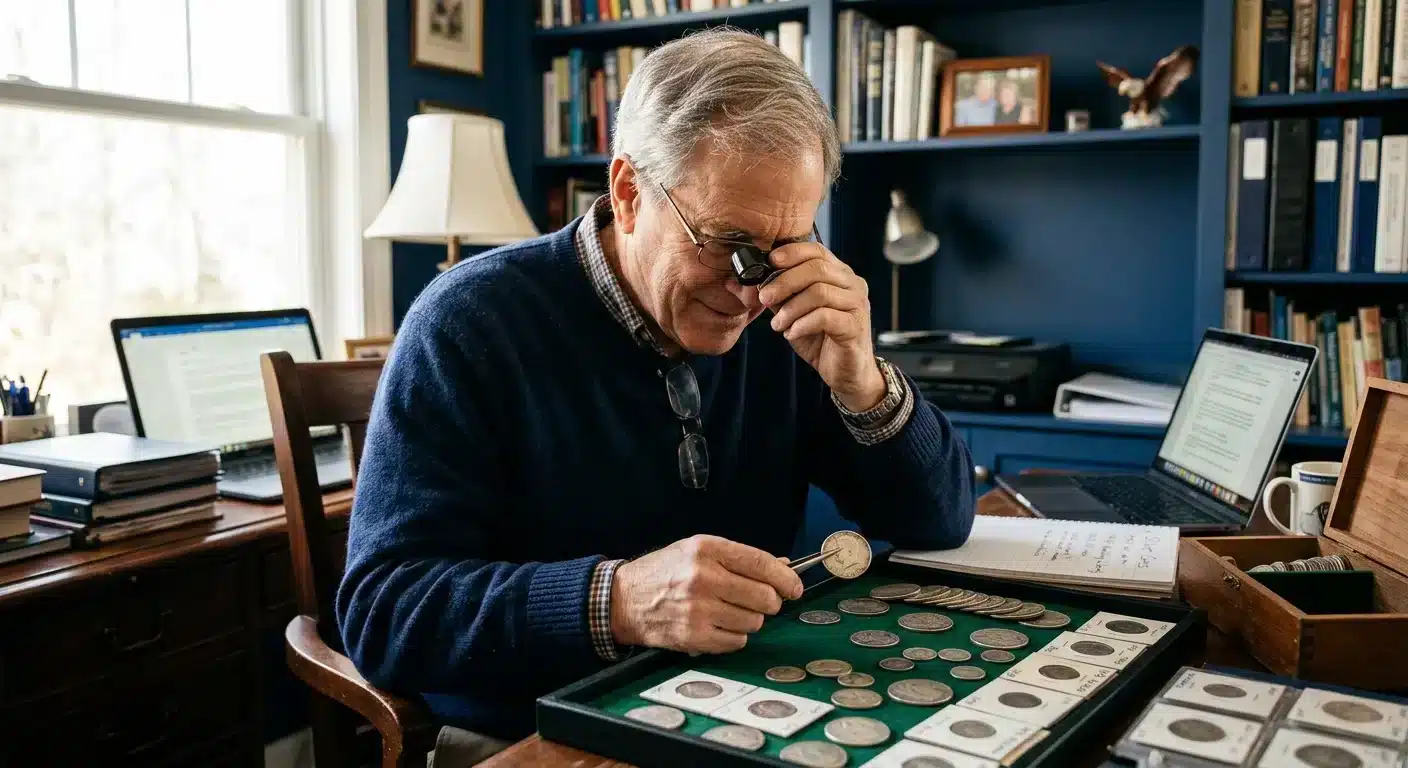
History sets the context. But retirees aren't asking about 1965. They're asking: what do I actually do with these coins?
The dual-track framework answers that directly. Home-Safe Liquidity covers local, tangible utility — the kind that doesn't depend on banks, digital payment systems, or counterparty trust. Institutional Wealth Preservation covers long-term retirement positioning through IRA-eligible products like American Silver Eagles. Junk silver belongs in Track 1. Exclusively.
So the question isn't whether these coins hold value. They do. The question is whether they're in the right track — doing the job they were built for.
Track 1 — Home-Safe Liquidity: The Barter Use Case
That pre-1965 dime once bought a loaf of bread. It doesn't work at a checkout anymore — but hand one to someone who understands silver, and the transaction happens. The coin didn't change. The system around it did.
Retirees who hold Home-Safe Liquidity coins aren't preparing for a movie. They're acknowledging something practical: when paper-based transactions break down, local exchanges rely on things people can recognize and divide. Pre-1965 dimes, quarters, and half dollars — each 90% silver by weight — fit that role. Small denominations. Widely recognized. No bank required.
Each dollar of face value in circulated pre-1965 coins contains approximately 0.715 troy ounces of pure silver. The math is transparent. The composition is statutory. The U.S. Mint documents that lineage directly — the nation's largest coin collection, housing over 450,000 coins and medals, traces the full arc from real silver coinage to the clad currency that replaced it. These aren't collector pieces. They're the last generation of American circulating coinage struck from real silver, and their value traces to that composition — not to sentiment.
Pricing and Premium: How 90% Silver Coins Are Valued
Junk silver carries a premium over spot — but it's typically the lowest-premium physical silver option you'll find. That matters when you're building a Home-Safe Liquidity position without overpaying for it. Low premium means you're closer to actual metal value. That's the point. silver's role in wealth protection
Dealers price 90% silver coins on melt value — derived from the silver spot price and the 0.715 troy ounces of pure silver per face-value dollar. A bag of junk silver is quoted in face value: a $100 face-value bag contains pre-1965 coins totaling $100 in original denomination. The actual silver content and its current market value are calculated from that baseline. The math is straightforward. No guesswork.
The premium over spot fluctuates with supply and dealer markup. But junk silver carries no design premium and no production premium from newly minted rounds — so it trades closer to melt value than most other silver products. For Home-Safe Liquidity purposes, that structure matters. You're acquiring silver content, not a collector's story. The Buy Silver process starts with understanding that distinction.
Storage, Accessibility, and Practical Logistics
Storage is simple by design. Pre-1965 90% silver coins are compact and stackable. A quality home safe — fireproof, bolted down, out of plain sight — handles it. These aren't vault assets. Accessibility is the entire point.
That accessibility also means liquidity. Junk silver sells through most reputable dealers, coin shops, and exchange networks without complex documentation or custodial processes. That simplicity is the feature — not the limitation. Home-Safe Liquidity coins are built to move when you need them: no banking intermediary, no custodian, no wire transfer. Brighton Gold's position is that understanding this practical reality — not fear, not urgency — is the right reason to hold them.
Junk Silver vs. American Silver Eagles: Knowing Which Belongs Where
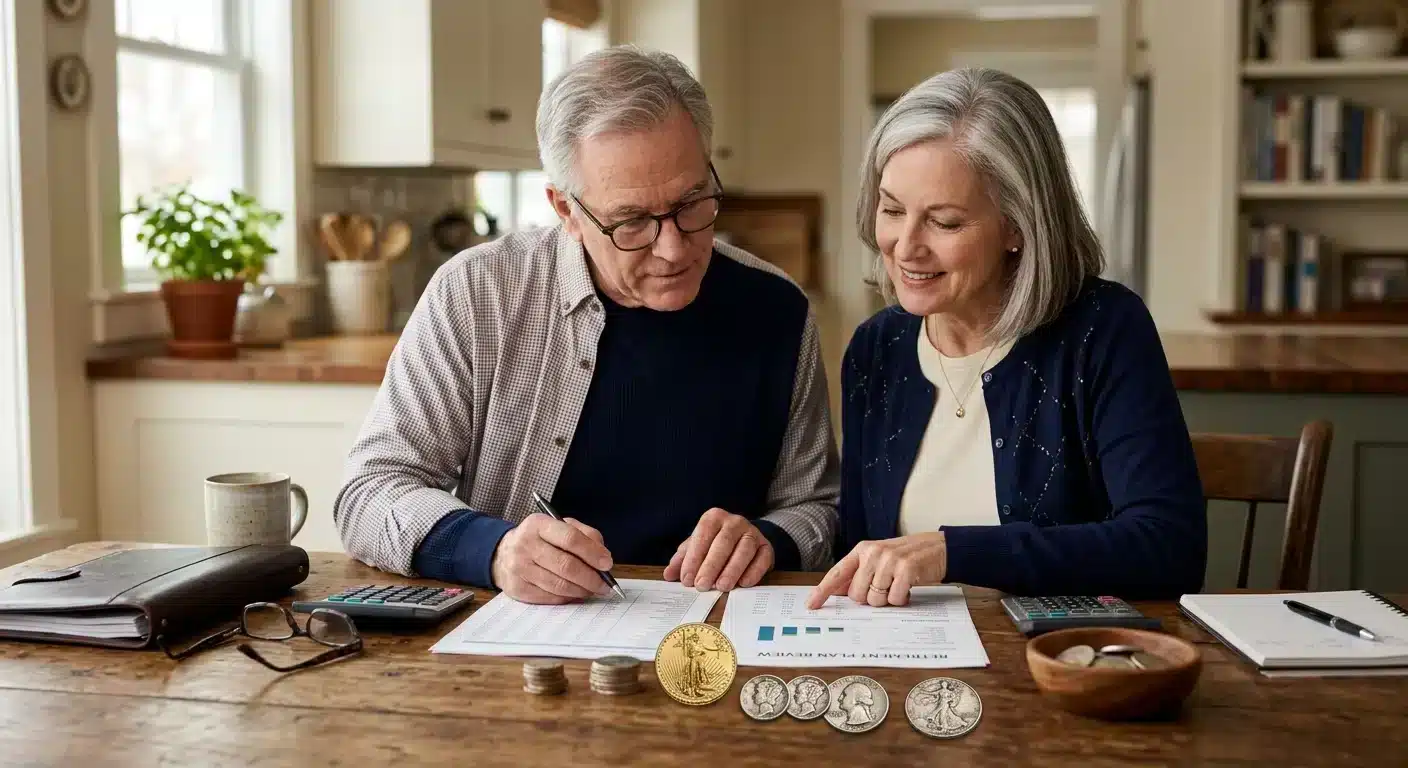
Junk silver belongs in your home safe. American Silver Eagles belong in your retirement account. That's not a preference — it's a structural reality. Get it backwards and you don't discover the mistake until the moment you can least afford it.
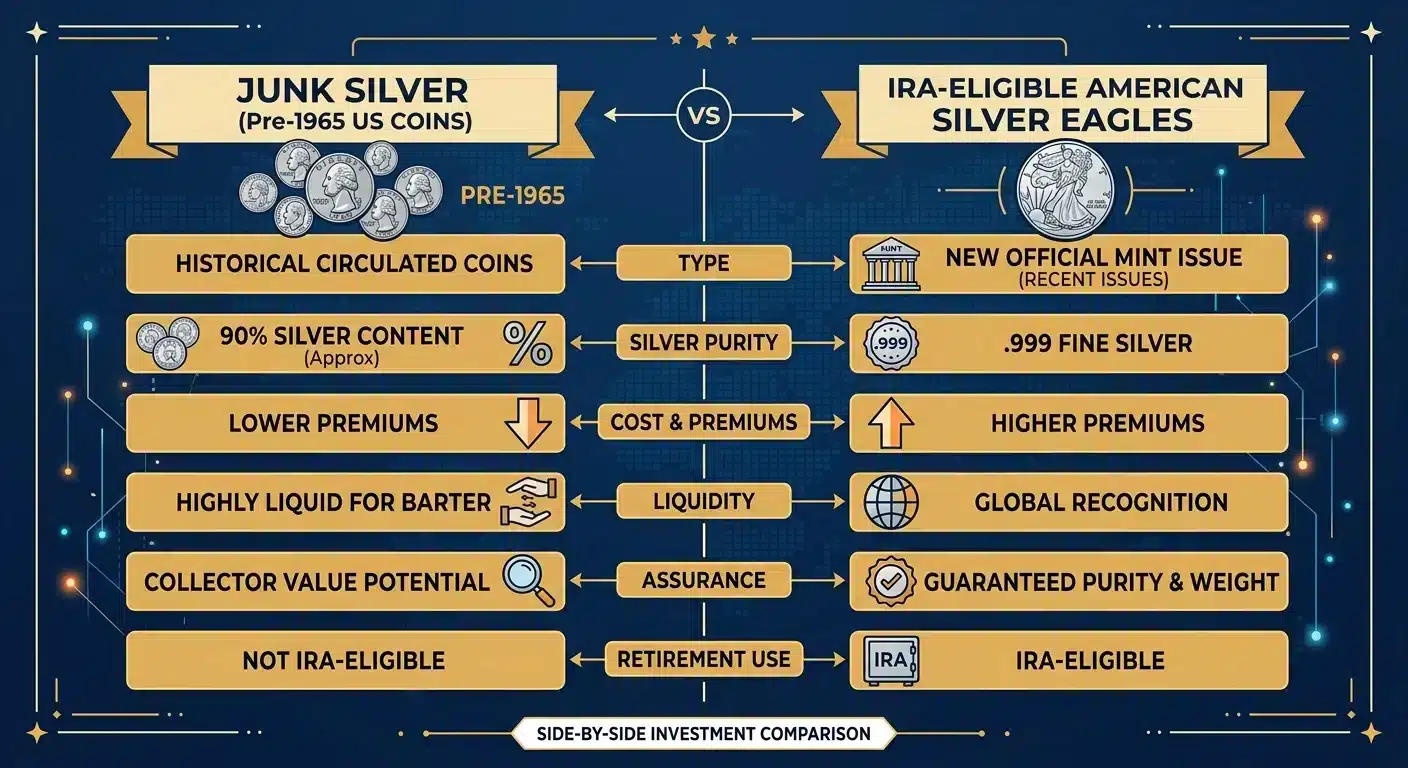
Pre-1965 90% silver coins are Home-Safe Liquidity assets — low-premium, widely recognized, built for accessible local utility without a custodian or documentation chain. American Silver Eagles are Institutional Wealth Preservation assets — U.S.-minted, IRA-eligible, and structured for long-term retirement positioning inside a properly administered account. Both hold real silver. Neither replaces the other. And the gap between them is not a matter of preference — it's a matter of IRS eligibility and structural purpose.
That's the architecture of a complete physical silver approach. Knowing why each coin belongs where it does separates purposeful ownership from simply stacking metal.
Track 2 — Institutional Wealth Preservation: The IRA Use Case
Institutional Wealth Preservation is the long-game track. It lives inside self-directed precious metals IRAs — accounts governed by IRS eligibility rules that don't bend for sentiment, silver content, or dealer preference.
Junk silver doesn't qualify. Pre-1965 90% silver coins are not IRS-approved for precious metals IRAs — full stop. The real silver content doesn't change that. The low premium doesn't change it. The widespread recognition doesn't change it. A dealer who tells you otherwise is either uninformed or has no interest in protecting your retirement. Brighton Gold's position is direct: non-compliant metals inside a retirement account create legal and tax exposure that wipes out any perceived advantage — and then some.
So start with one question: does this product belong in this account? The answer shapes every decision that follows. Owning silver in the wrong track isn't protection — it's exposure waiting to surface.
Why American Silver Eagles Are the IRA Standard
American Silver Eagles are U.S.-minted, IRS-approved for precious metals IRAs, and produced under the authority of the U.S. Mint to exacting specifications. That provenance is the point. It's what grants Institutional Wealth Preservation eligibility — and it's what gives American Silver Eagles the institutional liquidity that junk silver, for all its practical utility, simply doesn't carry at the same scale.
And the context matters. M2 money supply has grown exponentially since the mid-1960s — with over $20 trillion in circulation as of 2026, completely unbacked by metallic reserves. That's not a prediction. It's a documented pattern. Holding U.S.-minted silver inside a properly structured retirement account is a reasoned response to that reality. Brighton Gold's No Fee Precious Metals IRA is built for exactly that purpose — giving qualified customers a cost-efficient path to Institutional Wealth Preservation without the fee drag that quietly erodes long-term ownership value.
Building the Dual-Track Strategy
A dual-track approach doesn't require a large position in either track. It requires clarity. What each track does. Why each product belongs where it does. What breaks the structure if you get it wrong.
So the pre-1965 dime goes in the home safe. That's the Home-Safe Liquidity coin — the same one that once bought a loaf of bread, still carrying 90% silver, still recognized by anyone who understands what it is. It doesn't need a custodian. It doesn't need documentation. It needs a quality safe and an owner who knows what they're holding and why.
The American Silver Eagle goes into the IRA — IRS-compliant, held at an approved depository, anchored inside a Brighton Gold No Fee Precious Metals IRA built for the long term. That's Institutional Wealth Preservation: not a reaction to panic, not a trading position. A deliberate decision to hold something real inside a retirement structure designed to last. The National Numismatic Collection at the Smithsonian — documenting over 450,000 coins and medals — traces the full arc of American coinage from specie standards to fiat currency. Both tracks in this strategy exist because that arc happened. The dual-track approach doesn't resist that history. It acts on it — with precision.
| Factor | Junk Silver (Pre-1965 90% Coins) | American Silver Eagle (IRA-Eligible) |
|---|---|---|
| Silver Content | 90% silver, 10% copper — real metal, verified composition | U.S.-minted fine silver to exacting government specifications |
| Strategic Track | Home-Safe Liquidity — accessible, local, no intermediary required | Institutional Wealth Preservation — retirement-structured, long-term |
| IRA Eligibility | Not IRS-approved — cannot be held in a self-directed precious metals IRA | IRS-approved — fully eligible for self-directed precious metals IRAs |
| Premium Structure | Low premium over spot — priced near melt value, no design or production markup | Higher premium — reflects U.S. Mint production, provenance, and institutional liquidity |
| Ideal Storage | Quality home safe — fireproof, bolted, accessible without custodial process | IRS-approved depository — held in the owner's name, custodian-managed |
| Liquidity Profile | Local and dealer-level — moves quickly without documentation or wire transfers | Institutional — recognized globally, carries broad market liquidity at scale |
| Best Use Case | Neighbor-to-neighbor exchange, community barter, accessible utility in disrupted conditions | Long-term retirement positioning inside a No Fee Precious Metals IRA |
| Who Should Hold It | Retirees who want tangible, low-cost silver accessible at home without custodial overhead | Retirees anchoring physical silver inside a properly structured retirement account |
Frequently Asked Questions About Junk Silver and Crisis Protection
Good. Now let's work through what actually trips people up.
These are the questions Brighton Gold hears when retirees are mid-decision and something a dealer said isn't adding up. Not abstract theory. Not beginner definitions. Each one targets a specific gap — a claim that sounded reasonable until it didn't, or a choice that looks clean until you see what's actually at stake.
What exact coins are classified as junk silver?
Pre-1965 U.S. dimes, quarters, and half dollars. That's the definition. These were struck from 90% silver and 10% copper before the Coinage Act of 1965 changed the composition of American money. The composition is what matters — not the denomination, not the design.
Kennedy half dollars from 1965 through 1969 come up constantly. They are not true junk silver. At 40% silver, they belong to a different category with a different price structure and a different use case. True junk silver means the pre-1965 dimes, quarters, and half dollars with the full 90% composition. The cutoff is 1964 and earlier. That line isn't arbitrary — it's where the silver stopped.
Why do retirees prefer pre-1965 U.S. coins over modern silver bullion rounds?
Two reasons: recognition and premium structure. A pre-1965 Roosevelt dime or Washington quarter doesn't require an assay certificate or a certificate of authenticity. Any reputable dealer, coin shop, or exchange network knows what it is and what it contains. That recognition is built into the coin itself.
Modern silver bullion rounds from private mints can be real silver and solid products. But private-mint provenance isn't universally recognized the same way. For Home-Safe Liquidity purposes — where local utility and accessibility matter — the familiar face of a pre-1965 coin is a practical edge.
And because junk silver trades close to melt value, the entry cost per ounce of actual silver tends to be lower than most newly minted alternatives. You're acquiring metal content, not a production story.
How does the pricing of 90% silver coins work compared to spot price?
Dealers price 90% silver coins on melt value. The baseline: each dollar of face value in pre-1965 circulated coins contains approximately 0.715 troy ounces of pure silver. That figure is multiplied by the current spot price to get the theoretical melt value. A $100 face-value bag contains roughly 71.5 troy ounces of silver content — and its market price moves from there.
The premium over spot reflects supply, demand, and dealer markup. But there's no design premium and no new-minting production cost — so junk silver typically trades closer to melt than collector coins or freshly struck rounds.
That low-premium structure is the point. For Home-Safe Liquidity purposes, you're paying for silver content — not for a story attached to it.
Can I hold junk silver inside a self-directed precious metals IRA?
No. Pre-1965 90% silver coins are not IRS-approved for self-directed precious metals IRAs. The IRS sets specific fineness and product standards for metals held inside retirement accounts. Junk silver doesn't meet them — regardless of how much real silver it contains.
A dealer who says otherwise is working against your interests. The metals that belong in Institutional Wealth Preservation accounts — like American Silver Eagles — are U.S.-minted, IRS-compliant, and produced to exacting specifications.
Junk silver belongs in the Home-Safe Liquidity track only. Placing non-compliant metals in a retirement account creates legal and tax exposure that no premium discount offsets. Brighton Gold's view is direct: the right product in the right track, every time.
What are the storage and liquidity advantages of 90% silver coins during a systemic crisis?
Storage is simple by design. Pre-1965 90% silver coins are compact, stackable, and require no specialized infrastructure. A quality home safe handles the job. No custodian, no approved depository, no documentation chain. That accessibility isn't a side benefit — it's the whole point.
The liquidity advantage during a systemic disruption is equally direct. Junk silver moves through most reputable dealers and coin shops without wire transfers, custodial approvals, or institutional intermediaries. The coin is the asset. The owner holds it.
That structure — physical, local, immediately accessible — is exactly what Home-Safe Liquidity is built to deliver. When normal commerce channels are stressed, simplicity stops being a preference and starts being a feature.
Is junk silver a good acquisition for someone who has never owned physical silver before?
That depends entirely on the goal — and that's not a hedge, it's the actual answer.
For someone who wants a small, accessible position in physical silver for Home-Safe Liquidity purposes, pre-1965 90% silver coins are a reasonable starting point. Low premium, widely recognized, straightforward: 90% silver, 10% copper, melt value that tracks spot directly. No production story attached. No complexity.
But junk silver is the wrong first acquisition for someone whose primary goal is building a long-term retirement position. That goal belongs on the Institutional Wealth Preservation track — U.S.-minted American Silver Eagles inside a properly structured precious metals IRA.
Brighton Gold's approach is to clarify the goal first, then match the product to the track. Start that conversation before a coin is purchased — not after a dealer has already made the choice for you.
The Clearest Path Forward for Retirees Who Want Real Protection
That pre-1965 dime is a record of a decision someone else made for you.
In 1965, the U.S. government pulled silver out of circulating coins because the metal inside was worth more than the face value stamped on it. What replaced it: clad copper and nickel. What came before: still holds real silver.
That dime hasn't changed. The system around it has.
The decision you're making now is yours. Where your retirement savings sit. What they're made of. Which track they actually belong in — and what it costs to get that wrong.
Brighton Gold's position is straightforward: real protection isn't complicated, but it requires you to know exactly what each track is for.
Home-Safe Liquidity — pre-1965 90% silver coins in a quality home safe. Low-premium. No custodian. No documentation chain. No waiting period. You need it, you reach for it.
Institutional Wealth Preservation — U.S.-minted American Silver Eagles inside a properly structured precious metals IRA. IRS-compliant. Held at an approved depository. Built for the long term through Brighton Gold's No Fee Precious Metals IRA.
Two tracks. Two purposes. Neither one substitutes for the other.
This isn't about urgency. It isn't about fear.
It's about knowing what each coin does and where it belongs — because the structure falls apart when you confuse one track for the other. A pre-1965 dime in a home safe and an American Silver Eagle in a retirement account come from the same conviction: that owning something with physical weight and recognized value is a deliberate, reasoned decision. Not a reaction to a sales pitch.
Brighton Gold works with retirees who want to make that decision with full clarity and zero pressure. The right product. The right track. Not because a dealer manufactured urgency — but because you understood the difference and acted on it.
The coin in your home safe didn't lose its silver by accident. Your retirement account doesn't have to lose its structure by one either.
That dime still holds the same silver it held in 1964. The question is whether your retirement picture is built with the same kind of clarity — or whether you're holding things you can't fully account for. If you want to work through both tracks — what belongs in your home safe, whether a Brighton Gold No Fee Precious Metals IRA fits your situation, and what the right acquisition actually looks like for your goals — a complimentary consultation is where that conversation starts.