
Is Silver Too Volatile for Retirement Wealth Protection?
Silver has two identities — and both of them matter.
It's an indispensable industrial commodity consumed in electronics, manufacturing, and clean energy. It's also an independent monetary asset held entirely outside the banking system. That dual nature is the direct cause of its price swings. It's also the source of its long-term staying power.
The case for physical silver rests on structural realities, not market timing. Global silver industrial fabrication demand hit 655.7 million ounces in 2023 — a record high driven by accelerating real-world applications. At the same time, the global silver market ran a total supply deficit of 184.3 million ounces in 2023. The world consumed significantly more silver than it produced. Flat mining output and rising demand don't correct in a quarter.
The U.S. dollar's purchasing power has steadily declined over the same period. The Consumer Price Index climbed from 211.08 in January 2008 to over 310 by early 2026. Dollar-denominated savings — IRAs, money market accounts, fixed income — lost ground across that stretch. Physical silver, held as a tangible asset outside the paper financial system, doesn't carry that same dependency on a currency's health.
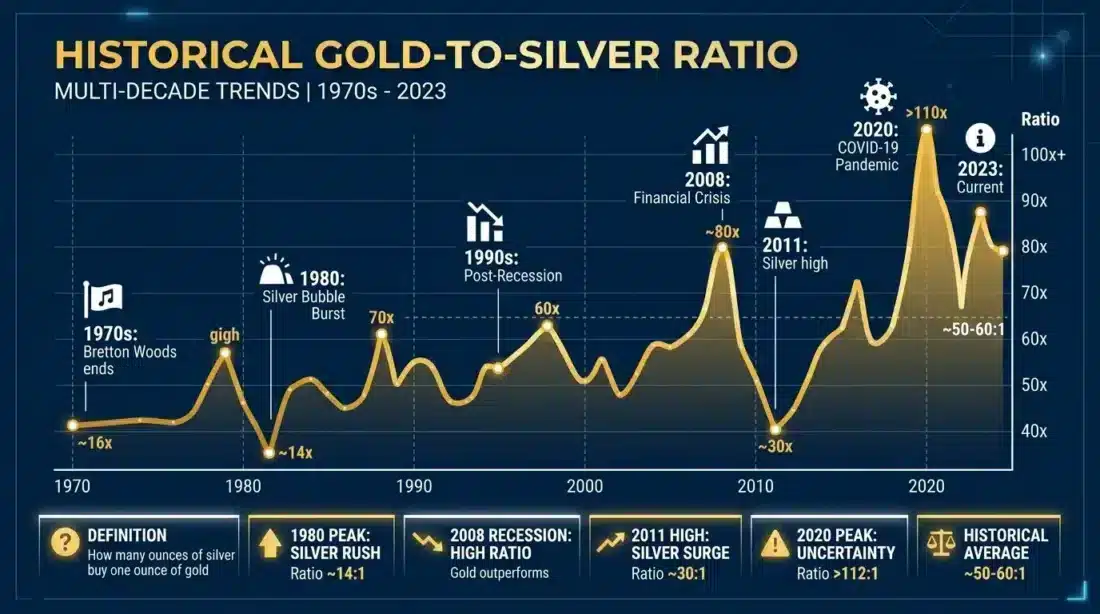
Short-term price swings are real. The gold-to-silver ratio moved from a modern low of 30:1 in 2011 to a record high exceeding 120:1 in March 2020 — a range that reflects genuine volatility. Over multi-decade horizons, academic research confirms that precious metals historically match or exceed inflation as stores of purchasing power. That's the time horizon that matters for retirement.
Physical silver may appreciate, depreciate, or remain unchanged. What doesn't change is that you own it outright — something real, tangible, and entirely outside the institutions whose solvency you're depending on with every other dollar-denominated account you hold.
- What Actually Drives Silver's Price Volatility?
- Why the Volatility Argument Against Silver Gets It Backwards
- Why Most Anti-Silver Arguments Target the Wrong Buyer
- How to Hold Physical Silver the Right Way for Retirement
-
Frequently Asked Questions About Silver Volatility and Retirement
- Why is physical silver more volatile than gold for retirement protection?
- How does silver's heavy industrial demand impact its long-term stability?
- Does short-term silver price volatility affect a No Fee Precious Metals IRA?
- Can physical silver protect retirement wealth during a banking crisis?
- How does the gold-to-silver ratio help retirees determine when to acquire silver?
- Is a Silver IRA right for every retirement situation?
- Silver Volatility Is the Signal, Not the Problem
What Actually Drives Silver's Price Volatility?
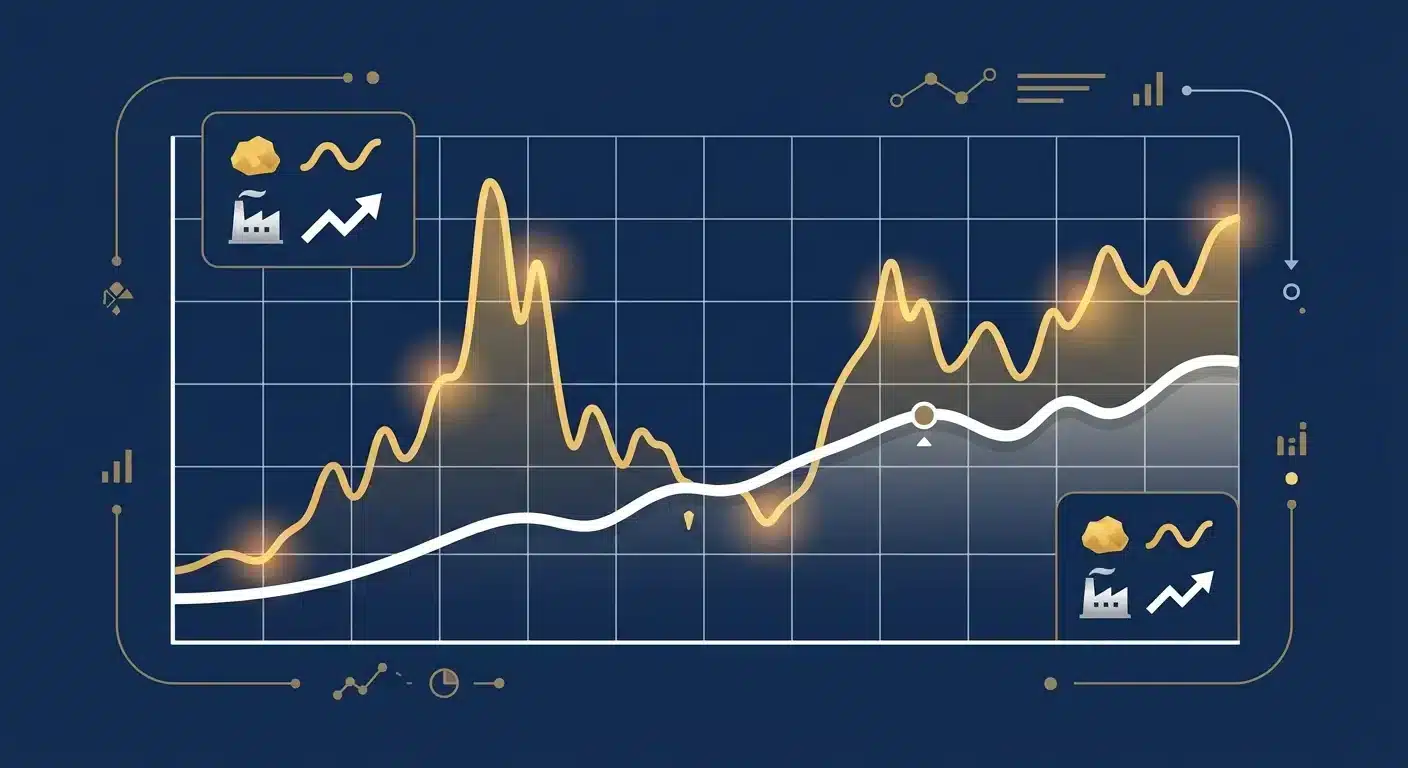
Volatility isn't random noise. Silver moves the way it does for specific, structural reasons — and once you understand the mechanism, the fear dissolves.
Silver sits at a rare intersection. It's consumed by industry and held as a monetary asset — simultaneously. Two entirely different buyer categories competing for the same finite supply. When either side surges, prices move hard and fast.
Then there's the decline of U.S. dollar purchasing power, tracked by the U.S. Bureau of Labor Statistics. When the dollar loses ground, physical assets priced in dollars reprice to compensate. Silver — tangible, limited, and genuinely useful — absorbs a significant share of that monetary pressure. That's not coincidence. That's arithmetic.
Silver's Dual Identity: Industrial Commodity and Monetary Asset
No other commodity carries this dual identity at scale. Solar panels, electric vehicles, medical equipment, semiconductors — silver is a functional input in all of them. Not a luxury. A requirement. Industrial demand hit 655.7 million ounces in 2023 — a record — reflecting how deeply embedded silver has become in the production economy. That number doesn't shrink because the price moves.
That industrial consumption doesn't pause when silver prices rise. Manufacturers need it regardless of the spot price — there's no substitute they can swap in overnight. So when monetary demand spikes simultaneously — when people seek physical assets outside the banking system — the market faces two competing, inelastic forces pressing on the same limited supply. That's what creates the swings. Not speculation. Structural reality.
The structural deficits in physical silver supply make this dynamic worse, not better. The global silver market ran a total supply deficit of 184.3 million ounces in 2023 — the world consumed meaningfully more silver than it mined. Flat mining output doesn't self-correct in a quarter. That gap is what long-term owners of physical silver are positioned against — not the daily chart.
Why the Paper Market Amplifies Every Price Move
Here's something most articles skip entirely. The physical silver market is small relative to the paper market built on top of it. Futures contracts, ETFs, and derivatives trade volumes that dwarf the actual supply of physical metal. When those paper instruments move, silver's spot price moves — regardless of what's happening to physical supply and demand underneath.
That amplification drives most of what retail buyers mistake for silver instability. A shift in speculative sentiment. A change in rate expectations. A liquidity event somewhere in financial markets. Any of these sends paper silver swinging — even when nothing has changed in the physical supply picture underneath. The noise is real. The signal is not.
For long-term retirement owners holding physical silver, that distinction is the whole ballgame. The paper market's noise isn't a signal about the underlying asset. It's a signal about leveraged speculation stacked on top of it. Physical ownership sits beneath that noise — connected to structural supply deficits, industrial demand, and dollar purchasing power that resolve over years. The daily ticker is someone else's problem.
| Driver of Volatility | How It Works | Short-Term Effect | Long-Term Implication |
|---|---|---|---|
| Industrial demand inelasticity | Manufacturers require silver as a functional input regardless of spot price — demand doesn't pause when prices rise | Competing industrial and monetary buyers pressure the same finite supply simultaneously, amplifying price swings | Structural consumption floors mean silver's real-world utility persists independent of financial market sentiment |
| Multi-year supply deficits | Global silver mining output has remained flat while industrial applications expand, creating a persistent gap between supply and consumption | Any spike in monetary demand collides with an already-strained physical market, accelerating upward price moves | Chronic deficits compound over time — they don't self-correct quickly, supporting the long-term case for physical ownership |
| Dollar purchasing power erosion | As the U.S. dollar loses ground, physical assets priced in dollars reprice upward to reflect the currency's declining value | Silver prices can move sharply during periods of monetary stress or currency uncertainty, even without changes in industrial demand | Physical silver held outside the banking system maintains a connection to real-world value that dollar-denominated accounts cannot replicate |
| Paper market amplification | Futures contracts, ETFs, and derivatives trade volumes that dwarf the actual supply of physical silver, layering speculative leverage on top of the physical market | Shifts in speculative sentiment or interest rate expectations can swing spot prices dramatically — independent of physical supply and demand fundamentals | Long-term physical owners sit beneath this paper noise; the underlying structural realities of supply and utility play out over years, not hours |
| Dual monetary and industrial identity | Silver is the only major commodity simultaneously consumed by industry at scale and held as an independent monetary asset outside the paper financial system | Two distinct buyer categories — manufacturers and wealth preservation owners — compete for the same limited supply, creating layered, compounding demand pressure | This dual identity is permanent, not cyclical — it cannot be engineered away, which is precisely what makes physical silver a non-correlated asset over long holding periods |
Why the Volatility Argument Against Silver Gets It Backwards
The volatility argument against silver has the logic exactly backwards.
Daily price swings aren't evidence that silver is unreliable. They're evidence that it's genuinely necessary. Assets with no real-world utility don't move the way silver moves. What critics call instability is the market's honest reaction to two completely different buyer categories — industrial and monetary — competing over the same finite supply.
That distinction matters if you're thinking about retirement. A dollar-denominated savings account doesn't swing — it sits still while its purchasing power quietly disappears. The decline of U.S. dollar purchasing power is not a theory. The Consumer Price Index climbed from 211.08 in January 2008 to over 310 by early 2026.
Silver's daily price moves more visibly. But the savings account is doing damage in silence. One kind of risk shows up on a chart. The other kind shows up in your grocery bill — years before most people connect the dots.
Physical silver's volatility is a byproduct of real-world demand — the kind that doesn't vanish when markets get nervous.
That's the reframe most retirement conversations about silver never reach. And that gap is exactly where bad decisions get made.
Why Most Articles on Silver Volatility Get It Wrong
Most articles on silver volatility treat the price chart as the whole story. They show the dramatic moves, point to the swings, and land on the same conclusion: silver is too risky for serious retirement planning.
Here's what they skip. They never explain why the price moves the way it does — or what that mechanism actually signals about silver's position in the global economy. The chart is real. The conclusion drawn from it is wrong.
That omission isn't neutral. When an article stops at the price chart without explaining the dual-identity dynamic — industrial commodity plus monetary asset — it leaves the reader with fear and no framework.
Fear without framework is how people make bad decisions. They avoid silver entirely, or they panic-sell during exactly the conditions where physical ownership matters most. Both outcomes serve the wrong buyer. Neither serves someone trying to protect wealth for the long haul.
Understanding what drives silver's role in retirement protection requires looking past the daily chart.
The forces behind silver's volatility — structural supply deficits, accelerating industrial consumption, dollar purchasing power erosion — are the same forces that make long-term physical ownership worth the short-term noise. Those aren't separate stories. They're the same story told at two different time horizons.
The Gold-to-Silver Ratio: Volatility as a Cyclical Opportunity
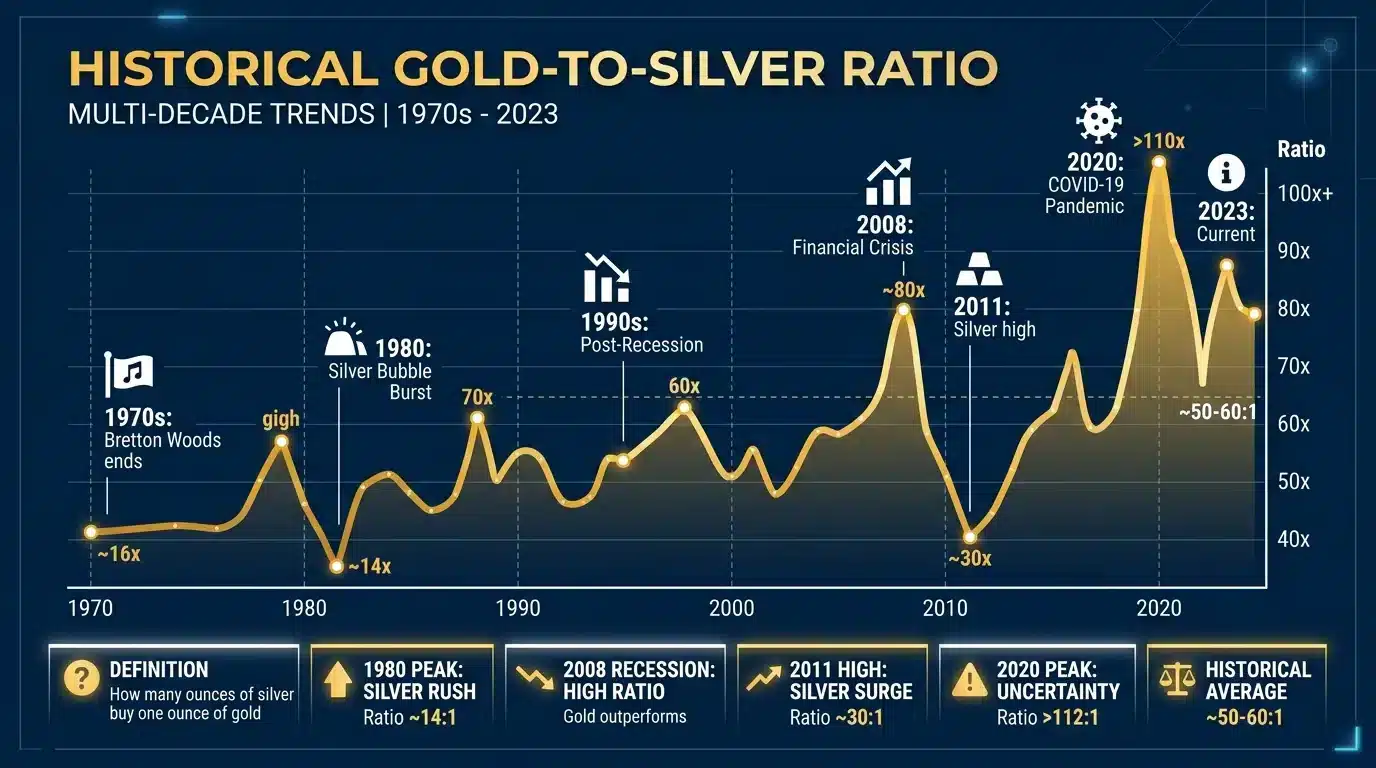
The historical price volatility indexes tell a striking story. The gold-to-silver ratio moved from a modern low of 30:1 in 2011 to a record high exceeding 120:1 in March 2020.
That range looks alarming on a chart. It reads differently once you understand what it actually represents.
What that spread reveals is cyclical repricing — not permanent impairment. When the ratio compresses, it has historically reflected periods where silver's dual demand drivers align and the market catches up to structural reality. When it expands to extremes like the 2020 peak, silver has been disproportionately sold off relative to its fundamentals.
Neither extreme is a verdict on silver's long-term value. Both are windows into how sentiment and real-world demand interact — and how they eventually correct.
For long-term retirement owners, the ratio's range is context. Not cause for alarm.
Yes, silver is more volatile than gold on a relative basis. But silver's repricing cycles are predictable in structure, even when the timing isn't. That's a meaningful distinction for anyone thinking in decades rather than quarters.
Long-Term Purchasing Power: What the Academic Record Shows
Academic research on the long-term inflation-hedging properties of precious metals cuts through a lot of the short-term noise. Precious metals return profiles historically match or exceed inflation over long-term holdings of 50 years or more.
That's the time horizon that reframes the entire volatility conversation. A daily price swing means something very different when you're measuring outcomes in decades.
Day-to-day silver price movements are real. But they're measured against a backdrop where the Consumer Price Index has been climbing for decades — and where the financial system holding your savings continues to carry structural risks no savings account can address.
Physical silver doesn't eliminate risk. Nothing does. What it does is place a portion of your wealth outside the institutions whose stability you're otherwise entirely dependent on.
Over the long arc, that distinction compounds.
| Time Horizon | Speculator's View of Volatility | Long-Term Owner's View of Volatility | Relevant Metric |
|---|---|---|---|
| Daily / Weekly | Unpredictable price swings signal unreliable, risky asset — avoid or trade quickly | Short-term noise driven by paper markets and speculative sentiment — irrelevant to physical ownership | Spot price movement on any given day |
| Monthly / Quarterly | Drawdowns confirm silver is unsuitable for serious retirement planning | Cyclical repricing tied to shifting industrial demand and monetary pressure — expected, not alarming | Gold-to-silver ratio fluctuations over rolling quarters |
| 1–5 Years | Volatility makes silver impossible to plan around compared to stable dollar accounts | Supply deficits accumulate; industrial consumption compounds; dollar purchasing power quietly erodes | Structural supply-demand balance across production cycles |
| 10–30 Years | Still points to the price chart — no framework for what the swings represent | Dual-identity demand drivers — industrial and monetary — reinforce silver's structural relevance across economic cycles | Physical ownership value relative to dollar-denominated account purchasing power |
| 50+ Years (Legacy / Retirement Arc) | Not considered — speculator's horizon ends at the next trade | Precious metals have historically matched or exceeded inflation as stores of purchasing power over multi-decade horizons | Real purchasing power retained across generations compared to paper currency |
Why Most Anti-Silver Arguments Target the Wrong Buyer

Most arguments against silver in retirement aren't wrong. They're just aimed at the wrong person. The volatility warnings, the price-swing charts, the comparisons to 'more stable' assets — all of it lands correctly if your time horizon is six months and your goal is to trade. But that's not who this conversation is for.
The critics dismissing silver as too risky are often correct — for their audience. Day-traders don't belong in physical silver. Short-term thinkers don't belong in physical silver. The error is letting that audience-specific warning travel as a universal verdict — and letting it reach the people who would actually benefit from long-term physical ownership.
So the question isn't whether silver is volatile. It is. The real question is whether that volatility is a dealbreaker for your timeline and your goals. That answer depends entirely on who you are — and it's worth being direct about it.
Who Silver Is Not Right For
If the plan is to buy silver today and sell in six months when the price moves — this isn't the right conversation. Physical silver doesn't work that way. Brighton Gold doesn't work that way.
And if you want someone to guarantee silver goes up — or to tell you the exact moment to buy based on a forecast — that's not something Brighton Gold does. No one can predict short-term silver prices. Anyone who claims otherwise is selling something other than honesty.
Then there's the buyer whose entire decision starts and ends with the cheapest per-ounce price. If another dealer is a dollar lower and that's the conversation-ender, the relationship won't hold.
The value in physical silver ownership isn't in the transaction. It's in what you hold over the years that follow. That's a different calculation — and it requires a different kind of buyer.
Who Silver Is Right For
Physical silver is right for someone building a long-term ownership position outside the paper financial system. Over 24 million ounces of Silver American Eagle bullion coins were sold in 2023 — by people acquiring something real, tangible, and entirely outside the institutions whose solvency they'd otherwise be depending on.
That's not a speculative move. That's a structural one.
It's right for someone who looks at the commodity pricing reports and actually reads what they say — a 184.3 million ounce gap between what the world mined and what it consumed in 2023 — and understands that those fundamentals don't vanish because a futures contract moved the wrong direction on a Tuesday.
The paper market creates noise. The physical supply deficit is the signal underneath it.
Most importantly, it's right for someone thinking in decades, not quarters.
The daily price chart is noise. The structural story — industrial demand that doesn't pause, dollar purchasing power that doesn't recover, physical silver strategy vital for retirement protection anchored in supply that can't be printed — is signal. Those forces reward ownership, not trading.
That's precisely what Brighton Gold is built to support.
| Buyer Profile | What They're Looking For | How They View Price Swings | Is Physical Silver a Fit? |
|---|---|---|---|
| Short-Term Speculator | Fast price gains on market timing | A dealbreaker — swings represent unacceptable risk to a position they plan to exit quickly | No — physical ownership is built for years, not months |
| Fear-Driven Buyer | Certainty and guaranteed protection against worst-case scenarios | Alarming — dramatic moves confirm their anxiety rather than inform a strategy | No — physical silver doesn't eliminate uncertainty, and panic-driven decisions compound it |
| Bargain Hunter | The lowest per-ounce price, regardless of guidance or support | Irrelevant except as a signal to chase the next cheaper option | No — the value of physical ownership compounds over time, not at the point of transaction |
| Long-Term Retirement Owner | A tangible, non-paper asset held outside the traditional banking system for years or decades | Expected and understood — short-term noise against a long-term structural story | Yes — physical silver's dual-demand fundamentals reward ownership, not trading |
| Legacy Builder | Something real to pass down that isn't dependent on institutional solvency or digital systems | Largely irrelevant to the goal — daily prices don't change what physical silver represents in a generation | Yes — physical ownership transfers directly, holds no counterparty risk, and sits outside the paper financial system entirely |
How to Hold Physical Silver the Right Way for Retirement
Knowing silver fits your plan is step one. Knowing how to hold it — inside the right structure, with the right products, through the right custodian — is what separates an ownership position that holds together from one you'll spend years correcting.
The mechanics aren't complicated. But they're specific. Getting the specifics right at the start means your focus stays where it belongs — on holding, not correcting.
There are two ways to hold physical silver for retirement. Direct cash purchase — home delivery or vaulted storage — or inside a self-directed Precious Metals IRA. For retirement savers, the IRA path carries real structural advantages: tax treatment, account integration, and long-term positioning. Brighton Gold's No Fee Precious Metals IRA is built specifically to make that path clear, not complicated.
IRA-Eligible Silver: What Qualifies and What Doesn't
The IRS doesn't accept just any silver inside a Precious Metals IRA. The purity threshold is .999 fineness — 99.9% pure silver — and the product must come from an approved manufacturer or mint. That's not a guideline. It's the gate. Everything else in the IRA selection process flows from it.
Silver American Eagle bullion coins are the benchmark — U.S.-minted, legal tender, and purity-compliant without question. Over 24 million ounces sold in 2023. That number isn't a curiosity — it's a direct measure of how many retirement savers are putting physical silver inside a structured account. Silver bars from approved refiners and qualifying silver rounds also clear the bar, provided they hit the fineness requirement.
Here's what catches people off guard. Pre-1965 U.S. coins don't qualify for an IRA — regardless of their silver content. Collectible coins and numismatics are excluded too. The IRA structure exists for bullion, not collectibles. And that distinction needs to be clear before you acquire anything, not after. That includes understanding exactly where your silver falls — starting with junk silver.
Storage, Custodians, and the No Fee IRA Structure
The process itself is three steps. Open a self-directed IRA with a qualified custodian. Fund it through a transfer or rollover from an existing retirement account. Purchase the physical silver through Brighton Gold. Your metals are held in your name at an IRS-approved depository — not in a co-mingled pool, not at home. That's the entire structure. Most customers are surprised by how straightforward it is.
And then there's the fee question. Most Precious Metals IRA structures carry ongoing account fees that don't show up loudly at the start — they just quietly reduce the value of what you're holding over time. Brighton Gold's No Fee Precious Metals IRA eliminates that on qualified purchases — no ongoing fees for the lifetime of the account. That's not a promotion. It's a structural commitment to not charging you to hold what you already own. The learning center has a full step-by-step walkthrough of how the IRA process works.
The silver market ran a 184.3 million ounce supply deficit in 2023, against industrial fabrication demand of 655.7 million ounces. Those numbers don't change based on how you hold silver. But holding it correctly — inside the right IRA, with the right products, through the right structure — means you're positioned for that story to pay out on the timeline it deserves. Buy Silver the right way, and the process is simpler than most people expect.
| Silver Product | IRA Eligible | Minimum Purity | U.S.-Minted | Typical Form |
|---|---|---|---|---|
| Silver American Eagle (Bullion) | Yes | .999 fine silver | Yes — U.S. Mint | Coins |
| Silver American Eagle (Proof) | Yes — bullion version only; proof coins excluded | .999 fine silver | Yes — U.S. Mint | Collectible coins |
| Silver bars (approved refiners) | Yes | .999 fine silver | Not required — refiner approval matters | Bars |
| Silver rounds (approved manufacturers) | Yes — if manufacturer is IRS-approved | .999 fine silver | Not required — approval required | Rounds |
| Pre-1965 U.S. coins (junk silver) | No | Below .999 threshold | Yes — but ineligible regardless | Coins |
| Numismatic and collectible coins | No | Varies — purity is not the disqualifying factor | Sometimes | Collectible coins |
Frequently Asked Questions About Silver Volatility and Retirement
The real questions don't show up during a presentation. They show up at night, when the decision feels close and the stakes feel real.
So here are the questions retirement savers actually ask — about volatility, about banking risk, about whether physical silver holds up when it counts. No hedging. Just answers.
Why is physical silver more volatile than gold for retirement protection?
Silver has two identities — and both of them matter. Gold is held almost entirely as a monetary store of value. Silver gets consumed by industries that can't substitute away from it.
That industrial consumption creates constant demand pressure. It reacts to economic cycles, supply shortfalls, and production news in ways purely monetary assets never do. That's not a flaw. That's the mechanism.
The gold-to-silver ratio moved from a modern low of 30:1 in 2011 to over 120:1 in March 2020. That range captures the volatility plainly. But for long-term retirement owners, it also maps the repricing cycles that purely monetary assets rarely produce — and that's where the opportunity lives, if you're patient enough to recognize it.
How does silver's heavy industrial demand impact its long-term stability?
Industrial demand doesn't make silver unstable. It makes silver irreplaceable.
Industrial fabrication demand hit 655.7 million ounces in 2023. That demand doesn't pause when silver prices rise — manufacturers need it regardless of spot price. There's no overnight substitute.
For a retirement owner thinking in decades, that level of sustained consumption is structural support. It means the world isn't walking away from silver. It means the world needs more of it.
Does short-term silver price volatility affect a No Fee Precious Metals IRA?
Short-term price swings don't change what you hold inside a Precious Metals IRA. The physical silver sits in your name at an IRS-approved depository. No price move forces a transaction. Nothing about daily volatility touches your ownership.
Day-to-day movement is information — not a trigger.
Brighton Gold's No Fee Precious Metals IRA is built for long-term ownership, not trading. The fee structure doesn't erode your position over time. The volatility doesn't either — not unless you decide to react to it. That's a choice, not a requirement.
Can physical silver protect retirement wealth during a banking crisis?
Physical silver sits entirely outside the banking system. It isn't a deposit. It isn't a liability on someone else's balance sheet.
A banking crisis doesn't freeze it, convert it, or make it inaccessible. What you hold physically, you hold outright.
That distinction matters most when institutions are under stress — which is exactly when paper-based assets reveal their counterparty dependencies. Physical silver doesn't have a counterparty. That's not a marketing claim. That's how physical ownership actually works.
How does the gold-to-silver ratio help retirees determine when to acquire silver?
The gold-to-silver ratio tells you how many ounces of silver it takes to buy one ounce of gold. When that number is historically high, silver is undervalued relative to gold. When it's low, silver has caught up.
The ratio moved from 30:1 in 2011 to over 120:1 in March 2020. That range gives long-term retirement owners a reference point — not a market-timing signal, but genuine context for when silver represents meaningful relative value.
And context is exactly what most silver conversations are missing. Retirement savers who understand this ratio make acquisition decisions with clear eyes. Those who ignore it react to a price chart in isolation — and those reactions rarely serve them well.
Is a Silver IRA right for every retirement situation?
No — and Brighton Gold says that plainly.
A Silver IRA fits someone building a long-term ownership position outside the paper financial system. Someone thinking in decades who wants something real, tangible, and entirely independent of institutions whose solvency they'd otherwise have to trust.
It isn't right for someone chasing short-term price movement. It isn't right for someone who needs maximum liquidity above everything else. Those aren't criticisms — they're honest qualifications.
Precious metals may appreciate, depreciate, or remain unchanged. The right question isn't whether a Silver IRA is a good idea in general. It's whether it fits your specific situation and timeline. That's exactly what a complimentary consultation with Brighton Gold is built to help you figure out.
Silver Volatility Is the Signal, Not the Problem
Silver's volatility isn't a flaw someone forgot to fix. It's the direct consequence of holding something the world genuinely needs — industrially, monetarily, and tangibly. A market running a structural supply deficit of 184.3 million ounces in a single year isn't volatile because it's fragile. It's volatile because it's real. That's the distinction most critics of silver never stop to make.
The academic record backs it up. Precious metals return profiles historically match or exceed inflation over long-term holdings of 50 years or more. That's not a forecast. That's what physical ownership has actually done across the time horizon that matters for retirement savers. Day-to-day price swings don't erase that record. They're noise running on top of a signal. Long-term owners don't confuse the two.
So if you're thinking in decades — and retirement savers should be — silver's volatility isn't a reason to walk away. It's evidence you're holding something with genuine, irreplaceable demand behind it. Demand the world can't print away. Can't digitize out of existence. Can't manufacture at will. Brighton Gold is built to help you hold it correctly — inside a No Fee Precious Metals IRA, with U.S.-minted products, and without the fee drag that quietly erodes what most competitors' offerings are actually worth. The question was never whether silver is volatile. The question is whether you're the kind of owner who understands what that volatility is telling you — and whether you're going to act on it.
That's the question worth answering. Not whether silver is volatile, but whether it fits your situation and your timeline.
Brighton Gold offers a complimentary consultation to walk you through exactly that, including how the No Fee Precious Metals IRA works and whether you qualify.
Learn About the No Fee IRA
Most people leave that conversation with more clarity than they expected. That's the point.