
How Do I Buy Physical Silver for Long-Term Wealth Preservation?
Buying physical silver for long-term wealth preservation means selecting IRA-eligible or deliverable bullion products, funding the acquisition through a cash purchase or retirement account rollover, and securing those metals in an approved depository or home storage arrangement — owning a tangible asset outright rather than holding a paper claim on one. That distinction — real metal versus a promise of metal — is the entire basis for the decision.
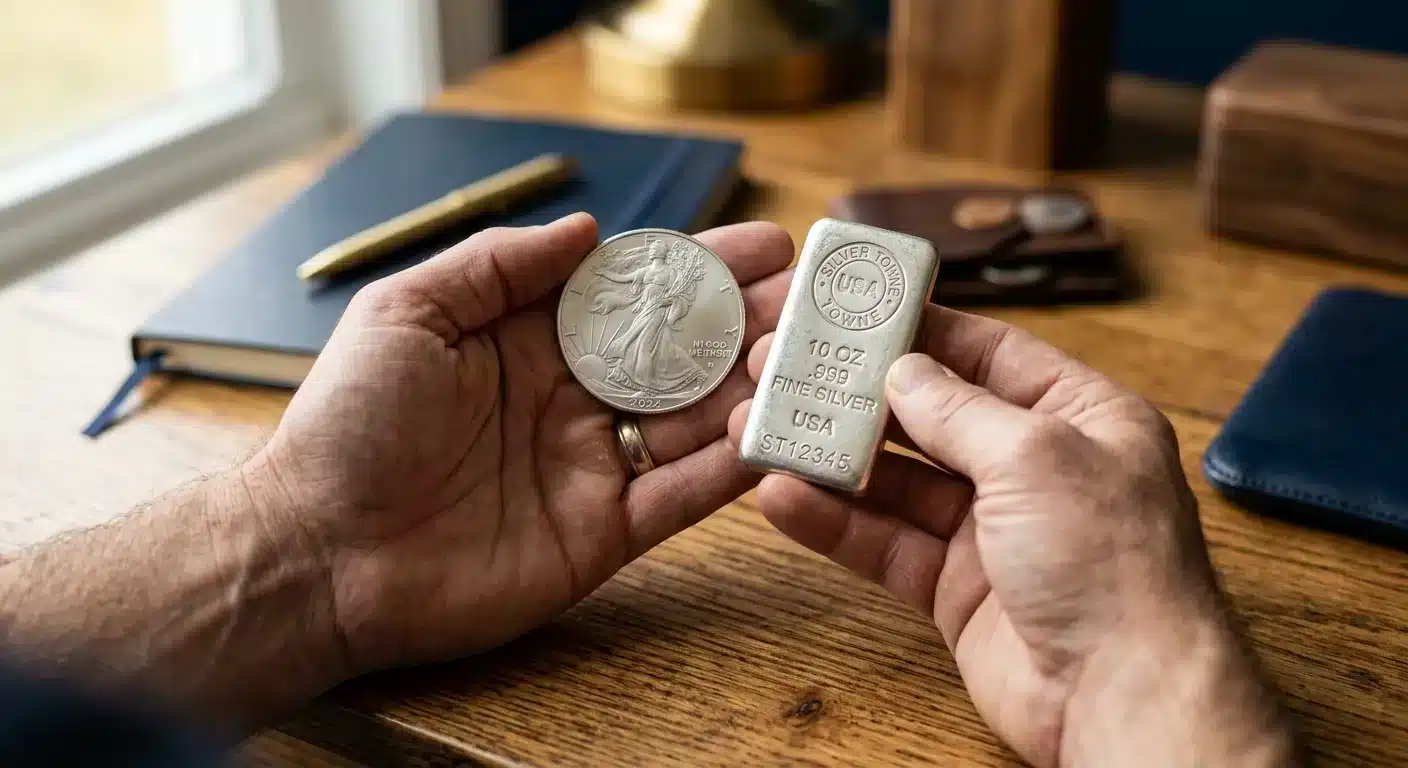
Physical silver comes in several forms. Coins minted by sovereign governments carry the highest recognition and liquidity. The American Eagle Silver Coin, produced by the United States Mint, contains one troy ounce of 99.9% pure silver and is backed by the U.S. government — making it one of the most widely accepted products for both direct ownership and retirement account eligibility. Rounds and bars from accredited private mints offer lower premiums for buyers who prioritize quantity over recognition.
The acquisition process follows a clear sequence. For cash transactions, payment is submitted and metals are shipped within a standard processing window. For retirement accounts, funds transfer from an existing IRA or 401(k) into a self-directed account, a custodian holds the account, and the metals are stored at an IRS-approved depository. The process is straightforward — but it requires a dealer with experience on both the product side and the account structure side.
The structural case for physical silver is grounded in real data. Industrial silver demand reached a record 654.4 million ounces in 2023, driven by solar energy, electronics, and medical applications. Over 50% of annual silver demand originates from industrial use — meaning silver’s role in the economy is functional, not speculative. Global mine production was estimated at approximately 26,000 metric tons in 2023, while the United States depends on imports for approximately 79% of its domestic silver consumption. Supply constraints are structural, not theoretical.
Precious metals may appreciate, depreciate, or remain unchanged. Physical silver is not a guarantee — it is a form of tangible ownership. What the buyer controls is the decision to hold something real, in their name, outside the paper financial system.
- Why Physical Silver — and Why the Common Approach Gets It Wrong
- Which Physical Silver Products Are Right for Long-Term Ownership
- How to Structure Your Physical Silver Acquisition — IRA vs. Cash Purchase
- Storage, Custody, and Security for Physical Silver Owners
- Who This Strategy Is Not For
- Frequently Asked Questions About Buying Physical Silver
- What are the storage requirements for holding physical silver in a self-directed retirement account?
- Why do some silver dealers charge high premiums, and how do I avoid overpaying?
- How long does the direct physical delivery process typically take when executing a cash transaction?
- Which physical silver products have the highest liquidity when it comes time to sell?
- Can I transfer funds from an existing traditional IRA to acquire physical silver without incurring penalties?
- Does Brighton Gold guarantee buyback pricing on physical silver purchases?
- Physical Silver Ownership Starts With a Clear Foundation
Why Physical Silver — and Why the Common Approach Gets It Wrong

Here’s the question most silver articles are designed to prevent you from asking: are you buying something real — or are you buying a story about something real?
The default industry framing around silver ownership runs on urgency. Prices are climbing. Supply is tightening. The window is closing — buy now, before it’s too late.
That framing isn’t built to serve long-term owners. It’s built to compress their decision-making window before they start asking harder questions — about premiums, about product selection, about storage logistics, about what ownership actually looks like five years from now.
That’s the lens for everything that follows. Not whether silver makes a good story — but whether your acquisition strategy is built on something structurally sound, or on emotional momentum that evaporates the moment spot price moves.
The Real Case for Physical Silver Ownership
The real case for physical silver doesn’t start with fear. It starts with the metal’s role in the real economy.
Industrial silver demand reached a record 654.4 million ounces in 2023 — driven by solar energy manufacturing, electronics, and medical applications. That’s not speculative pressure. That’s measurable, structural consumption backed by Silver Institute industrial demand data.
CPM Group puts over 50% of annual silver demand in the industrial bucket. That’s not investor sentiment driving this metal. That’s factories, solar panels, and circuit boards — real consumption that exists whether or not a single retail buyer ever picks up the phone.
Physical ownership means the metal is held in your name — at an approved depository or in your hands — not sitting in a brokerage account as a paper position that depends on someone else’s solvency.
Precious metals may appreciate, depreciate, or remain unchanged. That’s not a disclaimer to skip past. It’s the honest starting point. What doesn’t change is that you own it outright, outside the paper financial system — and for anyone seriously exploring physical silver retirement protection, that distinction is the entire conversation.
Why Fear-Based Silver Marketing Fails Long-Term Owners
Fear-based silver marketing fails long-term owners because it’s optimized for the wrong outcome. It creates buyers. Not owners.
Here’s what actually happens when a customer buys on apocalyptic framing — the coming collapse, the dollar’s imminent death, the window closing by Friday. They haven’t thought through product selection. They haven’t thought through storage. They have no idea what a rational exit looks like.
They bought a narrative. And when that narrative doesn’t play out on the timeline they were sold, the relationship falls apart.
Brighton Gold doesn’t use that framing. Not because the structural case for physical silver isn’t real — it is — but because customers who make calm, informed decisions about buy silver transactions are the ones who stay.
They understand what they own. They don’t call in a panic when spot price moves. That’s not a philosophy — it’s the practical result of building a relationship on clarity instead of urgency.
A fear-driven acquisition gets you into a position. It doesn’t build the foundation a long-term owner needs.
That foundation has specific components — and each one matters more than the price you paid on day one.
| Ownership Goal | Paper Silver Approach | Physical Silver Approach | Why It Matters for Long-Term Holders |
|---|---|---|---|
| Wealth preservation across economic cycles | ETFs or futures contracts that track silver price without delivering the metal | Physical coins, rounds, or bars held in an approved depository or delivered to the owner | Paper positions depend on a counterparty’s solvency — physical ownership does not |
| Retirement account structuring | Silver exposure through a brokerage account inside a conventional IRA | Self-directed IRA holding IRS-approved physical silver products at an approved depository | Physical metals inside a self-directed account are owned outright, not held as a fund share |
| Product selection and liquidity | Exposure to silver as a commodity price — product form is irrelevant | Sovereign-minted coins and IRA-eligible bullion chosen for recognition and resale acceptance | Product form determines real-world liquidity when it’s time to transact |
| Decision-making framework | Urgency-driven — timed to market fear, promotional windows, or price-movement narratives | Structured — based on account type, storage logistics, product fit, and long-term ownership goals | Calm, informed decisions produce owners who understand what they hold and why |
| Post-purchase relationship | One-time transaction — dealer involvement ends at the point of sale | Ongoing concierge support covering storage, account management, and future acquisition decisions | Long-term ownership requires ongoing guidance, not just a completed transaction |
| Outcome expectation | Implied price performance — framed as a return vehicle or inflation trade | Tangible ownership — metals may appreciate, depreciate, or remain unchanged; the goal is structural stability | Clarity about what silver is — and isn’t — protects the owner from decisions built on misaligned expectations |
Which Physical Silver Products Are Right for Long-Term Ownership
Not all physical silver is built for the long haul. And that gap costs buyers more than they ever expect.
The product you choose shapes your liquidity when it’s time to transact, your eligibility for a self-directed retirement account, and how smoothly a future buyer accepts what you’re offering.
Buying silver isn’t just a question of ounces. It’s a question of provenance, form factor, and what the broader market will recognize without friction.
There are three categories worth understanding before you commit capital: U.S.-minted coins, private mint bars and rounds, and the subset of products that qualify for IRA eligibility.
Each has a role. Each has real trade-offs. If you’re working through the silver coins vs. silver bars decision, start there — because the right answer depends entirely on what you’re building and how long you intend to hold it.
U.S.-Minted Silver Coins: The Liquidity and Provenance Standard
The American Eagle Silver Coin is what ‘real’ looks like in practice.
One troy ounce. 99.9% pure silver. Struck by the United States Mint and backed by the U.S. government. That government backing isn’t a marketing note — it’s why the coin is recognized without friction by dealers, custodians, and secondary buyers across the country.
U.S.-minted coins carry a provenance premium for a reason. When it’s time to transact — whether you’re liquidating, transferring to an heir, or moving metals between custodians — recognized sovereign mint products don’t require verification arguments.
The American Eagle Silver Coin specifications are standardized and publicly documented. That matters most when the transaction isn’t on your timeline.
That’s the real vs. a promise distinction applied directly to what you’re buying.
A coin with documented government standards and universal market acceptance is real. A product that asks the next buyer to trust a private assay on a bar they’ve never seen — that’s a promise. It may hold. But it introduces friction at exactly the moment you don’t want it.
Silver Bars and Rounds: Bulk Value and Trade-Offs
Bars and rounds from accredited private mints serve a different purpose — and the math makes them attractive.
Their premium over spot price runs lower than sovereign coins. For buyers focused on volume — getting as many ounces as possible out of a fixed dollar amount — that matters. The question is what you’re giving up to get there.
The trade-off is liquidity. A 100-ounce silver bar isn’t impractical to own — but it’s far less flexible to transact than a collection of one-ounce coins.
When you need to move a portion of your holdings — not all of it — coins give you that option cleanly. Bars require either finding a buyer for the full weight or accepting a haircut on a partial transaction. That’s a meaningful constraint for anyone building a long-term ownership structure.
Rounds occupy the middle ground. They’re typically one troy ounce. They look like coins — but they’re not struck by a sovereign government, which means they don’t carry the same instant-recognition premium.
For buyers who want flexibility without paying full coin premiums, rounds from well-known accredited mints are worth considering. But for most long-term owners building a structured acquisition plan, U.S.-minted products remain the standard.
IRA-Eligible Silver: What Qualifies and What Doesn’t
IRA eligibility isn’t automatic. The IRS specifies which silver products can be held inside a self-directed retirement account — and the standard is purity. Silver must meet a minimum fineness of .999 to qualify.
The American Eagle Silver Coin clears that threshold at 99.9% pure silver, which is why it’s one of the most commonly held products inside a Precious Metals IRA.
Not every silver product on the market makes the cut. Collectible coins, numismatic pieces, and anything that doesn’t meet the IRS fineness requirement are ineligible — regardless of spot value or historical appeal.
Buyers who skip the eligibility check before selecting a product can end up holding metals that won’t transfer into a self-directed account. That’s a structural problem. And it surfaces at exactly the wrong stage of the process. Understanding what qualifies for a retirement account before committing to a product category is the step most buyers skip — and the one that costs the most to fix later.
Here’s the practical implication: if a retirement account structure is any part of your long-term plan, let eligibility drive product selection from the start.
Acquiring IRA-qualified products and holding them in an approved depository is straightforward. Acquiring ineligible products, realizing the error later, and restructuring — that’s not.
Precious metals may appreciate, depreciate, or remain unchanged. But what you hold in your name, in the right structure, is yours outright. That’s the foundation a long-term owner builds on.
| Product Type | Purity Standard | IRA Eligible | Liquidity Level | Best For |
|---|---|---|---|---|
| American Eagle Silver Coin | .999 fine (99.9% pure silver) | Yes — IRS approved | High — universally recognized by dealers, custodians, and secondary buyers nationwide | Long-term owners, IRA holders, and anyone prioritizing frictionless future transactions |
| American Eagle Silver Coin (Proof) | .999 fine (99.9% pure silver) | Yes — IRS approved | Moderate — recognized but commands a collector premium that may not translate at resale | Collectors who also want IRA eligibility; not the primary vehicle for volume accumulation |
| Private Mint Silver Bars (accredited) | .999 fine or higher | Yes — if purity meets IRS minimum fineness standard | Moderate — recognized by major dealers but requires assay verification with some buyers | Volume-focused owners prioritizing ounce-per-dollar efficiency over instant liquidity |
| Silver Rounds (accredited private mints) | .999 fine | Yes — if purity meets IRS minimum fineness standard | Moderate — flexible form factor but lacks sovereign mint recognition premium | Buyers seeking coin-like flexibility at lower premiums; best from well-known accredited mints only |
| Large-format Silver Bars (100 oz+) | .999 fine or higher | Yes — if purity meets IRS minimum fineness standard | Lower — difficult to transact in partial quantities; best suited for bulk custodial storage | Institutional-scale owners or vaulted storage strategies where partial liquidation is not anticipated |
| Numismatic or Collectible Coins | Varies — often below .999 fine | No — typically ineligible regardless of market value or historical significance | Unpredictable — value driven by collector demand, not spot price | Collectors only; not suitable for structured long-term wealth preservation or retirement account use |
How to Structure Your Physical Silver Acquisition — IRA vs. Cash Purchase

Most buyers spend all their energy on product selection. Structure is the decision they skip — and it’s the one that’s hardest to undo later.
Two paths exist. A self-directed Precious Metals IRA, funded through a rollover or direct contribution. Or a cash purchase — metals delivered to your door or placed into vaulted storage in your name. Neither is automatically correct. The right structure depends on what retirement assets you already hold, how long you’re holding, and what you’re actually trying to protect.
This isn’t a complicated decision. But it is a consequential one. The structure you choose determines where your silver lives, how it’s titled, and what your options look like years from now when circumstances shift.
Rolling an Existing Retirement Account Into a Precious Metals IRA
Here’s what most people don’t realize: if you’re already holding a 401(k), traditional IRA, or similar qualified account, you don’t start from scratch. A rollover moves those existing funds into a self-directed IRA that holds physical silver. Done correctly, it doesn’t trigger a taxable event. The money moves. The ownership structure shifts. No penalty.
Here’s what the process actually looks like. You open a self-directed IRA with a qualified custodian. You initiate the transfer from your existing account. You select IRA-eligible silver products — coins that clear the .999 purity threshold, like the American Eagle Silver Coin at 99.9% pure silver. The metals are then purchased and held in your name at an IRS-approved depository. No intermediary holds your metals on your behalf. They’re yours — titled to your account, stored in a segregated facility.
What stops most people isn’t the process. It’s the story they’ve heard about it. Brighton Gold’s approach is straightforward: we walk customers through each step before anything is signed, so the structure is clear before the commitment is made. If you want to go deeper on what ownership inside a retirement account actually involves, our learning center covers it fully.
Cash Purchases: Direct Delivery and Vaulted Storage Options
A cash purchase is simpler by design. You acquire physical silver outright. It’s delivered to your door or placed into vaulted storage in your name. No custodian. No IRS eligibility requirements. No contribution limits. You own it, full stop.
Home delivery is the most direct form of ownership — the metals arrive, you hold them, and they exist completely outside the financial system. Vaulted storage gives you the same ownership structure with added security infrastructure. The metals stay titled to you, held in a facility built for exactly this purpose. The right choice comes down to volume, security preferences, and how you plan to eventually transact or transfer the holdings.
Precious metals may appreciate, depreciate, or remain unchanged. But what you hold in a cash purchase is yours outright — no intermediary needed to confirm it exists. You don’t need a third party’s solvency or a custodian’s recordkeeping to verify what you own. It’s physical. It’s in your name. That’s the entire point.
The No Fee IRA: What It Is and Why It Changes the Math
Brighton Gold offers the industry’s only No Fee Precious Metals IRA for the lifetime of the account on qualified purchases. That’s not a limited-time offer. It’s a structural commitment — and it changes the math on long-term ownership in a way most buyers don’t immediately account for.
Most Precious Metals IRA providers charge ongoing annual fees — custodian fees, storage fees, administrative fees. Those costs stack quietly over time. When you’re building a long-term ownership position, that fee drag isn’t a minor footnote. It’s a recurring cost that runs against your holdings year after year, whether silver moves or not. That’s the hidden structural tax most buyers don’t see until they’ve already committed.
The No Fee IRA removes that ongoing drag entirely for qualifying accounts. What you acquire is what you hold — without a fee structure quietly working against you. That’s what structured, lifetime-supported ownership actually means in practice. Not the fear-driven urgency that pushes someone into a purchase before they’ve thought through costs, storage, and exit options. A clear structure, with fees you understand from day one, is what serious ownership looks like when you move past the product and into the framework itself.
| Acquisition Method | Funding Source | Tax Treatment | Custody Requirement | Typical Timeline |
|---|---|---|---|---|
| Self-Directed Precious Metals IRA (Rollover) | Existing qualified retirement account — 401(k), traditional IRA, or similar | Tax-deferred growth; no taxable event on rollover when executed correctly | IRS-approved custodian required; metals held at approved depository in account holder’s name | Typically completed within a few weeks once custodian account is established and transfer is initiated |
| Self-Directed Precious Metals IRA (Direct Contribution) | New cash contribution subject to annual IRS contribution limits | Tax-deferred growth on qualifying contributions; contribution limits apply | IRS-approved custodian required; metals held at approved depository in account holder’s name | Similar to rollover once account is open; contribution limits may affect how quickly position is built |
| Cash Purchase — Home Delivery | Personal funds; no retirement account involvement | No tax-deferred treatment; acquisition is a straightforward purchase | No custodian required; owner holds metals directly in their possession | Typically completed within two weeks from transaction confirmation to delivery |
| Cash Purchase — Vaulted Storage | Personal funds; no retirement account involvement | No tax-deferred treatment; owner retains full title outside retirement structure | No custodian required; metals held at approved depository, titled directly to owner | Similar to home delivery timeline; vault setup may add brief administrative step |
| No Fee Precious Metals IRA (Brighton Gold) | Existing qualified retirement account or direct contribution on qualified purchases | Tax-deferred growth with no ongoing annual fee drag for the lifetime of the account | IRS-approved custodian required; Brighton Gold coordinates full setup and transfer process | Process mirrors standard IRA rollover; concierge support provided at every stage |
Storage, Custody, and Security for Physical Silver Owners
Getting the right silver through the right structure — that’s half the decision.
The other half is where those metals live after the transaction closes. And whether that arrangement is built to last.
Here’s where most buyers go quiet. Product selection? Done. IRA versus cash purchase? Figured out. Then storage comes up and it feels like a third problem they weren’t ready for.
It isn’t complicated. But it does require a clear answer before the acquisition closes.
One question settles most of this: is your silver held inside a retirement account, or outside one?
Those two paths carry different custody requirements, different access rules, and different implications when you’re ready to transact or transfer. Know which path you’re on before delivery closes. That’s the step that keeps the whole strategy intact.
IRS-Approved Depository Storage: Requirements for IRA Holdings
If your silver lives inside a self-directed Precious Metals IRA, the IRS rule is unambiguous: those metals cannot be stored at home, in a safe deposit box, or in any facility you personally control.
They must be held at an IRS-approved depository — a licensed, insured, third-party storage facility that meets the regulatory standards for retirement account custody. That’s not a technicality. It’s the structural requirement the account depends on.
That requirement isn’t bureaucratic friction. It’s what keeps the tax-advantaged status of the account intact.
The moment IRA-held metals leave an approved depository and enter your personal possession, the IRS treats it as a distribution. That means taxes. And depending on your age, penalties. The depository requirement isn’t just a rule to follow — it’s the architecture that protects everything the account is designed to deliver.
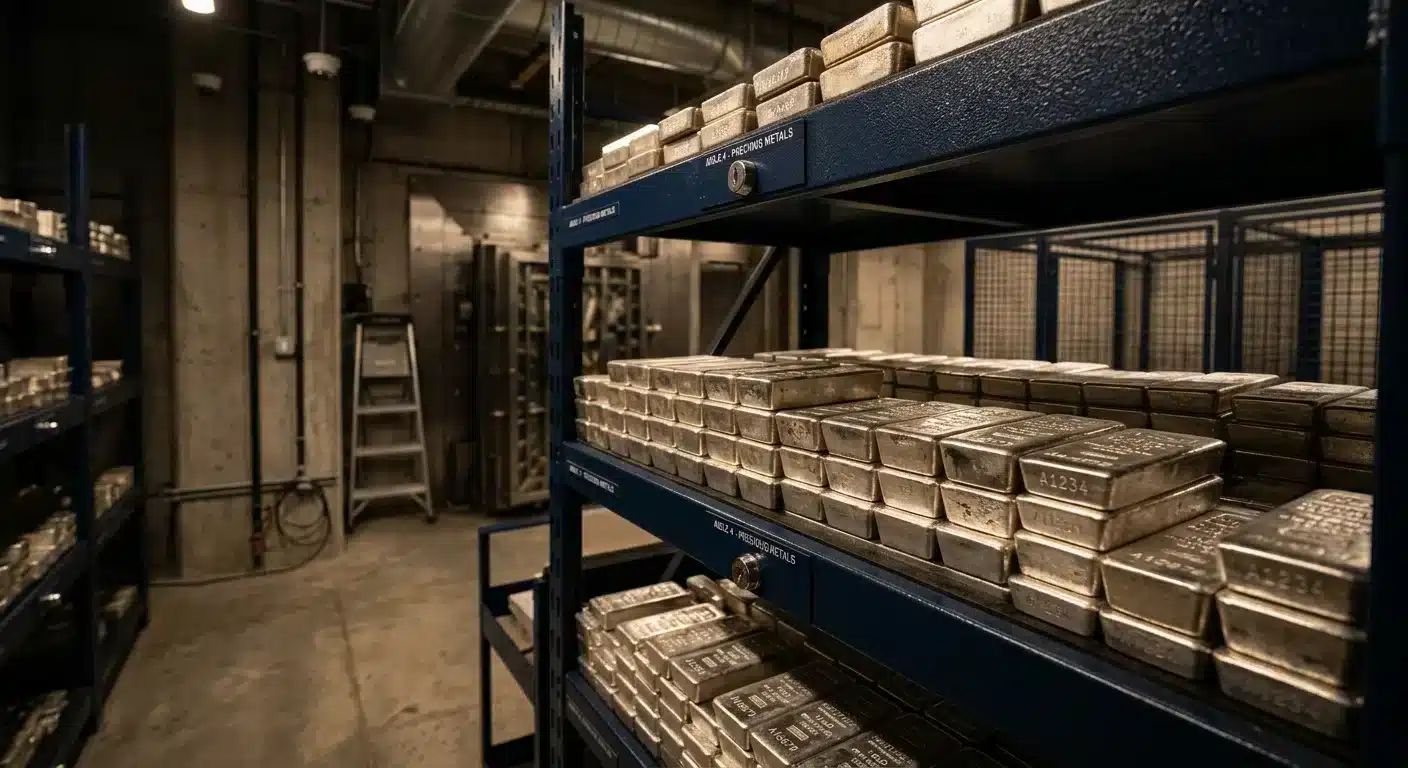
Approved depositories offer two custody arrangements. Segregated storage holds your specific metals separately — identifiable as yours, not pooled with anyone else’s. Commingled storage pools equivalent type and weight across multiple account holders.
Segregated costs more. But for long-term owners who want to know the exact coins they purchased are the ones sitting in their account — not a fungible equivalent — that certainty has a price, and it’s worth knowing what it is before you sign. The LBMA physical vault holdings track 26,140 tonnes of physical silver under institutional custody globally — that’s the operational scale of the professional storage infrastructure backing these arrangements.
Home Storage and Non-IRA Custody Considerations
For silver held outside a retirement account — a direct cash purchase — the IRS custody requirements don’t apply.
You can take physical delivery to your home, store the metals in a personal safe, or make your own security arrangements. That’s the purest form of direct ownership: no intermediary, no ongoing custody relationship, no institutional dependency. What you own is what you hold.
But home storage comes with obligations that belong in the plan before the metals ship — not after.
Standard homeowner’s insurance caps coverage on bullion, or excludes it entirely. A quality fire- and theft-resistant safe is a real cost. Silver is also physically dense — a meaningful accumulation of one-ounce coins or bars takes up real space and real weight. None of that disqualifies home storage. It just means going in with accurate expectations, not optimistic ones.
Silver held in your home, in your safe, under your control is about as real as ownership gets. What it demands in return is that you own the security responsibility just as directly as you own the metal.
Some buyers are well-positioned for that. Others aren’t — and that’s an honest answer worth arriving at before anything ships. The USGS 2024 silver report notes that the U.S. relies on foreign imports to meet approximately 79% of its domestic silver consumption — a supply dynamic that shapes long-term availability and reinforces why ownership structure, not just product selection, is where the real decision lives. industrial demand for silver
Vaulted Storage for Cash Purchases: What to Know
Vaulted storage for cash purchases sits between home delivery and IRA depository custody.
You own the silver outright — it’s a direct purchase, not a retirement account — but instead of taking delivery to your home, the metals are held at a secure third-party facility in your name. The ownership title is yours. The physical security infrastructure is the facility’s. That’s the distinction.
This arrangement fits buyers accumulating meaningful volume, or anyone who wants the ownership structure of a direct purchase without the personal security obligations of home storage.
The word that matters in any vaulted arrangement is titled. Your metals must be in your name — not held on your behalf in a pool the facility controls. Verify that explicitly before signing anything. If the answer isn’t clear, keep asking until it is. An ambiguous answer to that question is itself an answer.
Precious metals may appreciate, depreciate, or remain unchanged — but storage isn’t a passive detail you sort out after the purchase. It’s part of the ownership structure from day one.
Whether your silver lives in an IRA depository, a home safe, or a private vault, the question is the same one that runs through every step of a sound acquisition strategy: is this real, or is this a promise? Metals held in a titled, insured, verifiable arrangement are real. Metals held in an ambiguous custody structure — where your claim depends on a third party’s assurance rather than a documented title — are a promise.
Long-term owners build on the former.
| Storage Type | Applies To | IRS Compliant for IRA | Insurance Coverage | Owner Control Level |
|---|---|---|---|---|
| IRA-Approved Depository (Segregated) | Silver held inside a self-directed Precious Metals IRA | Yes — required by IRS for tax-advantaged status | Covered by depository’s institutional policy | Low — access governed by IRA custodian rules |
| IRA-Approved Depository (Commingled) | Silver held inside a self-directed Precious Metals IRA | Yes — required by IRS for tax-advantaged status | Covered by depository’s institutional policy | Low — equivalent metals returned, not specific coins purchased |
| Home Storage / Personal Safe | Silver acquired via direct cash purchase only | No — IRS prohibits home storage for IRA-held metals | Requires separate rider; standard homeowner policies typically exclude bullion | High — owner holds direct physical control with no intermediary |
| Private Vaulted Storage (Titled) | Silver acquired via direct cash purchase only | No — not an IRA structure; IRS rules do not apply | Covered by facility’s commercial policy; verify scope before signing | Medium — title stays with owner; physical security managed by facility |
| Safe Deposit Box | Silver acquired via direct cash purchase only | No — not permitted for IRA-held metals | Typically not covered by bank; owner must arrange separate coverage | Medium — accessible by owner but dependent on bank operating hours and policies |
Who This Strategy Is Not For

Say this directly: this strategy isn’t for everyone.
That’s not a disclaimer. It’s a courtesy.
Long-term physical silver ownership is a specific commitment. The customers who get the most out of this relationship come in knowing what they want: something real, something titled, something they can account for without relying on a third party’s assurance.
That clarity isn’t a high bar. But it is the bar.
The customers who leave frustrated usually arrived wanting something else entirely.
Catching that mismatch early saves everyone time.
The Speculator and the Bargain Hunter
The Speculator’s opening question is always some version of: is silver going up?
That question is the signal. If the goal is timing the market, catching a dip, and selling when the chart cooperates — Brighton Gold isn’t the right fit. We don’t forecast prices. We don’t recommend when to buy or sell. We don’t provide investment advice in any form. That’s not what we do, and it’s not what we’re positioned to do.
Industrial demand for silver hit a record 654.4 million ounces in 2023. According to CPM Group silver market analysis, over 50% of annual silver demand now comes from industrial applications.
Serious long-term owners track those numbers — not to time a trade, but because they build the structural case for holding physical silver over a decade or more.
The Speculator reads the same figures and asks what they mean for this week’s price. That’s a different question — and it belongs somewhere else.
The Bargain Hunter leads every conversation with spread. They’ve already called three other dealers. They want the lowest number — and if Brighton Gold isn’t it, they’re gone.
That’s a reasonable way to shop for a commodity. It’s just not what’s on offer here.
The value is guidance, structure, concierge support through every stage of ownership, and a No Fee Precious Metals IRA that reshapes the long-term cost equation entirely. When price is the only variable, none of that lands — and the relationship won’t hold.
Treating physical silver wealth preservation as a long-term ownership commitment — not a lowest-spread transaction — is the starting point.
Customers who don’t share that framing tend to leave frustrated. They’re judging something we’re not competing on.
The Fear Buyer and the Financial Advice Seeker
The Fear Buyer got here because someone told them the system is collapsing, the dollar is done, and silver is the last exit before the window closes.
Brighton Gold doesn’t use that language. And we don’t want that customer.
Not because the concerns aren’t real. Because fear-driven decisions produce panic, second-guessing, and escalation the moment spot price moves. You can’t build a long-term ownership relationship on that foundation.
Precious metals may appreciate, depreciate, or remain unchanged. We say that plainly, every time, because it’s true.
A buyer who needs a guaranteed outcome before moving forward isn’t ready for this. Real ownership means holding something tangible regardless of what the price does.
When the decision hinges on the price doing something specific — that’s not ownership. That’s a bet.
The Financial Advice Seeker wants someone to tell them what to do with their money. They want Brighton Gold’s team to function as a fiduciary — to assess their full financial picture, recommend a specific allocation, and own the outcome.
We don’t do that. Brighton Gold doesn’t hold investment advisor, broker-dealer, or fiduciary licensing. Full stop.
We educate. We guide through the process. We support customers at every stage of ownership. For personalized financial direction, the right resource is a licensed financial planner or CPA — and we’ll say that directly, every time.
The customers who build a genuine long-term ownership position here arrive already clear on the distinction.
They want to hold something real — titled, verified, and outside the paper financial system. Not a promise backed by someone else’s solvency. Not a bet on where prices are headed.
If that’s where you are, this strategy is worth your time.
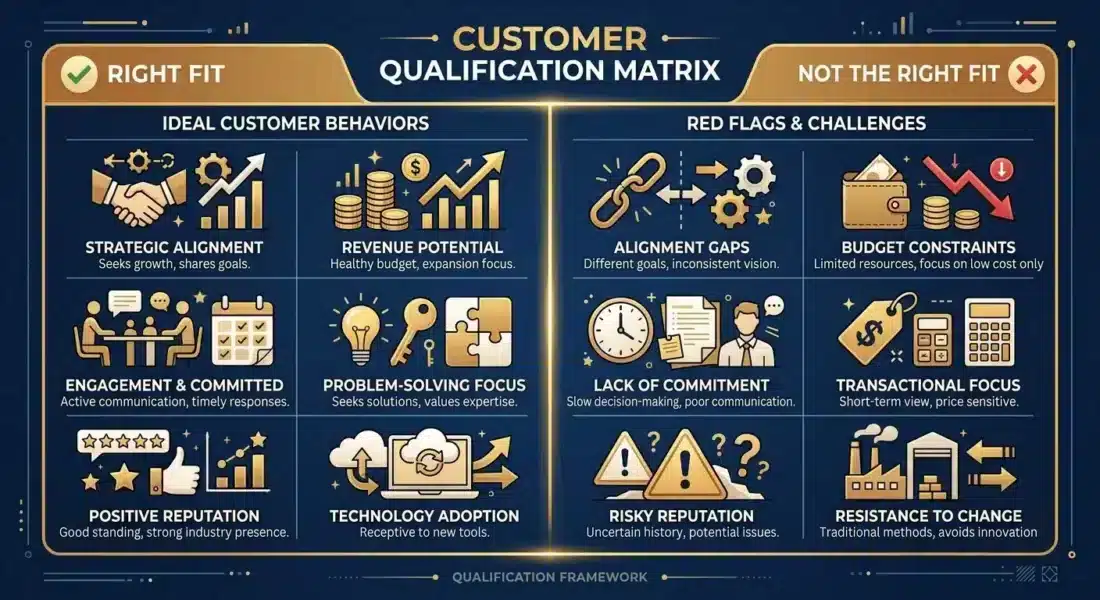
| Buyer Behavior | Why It’s a Signal | What Brighton Gold Provides Instead |
|---|---|---|
| The Speculator — asks about price forecasts, timing the market, or buying on a dip | The goal is a trade, not ownership. The opening question reveals the objective — and it’s the wrong one for this relationship. | Education on the structural case for long-term physical silver ownership; no price forecasts, no market timing, no investment recommendations of any kind |
| The Bargain Hunter — leads every conversation with spread, has already shopped three other dealers on price alone | Price-only evaluation means the concierge model, the post-purchase support, and the No Fee Precious Metals IRA don’t register as value — they register as noise. | Transparent guidance, structured acquisition support, and a No Fee Precious Metals IRA that changes the long-term cost equation — none of which compete on lowest spread |
| The Fear Buyer — responding to urgency framing, needs certainty of outcome, makes decisions based on panic rather than plan | Fear-driven decisions produce second-guessing and escalation when prices move. Ownership contingent on a specific price outcome isn’t ownership — it’s a bet. | Calm, factual guidance with no urgency language; an honest acknowledgment that precious metals may appreciate, depreciate, or remain unchanged — every time |
| The Financial Advice Seeker — wants a fiduciary relationship, expects Brighton’s team to direct their full financial picture and take responsibility for outcomes | Brighton Gold doesn’t hold investment advisor, broker-dealer, or fiduciary licensing. Expecting that function sets up a mismatch the relationship can’t survive. | Education and process guidance through every stage of ownership; referral to a licensed financial planner or CPA for personalized financial direction |
Frequently Asked Questions About Buying Physical Silver
But there’s always a short list of questions that surfaces right before someone moves forward — storage rules, premiums, delivery timing, account transfers. These are the details that matter most at the moment of decision.
Leaving them unanswered is what stalls an otherwise sound decision. Here are the straight answers.
What are the storage requirements for holding physical silver in a self-directed retirement account?
Physical silver inside a self-directed IRA must be held at an IRS-approved depository. Not at home. Not in a personal safe. Not in a bank. The IRS treats home storage of IRA-held metals as a distribution — which means taxes and potential penalties. That’s not an interpretation. That’s the rule.
The depository holds the metals in your name under a custodial arrangement. You own the silver. The facility provides the physical security and the IRS-compliant custody structure. Your custodian manages the relationship between your account and the storage facility.
The detail worth confirming: your metals are segregated — held in a titled account that’s yours specifically, not pooled with other customers’ holdings. That distinction matters inside an IRA just as much as it matters in a direct cash purchase.
Why do some silver dealers charge high premiums, and how do I avoid overpaying?
Premiums reflect the real cost of producing, assaying, and distributing physical silver — fabrication, minting, dealer margin, and current supply-demand conditions. A premium isn’t a problem. An unexplained one is.
The American Eagle Silver Coin contains one troy ounce of 99.9% pure silver, backed by a government guarantee of weight and purity. That assurance commands a premium over generic rounds — and that premium is justified, because it directly supports liquidity when it’s time to transact.
The way to avoid overpaying isn’t to find the lowest number. It’s to understand what you’re paying for. Generic rounds carry lower premiums and lower liquidity. IRA-eligible products from recognized mints carry higher premiums and significantly easier transactions down the road. Customers who feel they overpaid usually compared spread without comparing what the spread was covering.
How long does the direct physical delivery process typically take when executing a cash transaction?
A direct cash purchase — from confirmed transaction through physical delivery to your door — is typically completed in under two weeks under normal market conditions. Brighton Gold states that plainly because ambiguity on timing creates frustration that a clear answer prevents.
What affects that window: payment clearance, current demand on the mint or refinery, and shipping logistics to your location. Wire transfers clear faster than checks. High-demand periods for specific products can extend timelines modestly. Neither changes the ownership structure — the metals are yours from the moment the transaction is confirmed.
If a specific timeline matters to your planning, raise it upfront. The goal is a clear picture before the purchase closes — not reassurance after.
Which physical silver products have the highest liquidity when it comes time to sell?
Liquidity comes down to recognition. The products that transact most easily — whether you’re selling to a dealer, conducting a private transaction, or moving metals into a different structure — are the ones buyers already trust on sight.
U.S.-minted products hold the strongest position here. The American Eagle Silver Coin carries a U.S. Mint guarantee of one troy ounce of 99.9% pure silver — and that guarantee is instantly recognized by dealers across the country. No assay needed. No verification argument. The backing does that work for you.
Other recognized sovereign mint products carry broad recognition too. Generic rounds and private mint bars carry more limited liquidity, particularly outside established dealer networks. If eventual liquidity is part of your ownership plan, U.S.-minted products are the standard for a reason.
Can I transfer funds from an existing traditional IRA to acquire physical silver without incurring penalties?
Yes — and it doesn’t have to be a taxable event if it’s done correctly. A direct rollover or trustee-to-trustee transfer from a traditional IRA into a self-directed Precious Metals IRA moves the funds without triggering a distribution. No taxes. No penalties at the time of transfer.
The structure requires an IRS-approved custodian who handles self-directed accounts and a dealer who provides IRA-eligible metals. The American Eagle Silver Coin satisfies the IRS fineness standards by default.
One thing worth saying directly: Brighton Gold doesn’t provide personalized tax advice, and we don’t hold fiduciary or tax advisory licensing. The mechanics of the transfer are well-established. But for decisions affecting your specific tax picture, the right resource is your CPA or a licensed financial planner. We’ll say that every time — because it’s true.
Does Brighton Gold guarantee buyback pricing on physical silver purchases?
No. Brighton Gold doesn’t guarantee buyback pricing — and we say that directly because any dealer who does is making a promise they can’t structurally keep.
Precious metals may appreciate, depreciate, or remain unchanged. Resale values depend on market conditions at the time of the transaction. Not on what you paid. Not on last year’s price. Not on what any dealer commits to in advance. That’s the reality of holding a physical commodity.
What Brighton Gold does offer is support through every stage of ownership — including post-purchase guidance when customers are ready to transact or restructure their holdings. That support doesn’t come with a price guarantee. It comes with clear information, a transparent process, and a relationship built on what’s actually true rather than what’s convenient to say.
Physical Silver Ownership Starts With a Clear Foundation
Here’s what it always comes down to: real versus a promise.
Not which coin. Not which custodian. Not whether the IRA or the cash purchase fits better.
All of that matters — but it’s downstream of the only decision that counts. Are you ready to hold something tangible, titled, and outside the paper financial system? Or are you still weighing a price forecast against something someone else controls?
That’s not rhetorical. Every step in a sound acquisition strategy — product selection, account structure, storage arrangement — is only as solid as the answer underneath it.
Brighton Gold’s role in that process is specific. We educate. We guide through the acquisition and structuring steps. We support customers before the transaction, through it, and after — because this isn’t a one-time spread. It’s a long-term ownership relationship.
The No Fee Precious Metals IRA for the lifetime of the account on qualified purchases reflects that directly. It’s not a promotional hook — it’s a structural commitment to customers who are building something, not executing a transaction and moving on.
Precious metals may appreciate, depreciate, or remain unchanged. We say that plainly every time. The customers who stay are the ones who came in already knowing it — and chose to own something real anyway.
If you’ve worked through everything here — why physical silver functions differently than paper exposure, how to structure an acquisition, what storage actually means, and who this relationship isn’t built for — you’re not researching anymore.
You’re deciding.
The next step isn’t more reading. It’s a conversation about whether the structure makes sense for where you are right now. Brighton Gold’s complimentary consultation isn’t designed to sell you something. It’s designed to give you the clearest possible picture of what real ownership looks like for your specific situation.
Real versus a promise. That’s the whole question. And it deserves a straight answer.
That’s the full picture — products, storage, structures, and exactly who this isn’t for. What’s left is one direct conversation about whether it fits your situation. Brighton Gold’s complimentary consultation isn’t a pitch. It’s where the real answer lives.