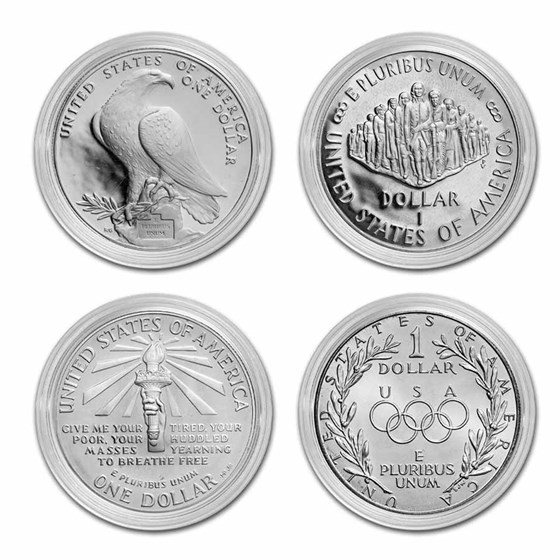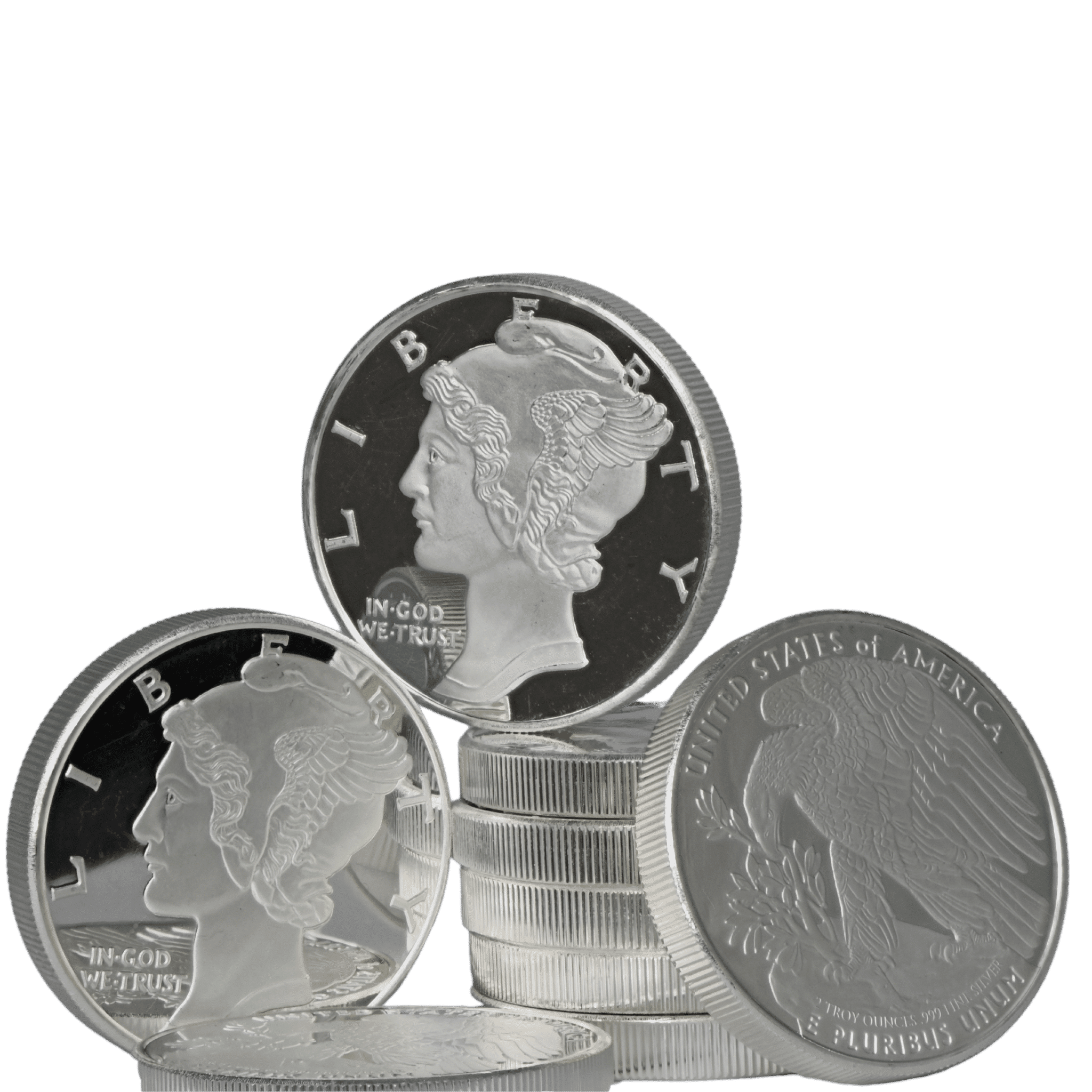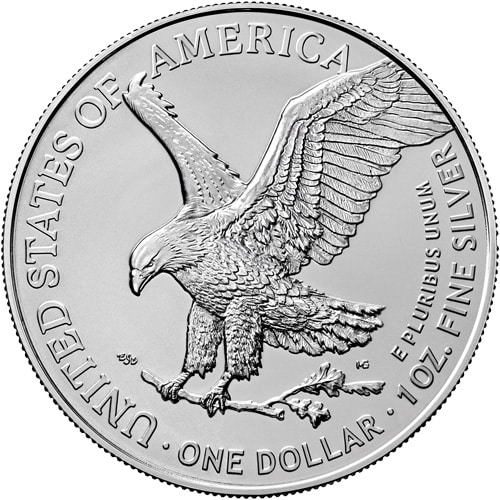
In a world where fiat illusions wobble under the weight of policy shifts and fragile economic signs, gold and silver stand resilient. This moment, framed by inflation twists, Fed politics, and bankruptcy surges—underscores why holding tangible assets is more than prudent—it’s a necessity for those committed to preserving wealth outside the grip of shifting financial tides.
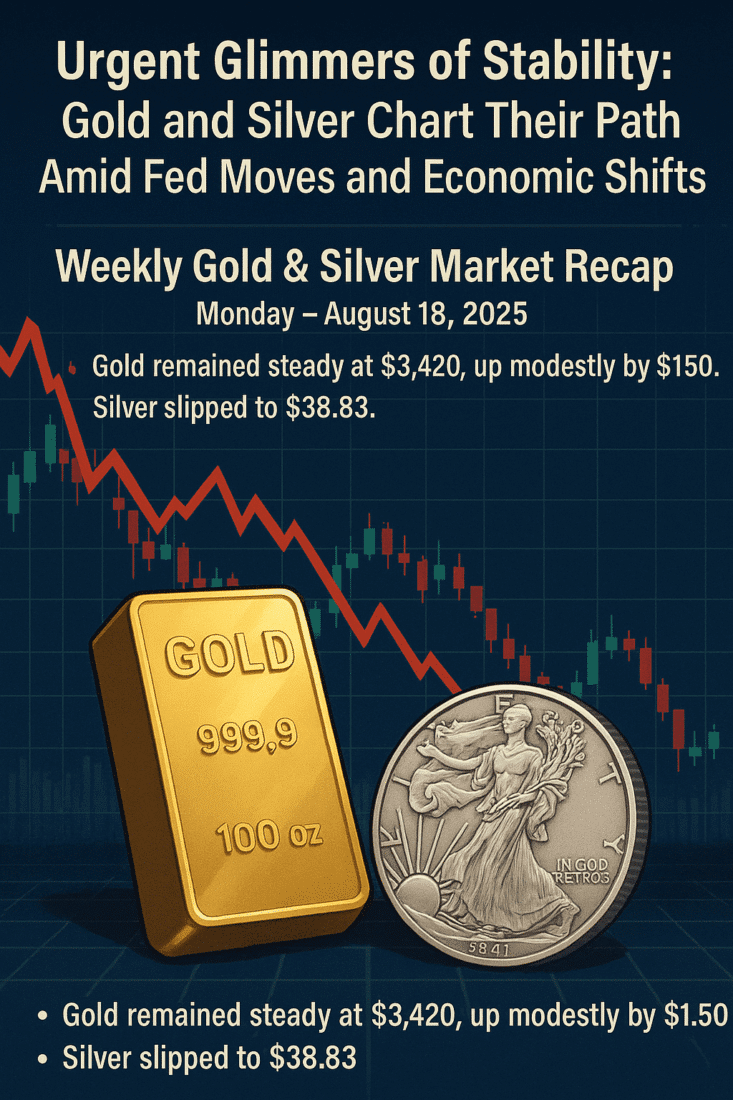
Weekly Gold & Silver Market Recap
Monday – August 18, 2025
Gold remained steady at $3,420, up modestly by $1.50. Silver slipped to $38.83. Market participants continued digesting Chair Powell’s signal of a possible September rate cut, even as advocates on the Fed remain divided and inflation concerns linger.
Tuesday – August 19, 2025
Gold rose $16.50 to reach $3,434.20—a two‑week high. This safe‑haven demand intensified after the abrupt dismissal of Fed Governor Lisa Cook by President Trump. Silver edged down to $38.69. Markets abroad grew uneasy; equities softened, treasury yields ticked upward, and the dollar weakened.
Wednesday – August 20, 2025
Gold inched upward to $3,436 amid political stress on the Fed, while silver eased to $38.47. All eyes were on Nvidia’s upcoming earnings—expected to trigger volatility and shake broader asset dynamics.
Thursday – August 21, 2025
Gold soared to a three‑week high and silver to a five‑week high. December gold climbed $12.60 to $3,461.30; September silver added $0.232 to $38.95. A revised Q2 U.S. GDP print of 3.3% beat forecasts, yet metals held up—proving once again that when confidence falters in paper promises, physical remains firm.
Friday – August 22, 2025
Gold dipped to $3,466.40 and silver fell to $38.99 as markets awaited the PCE inflation report. Fed Governor Christopher Waller’s mention of a potential September cut—possible further easing ahead—added fuel. Geopolitical friction rose, with Brazil bristling at U.S. tariffs and China turning to India for traction.
Core Inflation Climbs to 2.9%, Highest Since February
The Big Picture
Core PCE inflation hit 2.9% in July—the highest since February—laying bare the persistence of price pressures. Yet consumer spending and incomes continue to grow, showing that people are still engaged, even amid rising costs. In such a landscape, gold’s ability to preserve real value becomes ever more compelling.
What’s Happening
- Core PCE rose 0.3% month over month, 2.9% year over year; headline PCE rose 0.2% MoM and 2.6% YoY.
- Consumer spending climbed 0.5%; incomes rose 0.4%, matching expectations.
- Fed Governor Waller backs a September cut and suggests more easing if labor weakens.
- Gold held at $3,411/oz, dipping just −0.15%, showing strength even in the face of sticky inflation.
Why It Matters
Persistent inflation tugs at the credibility of monetary systems—and underlines the importance of accessible, reliable wealth protection. For markets, this dynamic favors gold: as expectations of rate relief gain traction, real yields fall, making bullion all the more attractive.
September Fed Rate Cut Will Impact Gold and the U.S. Dollar
The Big Picture
At Jackson Hole, Chair Powell signaled that September could deliver a rate cut—driven by growing employment risks and tariff‑induced price pressures. The balancing act between inflation and jobs is tight; every Fed utterance carries weight.
What’s Happening
- Inflation lingers at 2.7%, above the 2% Fed goal.
- Last fall’s cumulative rate cuts totaled 100 basis points; this year, the Fed has held steady—until now.
- The Fed remains split: dovish members push for action; hawkish members demand data-driven discipline; centrists favor measured steps.
- Deutsche Bank and others predict a high chance of a September cut—with future moves dependent on incoming data.
Why It Matters
A rate cut typically weakens the dollar, energizing gold’s global appeal. Whether the Fed limits itself to a single move or embarks on a broader easing path, the outcome bears heavily on tangible assets. Political undercurrents—from the White House agenda to Fed chair ambitions—add extra complexity, but the path tilts in gold’s favor.
Digital Dollar Coup: Trump’s GENIUS Act, World Liberty Financial, & Monetary Reinvention
The Big Picture
A new chapter in digital finance is unfolding with the GENIUS Act and the rise of World Liberty Financial (WLF). Together, they are reshaping how the dollar operates in a digital age, giving stablecoins federal recognition and introducing new players into the monetary system. With Treasury-backed digital assets gaining traction, questions are emerging about what this parallel system means for the role of the Federal Reserve and the future of money itself.
What’s Happening
- The GENIUS Act establishes a regulatory framework for stablecoins, positioning them as a key piece of U.S. financial infrastructure.
- WLF, co-founded by members of the Trump family, is at the forefront, issuing the USD1 stablecoin and WLFI token.
- USD1 issuance has surged to nearly $2.5 billion, with $205 million added in August alone. Coinbase has announced plans to list USD1, expanding its reach.
- WLF is also building a $1.5 billion crypto reserve through ALT5 Sigma, where Eric Trump serves on the board.
Why It Matters
Supporters see this as a bold step to strengthen the dollar’s dominance in global markets through digital innovation. Critics, however, raise concerns about consolidating too much monetary power in private hands. For markets, the shift highlights the broader transition toward digitized money—making physical assets like gold and silver all the more relevant as enduring, tangible stores of value outside of digital frameworks.
U.S. Companies Are Going Bankrupt at Levels Not Seen Since COVID
The Big Picture
Corporate bankruptcies in the U.S. have climbed to their highest levels since the early pandemic, raising important questions about how businesses are managing in today’s high-rate, high-cost environment. While headline numbers suggest stress across industries, the broader picture is more nuanced, with both challenges and areas of resilience coming into view.
What’s Happening
- July recorded 71 bankruptcy filings—the largest monthly total since July 2020.
- Year-to-date filings reached 446 through July, the most for this period since 2010.
- Industrial companies (70) and consumer discretionary firms (61) accounted for the largest share.
- Several high-profile names, including LifeScan Global, Del Monte Foods, and Genesis Healthcare, filed with more than $1 billion in assets and liabilities each.
- Despite the uptick in filings, large corporations in the S&P 500 posted stronger-than-expected earnings, with Q2 EPS growth of 11%.
Why It Matters
The rise in filings reflects pressure from high interest rates, tariffs, and ongoing inflation, all of which weigh on margins and cash flow. At the same time, many larger companies remain profitable, highlighting the uneven nature of the current economy. For people navigating these cross-currents, the trend underscores the importance of balancing risk with stability. Physical gold and silver—assets that carry no counterparty risk—remain essential tools for preserving wealth when corporate solvency and financial markets face uncertainty.
Next Week’s Key Events (September 1–5, 2025)
- Monday, Sept. 1 – Labor Day: markets closed; expect thin liquidity and overseas developments driving sentiment.
- Tuesday, Sept. 2
- 9:45 AM ET: S&P Final U.S. Manufacturing PMI
- 10:00 AM ET: ISM Manufacturing (forecast: 48.0%—under 50 signals contraction)
- Wednesday, Sept. 3
- 9:00 AM ET: St. Louis Fed President Musalem speaks
- 10:00 AM ET: JOLTS (job openings)
- 1:30 PM ET: Minneapolis Fed President Kashkari speaks
- Thursday, Sept. 4
- 8:15 AM ET: ADP Employment (prior: 104,000)
- 8:30 AM ET: Initial Jobless Claims
- 9:45 AM ET: S&P Final Services PMI
- 10:00 AM ET: ISM Services (forecast: 50.1%)
- 10:00 AM ET: Senate hearing on Fed nominee Stephen Miran
- 12:05 PM ET: New York Fed President John Williams speaks
- 7:00 PM ET: Chicago Fed President Austan Goolsbee speaks
- Friday, Sept. 5
- 8:30 AM ET: U.S. Jobs Report (prior: 73,000)—the central data point that could reshape Fed expectations
IMPACT ON PRECIOUS METALS MARKETS
Markets Closed – Labor Day (Mon, Sept. 1)
No U.S. data; metals may trade on overseas developments and thin liquidity.
S&P Final U.S. Manufacturing PMI (Tue, Sept. 2)
Stronger PMI signals industrial resilience → bearish for gold and silver.
Weaker PMI points to slowdown fears → bullish for metals as safe-havens.
ISM Manufacturing (Tue, Sept. 2)
Reading below 50 (forecast: 48.0%) confirms contraction → metals gain on slowdown fears.
Surprise rebound above 50 would dent metal demand as growth outlook firms.
Fed Speeches – Musalem (Wed, Sept. 3), Kashkari (Wed, Sept. 3), Williams (Thu, Sept. 4), Goolsbee (Thu, Sept. 4)
Hawkish tone (favoring tighter policy) puts pressure on metals.
Dovish tone (leaning toward easing) boosts safe-haven demand.
JOLTS Job Openings (Wed, Sept. 3)
Higher openings = labor strength, bearish for metals.
Lower openings (below 7.4M) = signs of weakness, bullish for gold and silver.
ADP Employment (Thu, Sept. 4)
Job creation above 104,000 = stronger economy, bearish for metals.
Weaker print raises labor market concern → bullish for metals.
Initial Jobless Claims (Thu, Sept. 4)
Rising claims = labor softness → gold and silver gain.
Falling claims = labor stability → metals ease.
S&P Final U.S. Services PMI (Thu, Sept. 4)
Stronger services activity = economic momentum, bearish for metals.
Weaker reading = uncertainty grows, safe-haven flows increase.
ISM Services (Thu, Sept. 4)
Reading near 50.1 keeps metals reactive.
Dip below 50 = contraction fears → bullish for metals.
Stronger rebound = growth outlook solidifies → bearish for metals.
Senate Banking Nomination Hearing (Thu, Sept. 4)
Hawkish tone from nominee Stephen Miran may pressure metals.
Dovish signals or political resistance could lift gold and silver.
U.S. Jobs Report (Fri, Sept. 5)
Strong payrolls (well above 73,000) = economic resilience, bearish for metals.
Weak growth or rising unemployment = slowdown fears, bullish for safe-haven metals.
By Brighton standards, the message is plain: when paper systems wobble—whether through sticky inflation, digital overreach, corporate distress, or volatile Fed policy—precious metals remain steadfast. For market participants committed to preservation, there’s no substitute for physical gold and silver held securely in your own possession.
Continue your journey toward tangible wealth. Visit Brighton Enterprises to explore how gold and silver can shield and elevate your financial foundation.
We are not financial advisors. This content is for informational purposes only and should not be construed as financial advice. Please consult with a licensed professional for personalized guidance. This publication adheres to all SEC laws, rules, and guidelines.