
Here’s what most people don’t hear when they start asking about gold for retirement—there are real risks involved.
Gold’s been on a historic run. Prices climbed past $4,500 per ounce in late 2025. Central banks are buying at record levels. And yes, the headlines make it sound like everyone should be rushing in.
But rushing in without understanding the downsides? That’s how people get hurt.
The biggest risks of owning physical gold in 2026 include price volatility, storage and insurance costs, dealer markups and scams, IRS compliance pitfalls, and the fact that gold produces no income. None of these are dealbreakers—but ignoring them could cost you thousands.
Here’s the good news. Every one of these risks can be managed with the right information and the right approach.
This guide walks you through what to watch for, how to protect yourself, and how to make confident decisions about identifying safe gold IRA practices in today’s market.
Let’s start with the risk that worries most people first—the possibility that prices could fall.
Understanding Gold Price Volatility in 2026
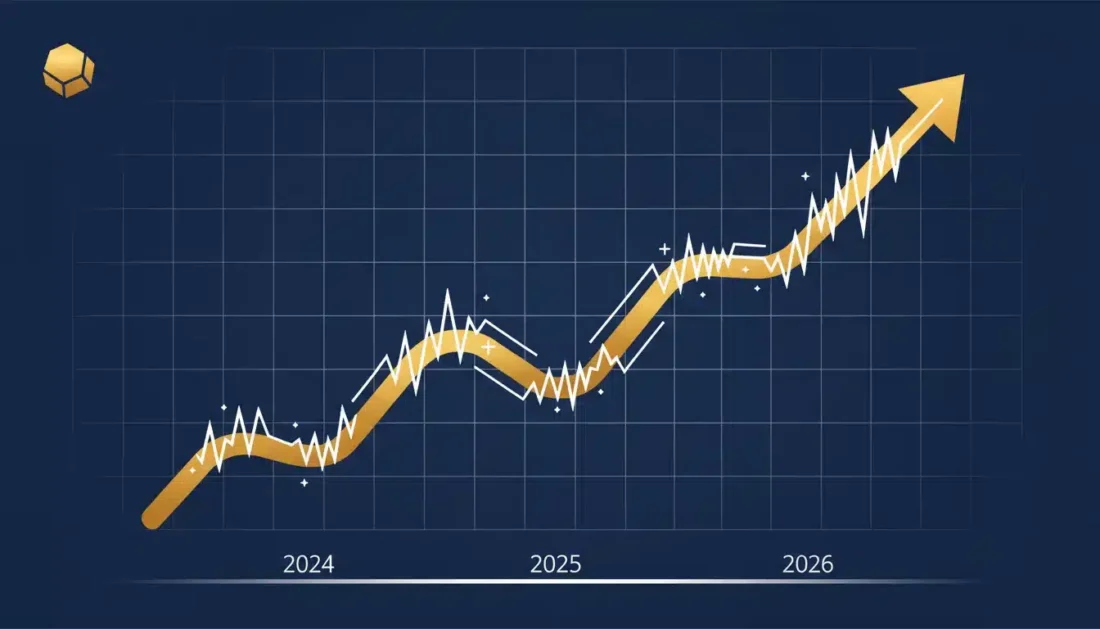
Gold’s recent performance has been extraordinary.
According to the World Gold Council, gold returned 67% in 2025—its strongest annual gain since the late 1970s. Prices hit all-time highs in multiple currencies.
But here’s what that doesn’t tell you: past performance is no indicator of future results. And volatility cuts both ways.
Why Gold Prices Move
Gold responds to a mix of factors—interest rates, the strength of the U.S. dollar, inflation expectations, geopolitical events, and central bank buying patterns.
When the Federal Reserve raises rates, gold often faces headwinds. When rates fall or uncertainty rises, gold tends to benefit.
The current environment has been favorable. J.P. Morgan’s research projects prices could reach $5,000 per ounce by year-end 2026, with central bank and buyer demand averaging 585 tonnes per quarter.
But projections aren’t guarantees. The same factors that pushed gold higher could reverse.
Short-Term Drops Are Normal
Even in strong markets, gold experiences pullbacks.
In October 2025, gold fell as much as 6% in a single day—its largest daily loss in 12 years. That kind of movement can be unsettling if you’re watching your holdings closely.
Here’s the distinction that matters: short-term volatility isn’t the same as long-term risk.
Gold’s track record over decades shows consistent purchasing power preservation. Someone who acquired gold in 2000 has seen significant appreciation—despite multiple corrections along the way.
What This Means for Your Retirement
If you’re acquiring gold for retirement, you’re likely thinking in terms of years or decades. Not days or months.
That longer timeline changes how volatility should affect your decisions.
- Short-term traders — Gold’s daily price swings can create significant gains or losses. This approach requires active monitoring and carries higher risk.
- Long-term owners — Historical data shows gold has maintained purchasing power across economic cycles. Short-term dips become less concerning when your timeline extends 10, 20, or 30 years.
- Retirement-focused purchasers — The goal isn’t speculation. It’s preservation. Gold’s role is protecting what you’ve already built—not chasing quick profits.
Understanding this distinction is essential when evaluating gold IRA advantages and disadvantages for your specific situation.
The Real Costs of Owning Physical Gold
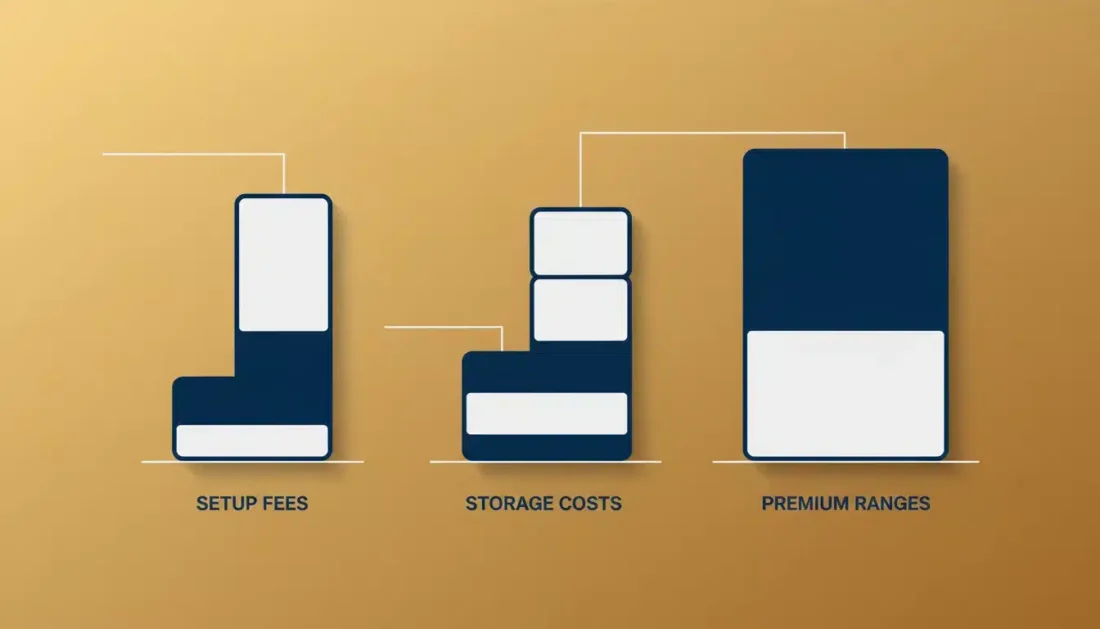
Physical gold isn’t free to own.
Unlike electronic records that cost almost nothing to maintain, tangible metal requires storage, insurance, and handling. These costs add up—and they’re often higher than new purchasers expect.
When understanding gold IRA fee structures, transparency matters. Here’s what you should anticipate.
Storage and Insurance Fees
The IRS requires all Gold IRA metals to be stored in an approved depository.
You can’t keep them at home. You can’t use a personal safe. You can’t use a bank safe deposit box. This rule exists for compliance reasons—but it means you’ll pay ongoing storage fees.
Typical costs break down like this:
| Storage Type | Annual Cost Range | Description |
|---|---|---|
| Segregated Storage | $150 – $300/year | Your metals stored separately with unique tracking |
| Commingled Storage | $100 – $250/year | Your metals pooled with others of the same type |
| Percentage-Based | 0.5% – 1.0% of value | Fees scale with your holdings |
Insurance is typically included in storage fees. It covers theft, fire, and other losses. But always verify the specifics—some depositories charge insurance separately.
For a $100,000 Gold IRA, expect annual storage and administrative costs in the $200-$350 range. That’s roughly 0.2% to 0.35% of your holdings each year.
Purchase Premiums and Spreads
When you acquire gold, you pay more than the spot price.
This markup—called the premium—covers the dealer’s costs and profit margin.
Standard premiums for IRS-approved bullion:
- Gold American Eagles — 3% to 5% above spot
- Gold bars from approved refiners — 2% to 4% above spot
- Silver products — Higher percentage premiums due to lower per-ounce value
The spread works in reverse when you sell. Dealers typically offer 1% to 2% below spot price for buybacks.
Here’s the red flag to watch for: If someone is charging 20%, 50%, or 100%+ premiums for “semi-numismatic” or “collectible” coins, something’s wrong. The CFTC and FINRA have documented cases where fraudulent dealers charged average markups of 51% to 71%—making it nearly impossible for purchasers to ever recover their costs.
One-Time Setup Costs
Opening a Gold IRA involves several one-time expenses:
| Fee Type | Typical Range |
|---|---|
| Account Setup | $50 – $100 |
| Wire Transfer | $25 – $50 |
| First-Year Admin | $75 – $200 |
Some dealers waive first-year fees for larger transfers—typically $50,000 or more.
Always ask about promotions. But don’t let fee waivers alone drive your decision.
Gold Doesn’t Pay Income
Here’s a reality that isn’t always discussed directly: gold doesn’t pay dividends, interest, or rent.
For some people, this is a dealbreaker. They want their retirement savings actively generating cash flow.
For others, it’s exactly the point.
Gold functions as wealth insurance—protecting purchasing power against currency devaluation, inflation, and systemic financial risk. You don’t expect your homeowner’s insurance to generate income. Same principle.
The key is knowing which approach fits your situation before you make any decisions.
Dealer Risks: Scams, Markups, and High-Pressure Tactics

This is where things get serious.
The Commodity Futures Trading Commission has brought cases totaling over $500 million in fraudulent precious metals sales over the past decade. Victims are overwhelmingly retirement-aged Americans with self-directed IRAs.
Protecting yourself starts with knowing what to watch for.
Common Scam Tactics
Fraudulent dealers follow predictable patterns:
- Unsolicited contact — Cold calls, spam emails, late-night infomercials, and social media messages targeting people who haven’t reached out. Legitimate dealers don’t need to chase customers.
- High-pressure urgency — “This deal expires today” or “Gold is about to skyrocket—you need to act now.” Real opportunities don’t require rushed decisions.
- Overpriced “collectible” coins — Pushing semi-numismatic coins with massive markups instead of standard bullion. The justification is usually that these coins will “appreciate more” or are “more valuable to collectors.”
- Fake endorsements — Stolen images of celebrities, religious leaders, or public figures to create credibility. Always verify endorsements independently.
- Storage for non-existent metal — Some fraudulent dealers charge storage fees for metals they never actually purchased. The CFTC documents cases where customers paid for years before discovering their metals didn’t exist.
How to Verify a Legitimate Dealer
Before working with any precious metals company:
- Check their physical address — A real business location, not just a P.O. box. Verify through independent sources.
- Research their track record — Look for at least several years of operation. Search their name plus “complaints,” “scam,” or “lawsuit” online.
- Review third-party ratings — Better Business Bureau, Trustpilot, and industry associations provide independent assessments.
- Ask for everything in writing — Pricing, fees, delivery timelines, storage arrangements. Legitimate dealers welcome documentation requests.
- Verify what they’re selling — Ensure products meet IRS purity requirements (99.5% for gold, 99.9% for silver) and are from approved mints or refiners.
Questions to Ask Before Purchasing
Use these questions to evaluate any dealer:
- What is the total cost, including all premiums and fees?
- What would you pay me if I sold this back tomorrow?
- Where will my metals be stored, and what insurance covers them?
- Can you provide written documentation of pricing before I commit?
- Are your salespeople licensed, and how are they compensated?
A trustworthy dealer answers these directly.
Evasiveness or resistance? That tells you everything you need to know.
IRS Compliance Risks and Prohibited Transactions

Gold IRAs come with strict IRS rules.
Violating them—even accidentally—can trigger immediate taxes, penalties, and potential disqualification of your entire account.
The IRS explicitly states that gold and bullion are “collectibles” under IRA statutes, with specific exceptions for highly refined bullion held by approved trustees.
The Home Storage Trap
Despite what some promoters claim, you cannot store Gold IRA metals at home. Period.
There’s no “LLC loophole” or “checkbook IRA exception” that makes home storage legal. The Tax Court has consistently ruled against taxpayers who tried this approach.
What happens if you take possession of IRA metals before age 59½?
- The full value counts as a taxable distribution
- You owe ordinary income tax on that amount
- You face an additional 10% early withdrawal penalty
- Your account may be disqualified entirely
The penalties can wipe out years of potential gains. It’s simply not worth the risk.
Prohibited Transactions That Trigger Penalties
The IRS defines specific “self-dealing” transactions that are forbidden:
- Buying from yourself — You can’t sell gold you already own to your IRA
- Selling to yourself — You can’t purchase gold from your IRA for personal use
- Using as collateral — IRA metals can’t secure personal loans
- Personal benefit — Even temporarily displaying IRA coins counts as a prohibited transaction
Disqualified persons include you, your spouse, parents, children, grandchildren, and any entity where you hold 50%+ ownership.
Transactions with any of these parties involving your IRA are prohibited.
Penalty structure for violations:
| Violation Level | Tax Consequence |
|---|---|
| First Violation | 15% excise tax on the amount involved |
| Uncorrected Violation | 100% excise tax |
| Full Disqualification | Entire account treated as distributed |
Purity and Product Requirements
Not all gold qualifies for IRA inclusion.
The IRS requires:
- Gold — 99.5% purity (with an exception for American Gold Eagles at 91.67%)
- Silver — 99.9% purity
- Platinum and Palladium — 99.95% purity
Products must come from approved mints or refiners. Collectible coins, jewelry, and non-certified bullion don’t qualify—regardless of their gold content.
When executing a precious metals IRA rollover, working with experienced custodians and dealers helps avoid compliance mistakes.
Counterparty Risk: Why Physical Gold Is Different

Here’s where gold starts looking less risky compared to some alternatives.
Counterparty risk is the chance that someone on the other side of your financial arrangement won’t deliver what they promised. It exists in almost every paper-based financial arrangement.
Paper Claims vs. Physical Ownership
Many people who think they own gold actually own paper claims.
- Gold ETFs — You own shares in a fund that holds gold. The fund’s managers, custodians, and authorized participants stand between you and actual metal.
- Gold futures — You own a contract for future delivery. Counterparty risk exists with the exchange and your broker.
- Mining company shares — You own equity in a company that mines gold. Company management, operations, and financial health all represent counterparty risks.
- Unallocated gold accounts — You have a claim on a pool of gold, but specific bars aren’t assigned to you. If the custodian fails, you’re an unsecured creditor.
Physical gold held in allocated, segregated storage eliminates most counterparty risk.
The metal exists. It’s assigned to you. No one else’s financial troubles can make it disappear.
The Banking System Question
Some purchasers worry about “bail-in” scenarios—where failing banks convert depositor funds to bank equity during a crisis.
This happened in Cyprus in 2013 and has been discussed as a policy tool elsewhere. While such scenarios remain unlikely in the U.S., the concern isn’t irrational.
Physical gold exists outside the banking system.
It can’t be “bailed in,” frozen by a failing institution, or converted to someone else’s liability without your consent.
This is part of what people mean when they talk about the intrinsic value of precious metals—value that doesn’t depend on any institution’s promise to pay.
Depository Protections
That said, Gold IRA metals still involve some relationships:
- Your custodian handles administrative functions
- Your depository provides physical storage
- Your dealer facilitates purchases
Each should carry appropriate insurance and meet regulatory standards.
IRS-approved depositories like Delaware Depository and Brinks provide:
- Full insurance coverage against theft, fire, and natural disasters
- Regular third-party audits verifying metal existence
- Segregated storage options keeping your metals separate
- Clear documentation of ownership in your name
If a depository faced bankruptcy, your metals—held in your name—would remain your property. Not part of the bankruptcy estate.
The Government Confiscation Question

This comes up constantly: “Couldn’t the government just take my gold?”
The question traces back to 1933, when President Franklin Roosevelt signed Executive Order 6102 requiring Americans to surrender most gold holdings.
Understanding what actually happened—and why it’s unlikely to repeat—provides important context.
What Happened in 1933
During the Great Depression, Roosevelt ordered Americans to turn in gold coins, bullion, and certificates in exchange for $20.67 per ounce.
Shortly after, the government raised gold’s official price to $35—effectively devaluing the dollar and profiting from the confiscation.
Penalties for non-compliance included fines up to $10,000 (equivalent to roughly $240,000 today) and up to ten years imprisonment.
However, according to economist Milton Friedman’s research, compliance was only about 50%. Gold coins are easy to hide, and enforcement proved impractical.
Several exemptions applied:
- Up to $100 in gold coins per person (about 5 ounces)
- “Rare and unusual coins” with collector value
- Gold used in legitimate industrial or professional applications
Why 1933 Is Unlikely to Repeat
The circumstances that enabled Executive Order 6102 no longer exist.
- No gold standard — The U.S. abandoned gold-backed currency in 1971. The Federal Reserve doesn’t need gold to expand money supply—it uses interest rate adjustments and quantitative easing.
- Congressional restrictions — In 1977, Congress removed the president’s authority to regulate gold transactions except during wartime. The legal pathway is narrower.
- Different monetary tools — Modern governments influence economies through digital policy tools, not by controlling physical metal.
- Massive existing reserves — The U.S. already holds enormous gold reserves at Fort Knox and other facilities. There’s no monetary incentive to seize private holdings.
Could it theoretically happen again? Yes—governments can change laws.
Is it likely? The conditions that drove 1933’s policy simply don’t exist in today’s fiat currency environment.
Practical Considerations
For those still concerned:
- Diversification across jurisdictions — Some purchasers hold metals in multiple storage locations
- Documentation — Keep detailed records of purchases and ownership
- Stay informed — Monitor policy developments that could affect precious metals
The more realistic concerns in 2026 involve taxation and reporting requirements—not physical seizure. Windfall taxes, expanded reporting rules, or capital gains changes represent more plausible policy shifts than 1933-style confiscation.
Liquidity and Practical Ownership Challenges

Owning physical gold isn’t as simple as clicking “sell” in an online account.
Understanding the practical realities helps set appropriate expectations.
Selling Physical Gold
When you decide to liquidate, you’ll work with a dealer to sell your metals.
This involves:
- Buyback spreads — Dealers typically pay 1-2% below spot price
- Processing time — Transactions may take several days to complete
- Shipping logistics — If taking delivery first, you’ll coordinate return shipping
- Spot price timing — The price when you initiate sale may differ from final settlement
For Gold IRA holders, required minimum distributions (RMDs) starting at age 73 create another consideration.
You can take distributions in cash (requiring metal sales) or physical metal (taking actual delivery). Most choose cash to avoid storage complications.
Market Access During Disruptions
Ironically, the times when you might most want to sell gold—during financial crises—can be exactly when markets become disrupted.
During extreme events:
- Dealer operations may slow or suspend
- Premiums can spike as demand surges
- Shipping and logistics may face delays
Having realistic expectations about liquidity helps you hold appropriate amounts.
Gold works best as a long-term position you don’t need to access quickly—not as an emergency fund requiring immediate liquidation.
Comparing Gold to Silver
Many purchasers consider both metals.
When comparing gold and silver acquisitions, liquidity differences matter:
| Factor | Gold | Silver |
|---|---|---|
| Dollar Value per Ounce | ~$4,600+ | ~$50+ |
| Storage Space Required | Minimal | Substantial |
| Premium Percentages | Lower | Higher |
| Liquidity | Excellent | Good |
Silver’s lower per-ounce value means you need more physical metal—and more storage space—for the same dollar amount.
This affects both costs and practical handling.
A 3-Step Checklist for Vetting Any Dealer

Before moving any funds, run through this verification process.
It takes time upfront but protects you from costly mistakes.
Step 1: Verify Business Fundamentals
Start with basic due diligence:
- Physical location — Confirm a real business address, not just a P.O. box. Use Google Maps street view to verify the building exists.
- Operating history — Look for at least 5+ years in business. Newer companies aren’t automatically bad, but longer track records provide more data points.
- Better Business Bureau — Check their rating and read complaint histories. Pay attention to how the company responds to issues.
- Industry memberships — Membership in organizations like the Industry Council for Tangible Assets (ICTA) or Professional Numismatists Guild (PNG) suggests commitment to ethical standards.
Step 2: Request Documentation
Legitimate dealers provide everything in writing:
- Complete pricing breakdown — Spot price, premium, shipping, and any other fees. No surprises after you commit.
- Product specifications — Exact items you’ll receive, including weight, purity, and mint/refiner.
- Storage arrangements — Which depository, what type of storage, and all associated fees.
- Buyback policies — What they’ll pay if you sell back, and any conditions or timeframes.
If a dealer resists providing written documentation, that tells you everything you need to know.
Step 3: Compare Multiple Sources
Never work with only one dealer:
- Get quotes from at least 3 companies
- Compare total costs—not just premiums
- Note differences in service, communication, and transparency
The cheapest option isn’t always best. But wide price disparities should prompt questions.
A dealer charging double the market premium needs to explain why.
For reference on precious metals industry terminology, Brighton’s glossary helps you speak confidently with any dealer.
Frequently Asked Questions
Can the government confiscate my gold in 2026?
While Executive Order 6102 allowed gold confiscation in 1933, the circumstances today are vastly different.
The U.S. abandoned the gold standard in 1971. Congress removed the president’s authority to regulate gold transactions (except during wartime) in 1977.
Gold no longer backs the dollar, so the government has no monetary incentive to seize it. The Federal Reserve manages money supply through interest rates and quantitative easing—not gold reserves.
However, no one can predict future policy with certainty. Staying informed about legislative developments remains prudent.
Is my gold insured if the depository goes out of business?
IRS-approved depositories carry comprehensive insurance policies covering theft, fire, and other losses.
Major facilities like Delaware Depository and Brinks maintain coverage well beyond their holdings.
Critically, your metals are held in your name (or your IRA’s name). They remain your property even if the depository faces financial trouble. You’re not an unsecured creditor—you own specific, allocated metal.
Always verify your depository’s insurance coverage, audit practices, and ownership documentation before storing metals.
What is the penalty for storing Gold IRA metals at home?
Storing Gold IRA metals at home triggers an immediate taxable distribution.
The IRS considers you to have taken possession of the assets.
You’ll owe ordinary income taxes on the full value of the metals plus a 10% early withdrawal penalty if you’re under age 59½. The IRS has been clear and consistent: there are no exceptions for home storage, personal safes, or bank safe deposit boxes.
Some promoters claim “LLC loopholes” exist—the Tax Court has consistently rejected these arguments.
How do I know if I’m paying too much of a premium?
Standard bullion premiums typically range from 3% to 5% above spot price for gold and slightly higher for silver.
If a dealer is charging significantly more—especially for “semi-numismatic” or “collectible” coins—that’s a red flag.
The CFTC has documented cases where fraudulent dealers charged 50-70%+ markups while claiming coins would appreciate to collectors. Standard IRS-approved bullion doesn’t carry these inflated prices.
Always compare the dealer’s price to the current spot price. Ask for a written breakdown of all fees. Get quotes from multiple sources before purchasing.
Why don’t precious metals generate income like dividends?
Physical gold and silver don’t pay dividends or interest because they’re tangible assets—not equity stakes in companies or debt instruments.
They preserve purchasing power over time rather than generate ongoing income.
Many owners view this as a feature rather than a bug. Gold functions as wealth insurance against currency devaluation rather than an income-producing vehicle. You don’t expect your homeowner’s insurance to generate dividends.
What happens if gold prices drop significantly after I purchase?
Like any asset, gold can decrease in value in the short term.
During October 2025, gold fell 6% in a single day—even while posting its strongest annual performance in decades.
Short-term volatility is normal. The question is whether short-term price movements matter for your goals and timeline.
If you’re acquiring gold for retirement decades away, temporary drops are opportunities, not crises. If you need the money within months, physical gold may not be the right vehicle.
Historical data shows gold has maintained purchasing power over long periods despite short-term fluctuations.
Are Gold IRAs riskier than traditional IRAs?
Gold IRAs have different risk profiles—not necessarily higher risk overall.
Traditional IRAs carry market volatility and counterparty risk (the financial health of companies, brokerages, etc.). Gold IRAs carry price volatility and storage considerations but eliminate counterparty risk since you own physical metal.
The right choice depends on your goals, timeline, and existing holdings.
Many people hold both—using traditional retirement accounts for growth potential and Gold IRAs for preservation and diversification.
How do I verify a precious metals dealer is legitimate?
Check for a physical business address and track record of at least several years.
Search their name plus “complaints” or “scam” online. Review their Better Business Bureau rating and complaint history.
Ask for written pricing and fee disclosures before purchasing. Verify they’re selling IRS-approved products that meet purity requirements.
Legitimate dealers welcome questions and provide transparent documentation.
High-pressure tactics, reluctance to provide details in writing, or claims that seem too good to be true are warning signs.
The Takeaway
Owning physical gold for retirement in 2026 isn’t without risks.
Price volatility, storage costs, dealer fraud, compliance pitfalls, and the absence of income generation are all real considerations.
But here’s the perspective that often gets lost: every retirement strategy carries risks.
The question isn’t whether gold has risks—it’s whether those risks fit your situation and goals.
For many retirement-focused Americans, gold’s risks are acceptable precisely because they’re different from the risks in the rest of their holdings.
Physical metal doesn’t depend on company earnings, government solvency, or banking system stability. It exists outside the digital financial system that dominates modern life.
Understanding risks doesn’t mean avoiding gold. It means making decisions with clarity and control.
Ready to explore whether physical gold fits your retirement strategy?
If you’re thinking “this all makes sense, but I don’t have time to figure it out on my own,” you’re not alone. Most customers we work with felt the same way before they realized how straightforward the process can be with the right guidance.
That’s why we offer a complimentary consultation to walk you through your options—including our No Fee Precious Metals IRA, which covers custodial fees for the lifetime of the account on qualified purchases.
We’ll show you exactly:
- How the No Fee IRA works and whether you qualify
- The difference between U.S.-minted coins and foreign alternatives
- What to expect from the purchasing and delivery process
- How to roll over or transfer existing retirement funds
- What ongoing support looks like after your purchase
Learn About the No Fee IRA — no obligation, just actionable insights you can use whether you work with us or not.
Your retirement savings deserve the same careful evaluation you’d give any major decision. Take the time to understand what you’re doing—and why—before moving forward.