
If you’ve been watching gold prices climb—and wondering whether the window has closed—you’re not alone.
Gold surged nearly 70% in 2025. That’s its strongest annual performance since 1979. Prices broke above $4,300 per ounce by year’s end, and many Americans watched from the sidelines, unsure what to do next.
Here’s the short answer: no, it’s not too late.
The factors driving gold higher haven’t disappeared. They’ve intensified.
J.P. Morgan forecasts gold to reach $5,055 per ounce by Q4 2026—with potential to climb toward $5,400 by late 2027. Central banks continue buying at record levels. The dollar has lost roughly 25% of its purchasing power since 2020. And Basel III banking regulations now treat physical gold like cash on bank balance sheets.
So is the “easy money” gone? Perhaps.
But this isn’t about chasing quick returns. It’s about whether gold still serves its purpose—preserving purchasing power, providing a tangible hedge, and offering something outside the traditional financial system.
Based on what we’re seeing today, the answer is yes.
Let’s look at why—and what it means for you.
Why Gold’s 2025 Surge Doesn’t Mean You Missed the Opportunity
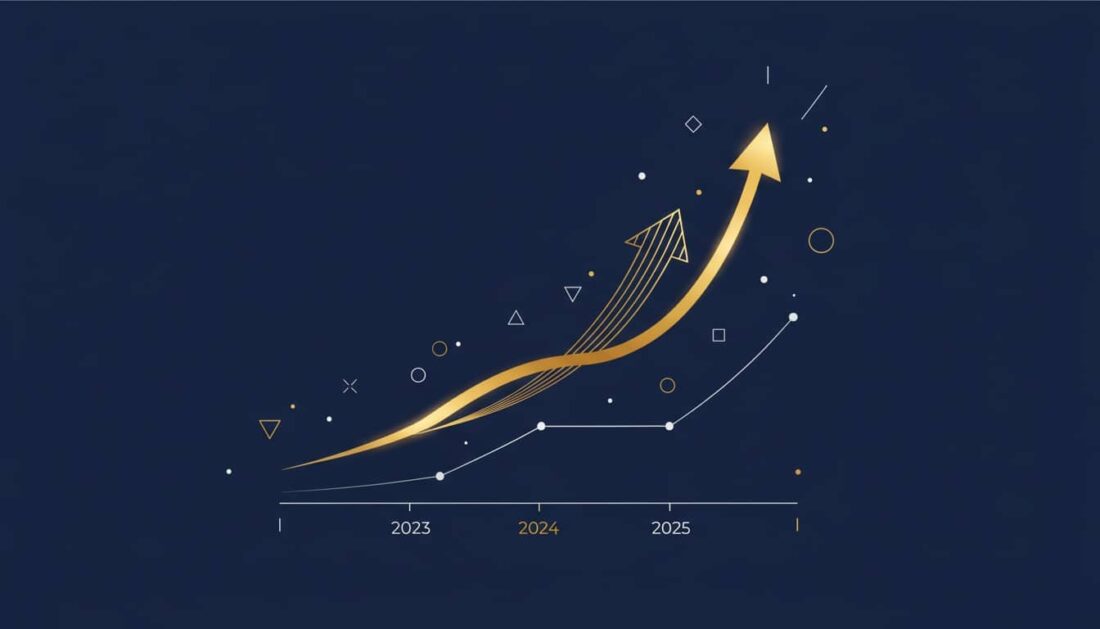
The numbers from 2025 are hard to ignore.
Gold began the year around $2,600 per ounce. It closed above $4,300—a gain that exceeded analyst consensus by over 25%.
It was gold’s best year in nearly five decades.
But here’s what those headlines don’t tell you: the same institutions that missed the 2025 rally are now raising their 2026 forecasts, not lowering them.
What Major Banks Are Projecting for 2026
Here’s what we’re seeing from the largest financial institutions:
- J.P. Morgan projects gold to average $4,753 per ounce for 2026, reaching approximately $5,055 by Q4. Their head of Global Commodities Strategy stated that the trends driving higher prices “are not exhausted.”
- Goldman Sachs forecasts $4,900 per ounce by December 2026—more than 10% above current levels. They point to central bank demand and Federal Reserve rate cuts as primary drivers.
- Bank of America raised its 2026 forecast to $5,000. Some analysts suggest $6,000 is possible if geopolitical tensions escalate.
- Morgan Stanley projects $4,800 by Q4 2026, citing continued support from rate cuts and sustained demand.
These aren’t fringe predictions.
They represent mainstream Wall Street research—institutions that manage trillions in assets.
Why This Matters Now: The “New Baseline”
One way to think about 2025’s surge: it wasn’t the end of a rally. It was the establishment of a new floor.
Before 2024, gold had never sustained prices above $2,500 per ounce.
Now, that level seems like a distant memory.
The question isn’t whether gold “should” be at $4,300. It’s whether $4,300 is the starting point for the next phase.
According to the World Gold Council, the gold price today “broadly reflects macroeconomic consensus expectations.” In other words, current prices aren’t a bubble. They’re the market’s assessment of fair value given ongoing risks.
The more interesting question: what happens if those risks intensify?
| Institution | 2026 Average Forecast | Q4 2026 Target | Upside Scenario |
|---|---|---|---|
| J.P. Morgan | $4,753/oz | $5,055/oz | $5,400/oz (2027) |
| Goldman Sachs | $4,500-4,700/oz | $4,900/oz | $5,000+/oz |
| Bank of America | $5,000/oz | $5,000/oz | $6,000/oz |
| Morgan Stanley | $4,500/oz | $4,800/oz | — |
| Deutsche Bank | $4,450/oz | $3,950-4,950/oz | — |
Central Banks Aren’t Slowing Down—Here’s Why That Matters

Here’s something most people don’t realize: the biggest buyers of gold aren’t individual customers. They’re governments.
Central banks have been net buyers of gold for 15 consecutive years.
But something shifted in 2022.
Annual purchases jumped above 1,000 tonnes—and have stayed there for three consecutive years. That pace dwarfs the previous decade.
The Numbers Behind the Trend
According to the World Gold Council’s Central Bank Gold Reserves Survey, the data tells a clear story:
- 2022: 1,136 tonnes purchased (a modern record)
- 2023: 1,051 tonnes purchased
- 2024: 1,045 tonnes purchased
For comparison, central banks averaged just 473 tonnes annually between 2010 and 2021.
The recent three-year total represents a 104% increase over purchases made from 2014-2016.
And 2025 continued the trend. Through the first half of the year, central banks added 415 tonnes to reserves—led by Poland, Azerbaijan, and Kazakhstan.
In Q3 2025 alone, purchases reached 220 tonnes. That exceeded the five-year quarterly average by 6%.
Who’s Buying—And Why
The buying is broad-based. Twenty-three countries increased their gold reserves in the first half of 2025.
Poland has been particularly aggressive—targeting 30% of its total reserves in gold (up from 20%).
The Czech Republic has quadrupled its holdings since 2021.
India, China, Turkey, and Singapore have all steadily accumulated.
Why? The motivations are consistent:
- Diversification away from U.S. dollar reserves. According to IMF data, the dollar’s share of global reserves has been declining—while gold’s share has risen to nearly 20%.
- Protection against geopolitical risk. Gold has no counterparty risk. It can’t be frozen, sanctioned, or devalued by another country’s policies.
- Balance sheet strength. With Basel III regulations treating physical gold as a top-tier asset, central banks have even stronger incentives to hold it.
Here’s the number that stands out most: the World Gold Council’s 2025 survey found that 95% of central banks expect global gold reserves to increase over the next 12 months.
Nearly half (43%) plan to increase their own holdings—up from 29% the previous year.
None of the central banks surveyed expect to reduce their gold reserves.
What You Can Do With This Information
Central bank behavior isn’t just interesting to read about. It has direct implications for supply and pricing.
When official institutions absorb 1,000+ tonnes annually—roughly 25-30% of total mine production—that’s metal that isn’t available to private markets.
As one J.P. Morgan analyst noted, “We continue to see the potential for gold’s share of total investor AUM to rise toward 4-5% over the coming years.”
If you’re wondering whether the “smart money” still sees value in gold at these prices—the institutions with the longest time horizons and the most sophisticated research are still buying.
And they’re doing so at record-high prices.
The Dollar Decline: What It Means for Your Purchasing Power
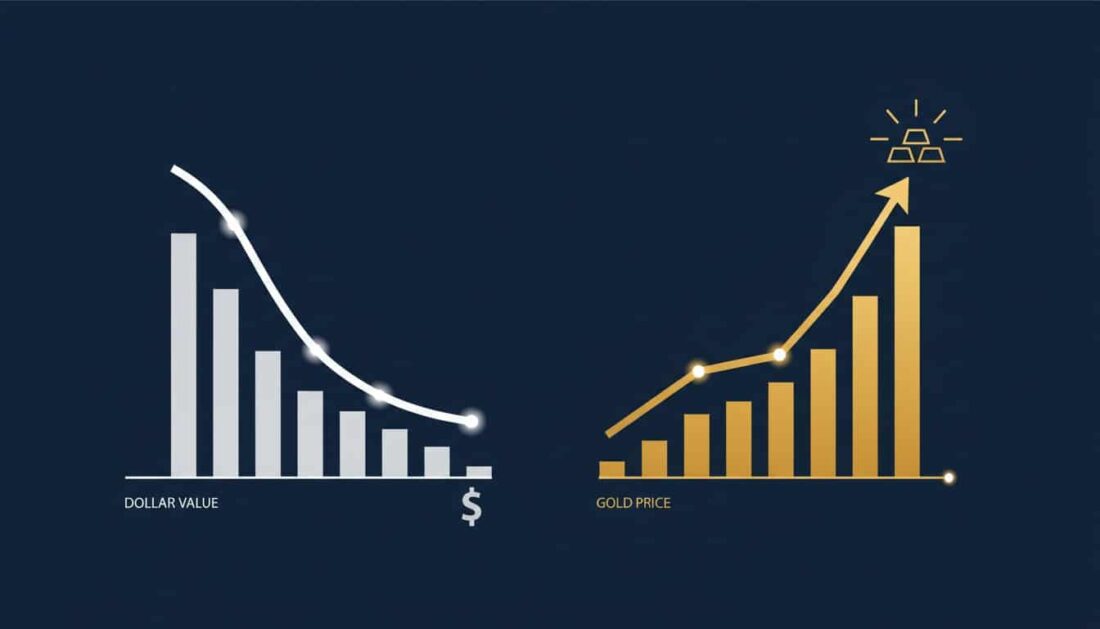
Here’s a question that rarely gets asked: how much has the dollar you’re holding today actually lost since 2020?
According to the Bureau of Labor Statistics, the answer is approximately 25%.
Inflation’s Quiet Erosion
A dollar in 2020 is worth roughly $0.80 today in terms of purchasing power.
Put differently: prices have increased about 25% across the board over five years.
That’s not a one-time event. It’s the cumulative effect of inflation running well above the Federal Reserve’s 2% target through 2021, 2022, and 2023—with sticky readings continuing into 2024 and 2025.
The Federal Reserve Bank of St. Louis (FRED) tracks this in real time.
The long-term trajectory is clear: the dollar steadily loses value.
What $100 bought in 2000 requires approximately $180 today.
Meanwhile, gold has moved in the opposite direction.
Gold’s Purchasing Power Over Time
In early 2020, gold traded around $1,500 per ounce.
Today, it’s above $4,300.
That’s not a speculative surge—it’s gold repricing to reflect what the dollar has lost.
Think of it this way: if you held $100,000 in a money market account in 2020, its purchasing power is now closer to $80,000 in 2020 dollars.
If you’d held that same value in gold, it would be worth approximately $286,000 at today’s prices—a real increase in purchasing power.
This isn’t a prediction about what gold “might” do. It’s what already happened.
Why This Matters Now: Retirement and Fixed Income
For retirement-aged Americans, this erosion is particularly concerning.
Social Security cost-of-living adjustments (COLAs) are designed to keep pace with inflation—but they often lag behind real-world costs, especially for healthcare and housing.
Fixed-income payments lose purchasing power year after year.
And money sitting in traditional savings or low-yield accounts steadily declines in real terms.
Physical gold doesn’t generate income. But it also doesn’t erode.
What you hold today will still be there in 20 years—denominated in ounces, not in a currency that loses value over time.
That’s the core reason many retirement-focused customers explore gold: not to speculate on price movements, but to preserve what they’ve already built.
| Metric | 2020 | 2025/2026 | Change |
|---|---|---|---|
| Dollar Purchasing Power | $1.00 | $0.80 | -20% |
| Gold Price (per oz) | ~$1,500 | ~$4,300 | +187% |
| CPI (U.S. Average) | 258.8 | 324+ | +25%+ |
| Cumulative Inflation | Baseline | +25.18% | — |
Basel III: Why Banks Now Treat Gold Like Cash
If you’ve heard about Basel III and gold, you may have seen conflicting information online.
Here’s what’s actually happening—and why it matters for everyday purchasers.
The Regulatory Shift (In Plain English)
Basel III is an international banking rulebook. It sets standards for how banks calculate their reserves and manage risk. It was developed after the 2008 financial crisis to strengthen the global banking system.
Here’s the key change for gold:
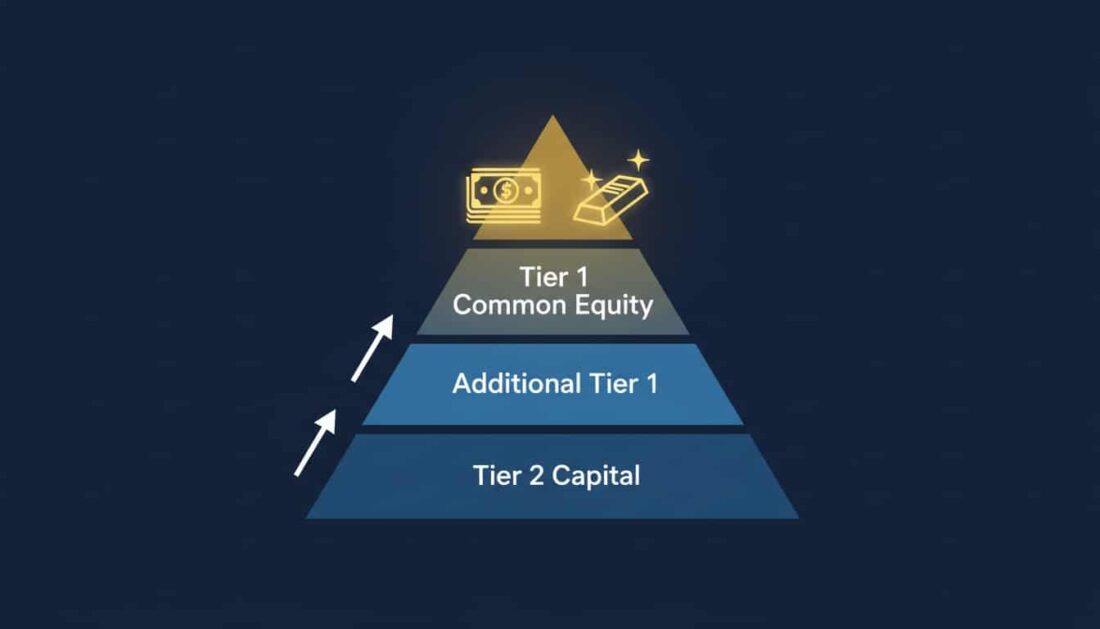
Under current Basel III rules, physical gold held in a bank’s vault is now treated the same as cash for reserve calculations. Banks can count it at 100% of its market value toward their core capital.
Previously, gold was discounted by 50%. Banks could only count half its value.
That’s a significant shift.
According to the World Gold Council’s analysis, physical allocated gold “attracts no credit risk” because it doesn’t depend on anyone else’s promise to pay.
It’s just metal in a vault. Yours.
What This Means for Demand
When regulators tell banks they can count gold like cash, banks pay attention.
Pension funds manage over $38 trillion. Insurance companies control another $8 trillion.
If these institutions shift even 1% of their holdings into gold, that’s $430 billion in new demand.
For context, all the gold ever mined in human history is valued at roughly $12-17 trillion at current prices.
The Basel III framework also distinguishes between physical gold and paper gold (like ETFs or unallocated accounts).
Only physical gold gets the favorable treatment—which may shift institutional preferences toward bullion and away from paper alternatives.
The Supply Side
Global mine production adds roughly 3,500-4,000 tonnes of gold annually.
That number hasn’t changed significantly in decades.
If institutional demand continues rising—driven by both Basel III incentives and central bank accumulation—the math gets challenging.
There simply isn’t enough new gold coming out of the ground to satisfy sustained buying at current levels.
The Takeaway
What large institutions do often signals where markets are heading.
Right now, they’re positioning toward physical gold—and regulators have made it easier for them to do so.
For individual customers, this creates both opportunity and urgency. The same metal you can hold in a retirement account is now competing for attention from pension funds and sovereign wealth funds.
The “Insurance” vs. “Growth” Mindset

One of the most common concerns we hear: “What if I buy now and prices drop 20% next month?”
It’s a fair question. And the honest answer is: they might.
Understanding Volatility
Gold prices don’t move in a straight line.
The World Gold Council’s 2026 outlook presents four scenarios—ranging from a 5-20% decline (if economic growth accelerates) to a 15-30% increase (if global risks intensify).
Short-term pullbacks are normal. In 2025 alone, gold experienced several corrections of 5-10% before resuming its upward trend.
But here’s where the “insurance” mindset becomes relevant.
Gold as Protection, Not Speculation
Most Brighton customers don’t buy gold expecting to double their money.
They buy it because they want something outside the traditional financial system—something that doesn’t depend on a bank, a government, or a counterparty.
Think about homeowner’s insurance.
You don’t hope your house burns down. You hope you never need the policy. But you buy it anyway, because the protection is worth the cost.
Physical gold works similarly.
It’s not designed to outperform the S&P 500 in bull markets. It’s designed to be there when other things aren’t.
If you have concerns about banking instability, currency erosion, or the long-term trajectory of the federal debt—gold addresses those concerns directly.
Its value doesn’t come from performance charts. It comes from what it represents: real, tangible ownership outside of digital systems.
What You Can Do: The Opportunity Cost of Waiting
Here’s the flip side of the “what if it drops” question: What if it doesn’t?
Central banks are buying at record levels—even at $4,000+ per ounce.
Major financial institutions are raising price targets, not lowering them.
The dollar continues losing purchasing power.
Waiting for a pullback that doesn’t come isn’t a neutral choice. It’s a decision that has its own cost.
Many of our customers address this by taking a partial position—moving a portion of their retirement savings into gold while maintaining flexibility elsewhere.
They’re not trying to time the market perfectly.
They’re establishing ownership of a tangible asset before conditions change further.
How a Precious Metals IRA Works in 2026
If you’ve been considering physical gold for retirement, the process may be simpler than you think.
The Basics of a Self-Directed IRA
A Precious Metals IRA allows you to hold physical gold, silver, platinum, or palladium inside a tax-advantaged retirement account.
It works like a traditional or Roth IRA—with the same contribution limits and tax treatment—but instead of holding paper assets, you own actual metal stored in a secure, IRS-approved depository.
The Taxpayer Relief Act of 1997 made this possible.
Since then, millions of Americans have added physical precious metals to their retirement accounts.
The Rollover Process
Moving funds from an existing 401(k) or IRA into a Precious Metals IRA typically follows three steps:
- Open a self-directed IRA with a qualified custodian—a bank, credit union, or trust company licensed by the IRS to hold alternative assets.
- Fund the account by rolling over or transferring funds from your existing retirement plan. A direct rollover (trustee-to-trustee transfer) avoids tax implications and keeps the process straightforward.
- Purchase IRS-approved precious metals through your dealer. The metals are shipped directly to the depository and held in your name.
Most customers complete the entire process within two weeks.
The paperwork is minimal. And Brighton’s concierge team handles coordination between custodians, administrators, and depositories—so you don’t have to chase down paperwork or make multiple phone calls.
For a detailed walkthrough, see our guide on Gold IRA transfers and rollovers.
U.S.-Minted Products: Why They Matter
Not all gold is IRA-eligible. The IRS requires specific purity standards (generally 99.5% for gold bullion) and limits the types of coins that qualify.
The Gold American Eagle is the most popular choice for IRA customers.
It’s backed by the U.S. Mint, widely recognized, and highly liquid. Canadian Maple Leafs, Austrian Philharmonics, and certain bars also qualify.
U.S.-minted coins offer an additional benefit: if you ever take delivery of your metals (as an in-kind distribution), they’re easier to sell or exchange domestically than foreign alternatives.
Brighton specializes in helping customers understand which products fit their goals—whether that’s maximizing ounces, prioritizing liquidity, or building a legacy that can be passed to children or grandchildren.
| Account Type | Eligible for Rollover | Transfer Method | Tax Treatment |
|---|---|---|---|
| Traditional IRA | Yes | Direct Transfer | Tax-deferred |
| Roth IRA | Yes | Direct Transfer | Tax-free (qualified) |
| 401(k) (former employer) | Yes | Rollover | No penalty if direct |
| 401(k) (current employer) | Sometimes | Check plan rules | Varies |
| SEP IRA | Yes | Direct Transfer | Tax-deferred |
| TSP (Thrift Savings Plan) | Yes (after separation) | Rollover | Tax-deferred |
Common Objections—And What the Data Actually Shows
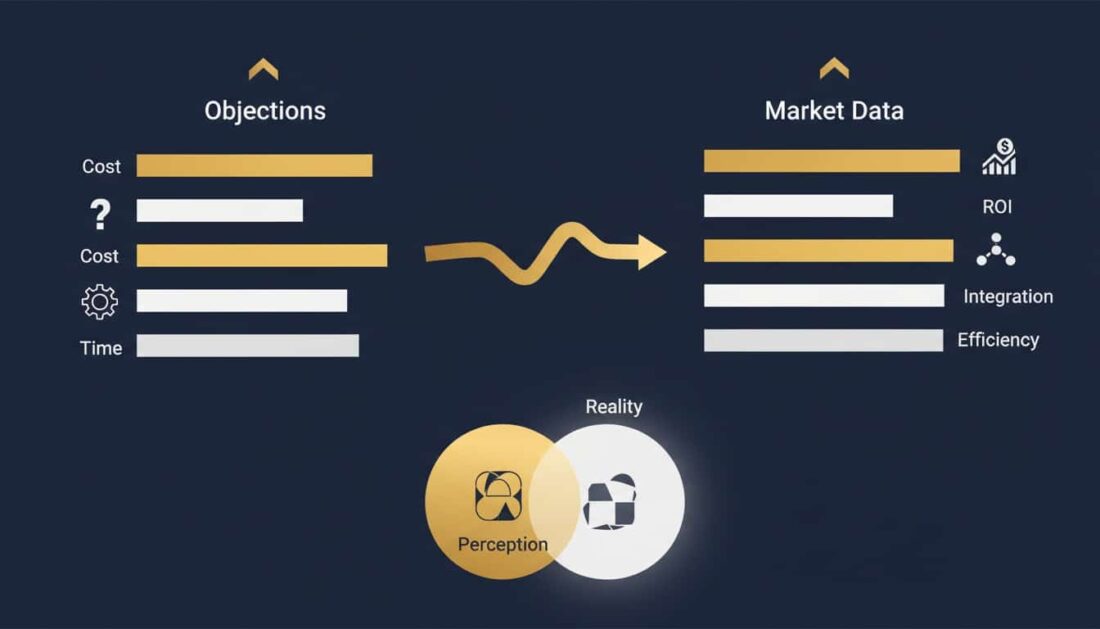
Let’s address some of the most common reasons people hesitate—and examine what the evidence suggests.
“Gold Is Already at All-Time Highs”
This is true. Gold hit multiple record highs in 2025 and continues trading near those levels.
But here’s the context: gold has set “all-time highs” repeatedly throughout its history—and each time, many people waited for a pullback that never materialized.
In 2011, gold peaked at $1,920 per ounce. That seemed expensive at the time.
It never returned to those levels on a sustained basis.
In 2020, gold crossed $2,000 for the first time. Today, that price seems like a bargain.
The question isn’t whether gold is at a record high. It’s whether the factors driving the price have peaked—and whether you’d rather own gold at $4,300 or wait for $5,000.
“It Doesn’t Pay Interest or Dividends”
Correct. Gold is a non-yielding asset.
In an environment of high interest rates, this is often cited as a disadvantage.
However, the Federal Reserve has signaled further rate cuts in 2026. As yields decline, the “opportunity cost” of holding gold decreases.
And gold’s lack of yield is also its advantage: it has no credit risk, no counterparty risk, and no dependency on a company’s performance or a government’s solvency.
The dollar in your savings account pays interest—but loses purchasing power to inflation.
The net effect may be negative in real terms.
“I’m Too Close to Retirement to Make Big Changes”
This one deserves careful consideration. Timing and allocation should reflect your individual situation.
That said, many of our customers are already in retirement—or within a few years of it.
They’re not looking for aggressive growth. They’re looking for stability, protection, and tangible ownership.
A partial rollover allows you to maintain most of your existing allocation while establishing a position in physical metals.
It’s not an all-or-nothing decision.
“What If I Need to Access the Funds?”
Precious metals inside an IRA follow the same distribution rules as traditional retirement accounts.
You can take distributions (in cash or physical metal) without penalty after age 59½.
Many reputable dealers—including Brighton—offer structured buyback programs. If you need to liquidate, the process is straightforward: your custodian sells the metal at current market prices, and you receive the proceeds.
Liquidity is generally not a concern with U.S.-minted products like American Eagles or Maple Leafs.
These are among the most recognizable and tradable bullion products in the world.
Frequently Asked Questions
What is J.P. Morgan’s price prediction for gold in 2026?
J.P. Morgan forecasts gold prices to average $5,055 per ounce by Q4 2026, with potential to reach $5,400 by late 2027.
This is based on continued central bank and investor demand projected to average approximately 585 tonnes per quarter.
Goldman Sachs projects approximately $4,900 per ounce by December 2026, while Bank of America has raised its forecast to $5,000.
Why are central banks still buying gold at record prices?
Central banks have purchased over 1,000 tonnes of gold annually for three consecutive years (2022-2024).
This is part of a strategy to diversify away from U.S. dollar reserves, hedge against geopolitical uncertainty, and strengthen balance sheets with a zero-risk asset.
The pace represents a 104% increase over purchases made from 2014-2016.
According to the World Gold Council, 95% of central banks surveyed expect global gold reserves to continue increasing.
Is it better to buy gold or silver in 2026?
Both metals have merit in 2026.
Gold offers stability, central bank backing, and a track record as a store of value.
Silver provides additional industrial demand drivers (solar, electronics, data centers) and potentially higher percentage gains—J.P. Morgan forecasts silver to reach $58 per ounce by Q4 2026.
Silver surged 144% in 2025 compared to gold’s 65% gain.
Many customers choose to hold both metals in their retirement accounts, with gold and silver serving complementary roles.
What happens to my Gold IRA if the dollar strengthens?
A stronger dollar typically creates short-term price pressure on gold, as gold is priced in dollars globally.
However, physical gold in an IRA remains yours regardless of currency fluctuations. The ounces you own today will still be there tomorrow.
Many customers view temporary price dips as opportunities to acquire additional ounces at lower prices.
Gold has maintained purchasing power over decades while the dollar has lost approximately 25% of its value since 2020.
How much of my retirement should I move into gold today?
Allocation depends on your individual situation, timeline, risk tolerance, and goals.
Some financial experts suggest between 5-10% of a retirement portfolio in precious metals as a baseline, while others recommend up to 25-30% for those prioritizing wealth preservation.
Brighton does not provide financial advice—we recommend consulting your CPA or financial professional for guidance specific to your situation.
However, many of our customers start with a partial rollover to establish a position while preserving flexibility.
Can I still qualify for the no-fee Gold IRA in 2026?
Yes. Brighton’s No Fee Precious Metals IRA remains available for qualified purchases.
This covers custodial fees for the lifetime of the account, which can represent significant savings over time—especially as your account grows in value.
Eligibility depends on purchase thresholds, which a Brighton representative can explain during a complimentary consultation.
There’s no obligation to proceed, and we’ll walk you through whether you qualify.
What are the risks of waiting for a market pullback?
Waiting for a pullback carries opportunity cost if prices continue rising—as they did throughout 2025.
Central bank buying has remained strong even at record-high prices, suggesting sustained structural demand.
Additionally, supply constraints (mine production is relatively flat) and regulatory changes like Basel III’s Tier 1 classification may limit future availability at current price levels.
There’s also the continued erosion of dollar purchasing power while you wait.
How does Basel III affect gold availability in 2026?
Basel III banking regulations now classify physical allocated gold as a Tier 1 asset for bank capital reserves.
This places gold on equal footing with cash and government bonds.
The change has increased institutional demand for allocated physical gold while making “paper gold” (like unallocated accounts or certain derivatives) less attractive.
The shift in institutional buying preferences may tighten physical supply over time and provide structural support for prices.
Only allocated physical gold—not ETFs or certificates—receives the favorable regulatory treatment.
The Bottom Line: It’s About Positioning, Not Timing

Here’s what the data tells us heading into 2026:
Gold isn’t a flash-in-the-pan trade.
It’s a structural repositioning by the world’s largest institutions—central banks, pension funds, sovereign wealth funds—away from paper assets and toward tangible, zero-risk reserves.
The dollar has lost roughly 25% of its purchasing power since 2020. And that erosion continues.
Major financial institutions project gold prices to rise further—not because of speculation, but because of sustained demand against fixed supply.
Is $4,300 per ounce expensive?
It depends on your reference point. Compared to 2020, absolutely. Compared to where prices may be in 2027? Perhaps not.
The customers who work with Brighton aren’t trying to time the market perfectly.
They’re trying to own something real—something that can’t be inflated away, frozen, or defaulted upon. They want peace of mind knowing a portion of their retirement sits outside the digital financial system.
That’s a decision only you can make.
But if you’ve been waiting for the “right time” to explore precious metals, the question worth asking is: what are you waiting for, exactly?
The world’s central banks aren’t waiting.
Major institutions aren’t waiting.
The supply of physical gold isn’t increasing to meet demand.
If clarity and confidence matter more than perfect timing, this might be the year to take the next step.
Ready to Learn More?
If you’re thinking “this all makes sense, but I don’t know where to start,” you’re not alone.
Most customers we work with felt the same way before they realized how straightforward the process can be with the right guidance.
That’s why we offer a complimentary consultation to walk you through your options—including our No Fee Precious Metals IRA, which covers custodial fees for the lifetime of the account on qualified purchases.
We’ll show you exactly:
- How the No Fee IRA works and whether you qualify
- The difference between U.S.-minted coins and foreign alternatives
- What to expect from the purchasing and delivery process
- How to roll over or transfer existing retirement funds
- What ongoing support looks like after your purchase
Learn About the No Fee IRA — no obligation, just actionable insights you can use whether you work with us or not.
The window for building your position at 2026 prices won’t stay open forever. But there’s no pressure—only clarity about what’s possible and how to get there.