
How Do I Know If My Gold Is Authentic? (2026 Verification Guide)
Here’s a surprise most people don’t expect — verifying your gold isn’t about one single test. It’s about layering a few simple checks together until you’ve got a clear answer.
And most of it? You can do right at home.
Start with a strong magnet. Real gold won’t stick to it.
Then weigh the coin on a digital scale and measure it with a caliper — every U.S.-minted coin has exact specs published by the U.S. Mint.
Even small differences in weight or size can tell you something’s off.
Want a quick sound check? Tap the coin on a hard surface.
Real gold rings like a bell — clear, musical, and it hangs in the air. Fakes tend to produce a flat thud that dies fast.
For absolute certainty, that’s where electronic testing comes in. A device like the Sigma Metalytics Precious Metal Verifier reads through the entire coin — not just the surface. It catches problems that even an expensive jewelry store scanner might miss.
Does any of this mean you should worry about owning physical gold? Not at all.
It means the more you know about verification, the more confident you’ll feel about what you hold. And that confidence starts with one thing — where you buy.
When you’re working with a dealer who takes identifying safe gold IRA practices seriously and tests every piece before it ships, the chance of ever seeing a fake drops to almost zero.
This guide walks you through every level — from free kitchen-table checks to professional scans — so you can own your gold with complete peace of mind.
Why Today’s Fakes Look Better Than They Used To
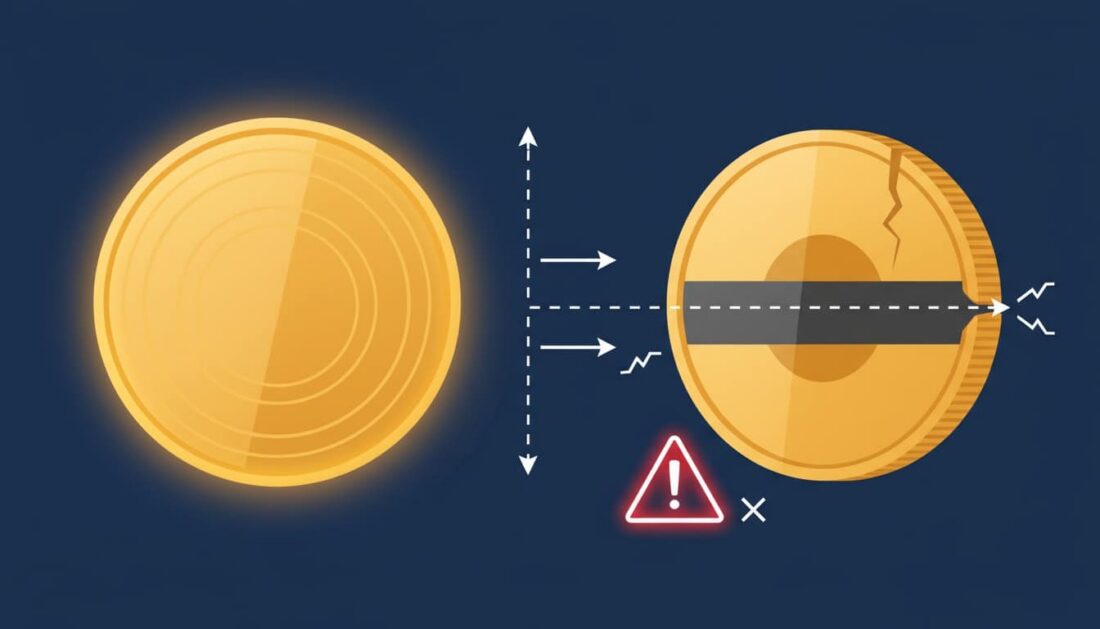
How good are fakes these days?
Better than a few years ago. But that’s exactly why understanding verification matters right now.
Here’s What We’re Seeing Today
Not long ago, most fakes were easy to spot. Wrong weight. Wrong color. Blurry designs.
That’s changed. With gold trading above $5,000 per ounce in early 2026, the payoff for a convincing fake has gone way up.
Here’s what we’re seeing today:
- Tungsten-core pieces — Tungsten is a metal that weighs almost exactly the same as gold. A tungsten core wrapped in a thin gold shell can fool a basic weight test. This is the most common type of well-made fake on the secondhand market right now.
- Die-struck replicas — Made with precision machines that copy real mint designs closely. They look sharper than older fakes — but they still tend to miss on weight, size, or both.
- Cast copies — Molds taken from real coins, then cast in cheaper metals and plated with gold. These usually show softer details, tiny bubbles, or seams along the edge.
- Heavy plating over cheaper metals — Some fakes use a thick layer of real gold over copper or brass. They can pass a quick visual check — but they won’t hold up under closer testing.
Why This Matters Now
Does this mean physical gold is risky to own?
No. It means where you buy matters just as much as what you buy.
A reputable dealer tests every piece with professional equipment before it ships. The counterfeiting problem is almost entirely a secondhand market issue — estate sales, online auctions, and unknown sellers.
When you’re focused on identifying safe gold IRA practices and purchasing through established channels, the picture changes entirely.
Home Testing: Simple Checks You Can Do Today
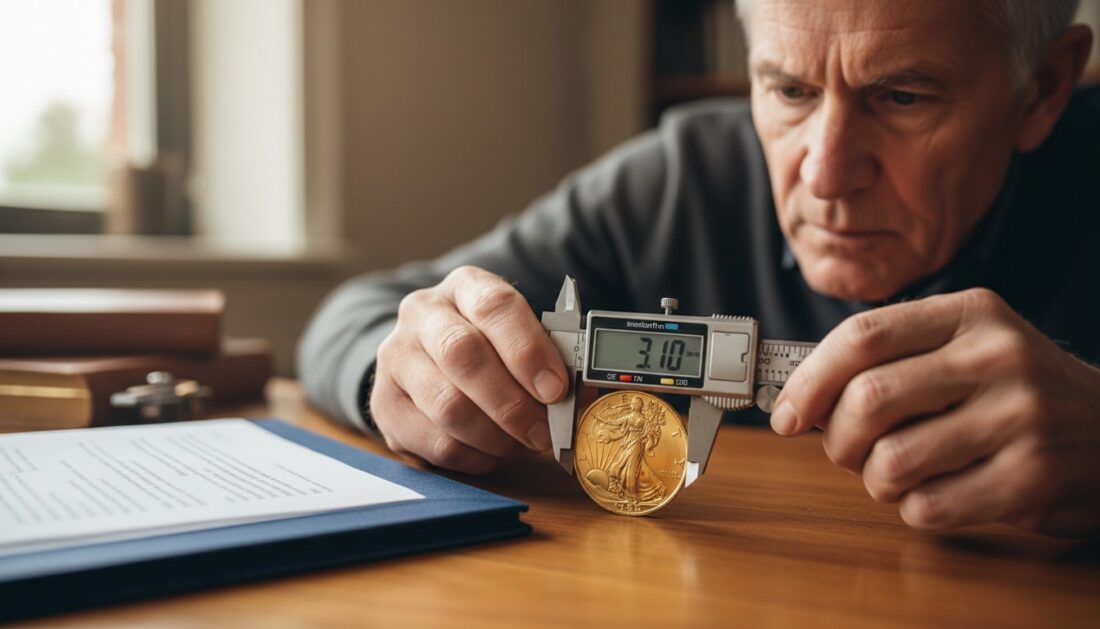
Here’s the good news — you don’t need expensive equipment to catch most fakes.
Most counterfeits fail at least one basic physical test. Many fail several. By running a few simple checks together, you can rule out the vast majority of fakes before you’d ever need professional help.
The Magnet Test
This takes about ten seconds.
Gold isn’t magnetic. Neither is silver or platinum.
So if you hold a strong rare-earth magnet — not a refrigerator magnet — to a coin and it sticks? It’s not gold.
But what if it doesn’t stick? Does that prove it’s real?
Not quite. Copper, brass, and tungsten aren’t magnetic either.
So the magnet test is really a starting point. It catches the cheapest fakes — the ones with steel or iron cores — but it won’t catch better-made counterfeits.
There’s a more useful version of this test, too.
Hold the coin at a 45-degree angle and slide the magnet down its surface. On real gold, the magnet slides slowly — almost like it’s dragging through honey.
That slow-motion effect happens because of how gold’s natural properties interact with magnetic fields. It’s one of the things that makes gold so unique as a physical metal — and it’s genuinely hard for fakes to copy.
If you’re curious about what makes gold different from other metals at a fundamental level, it’s the same reason behind the intrinsic value of precious metals.
The Weight and Dimension Test
If you only do one test at home, make it this one.
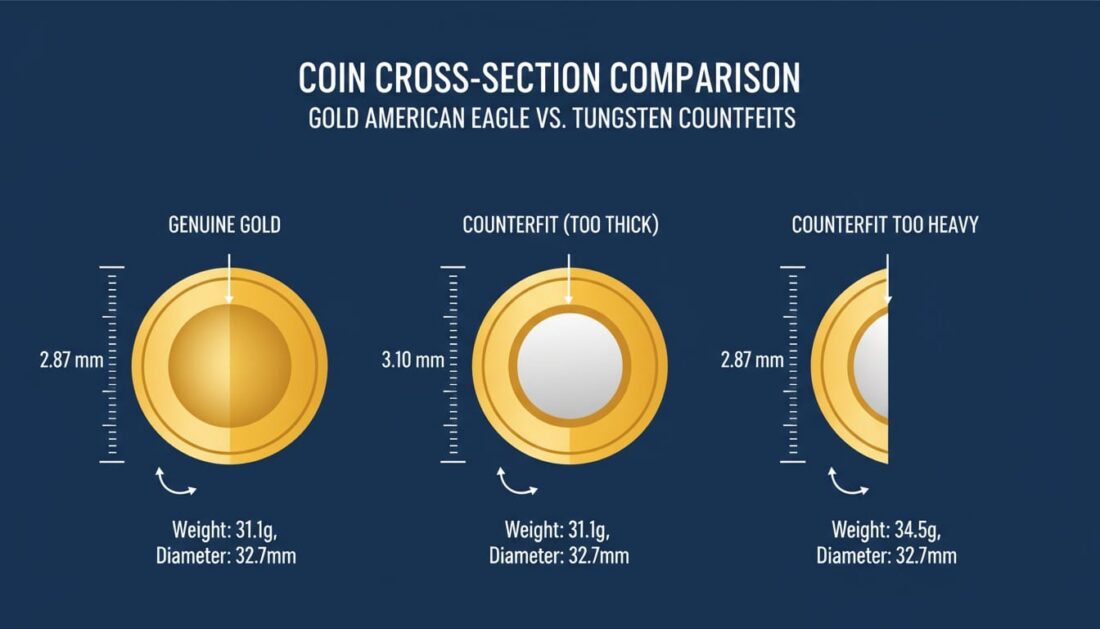
Every major mint publishes exact specifications for their coins. The 1 oz Gold American Eagle weighs 33.930 grams, measures 32.70 mm across, and is 2.87 mm thick.
The 1 oz Canadian Gold Maple Leaf weighs 31.1035 grams, measures 30.00 mm in diameter, and is 2.87 mm thick.
You’ll need two tools — a digital scale that reads to two decimal places (around $20-40) and a digital caliper (around $15-30). Both are easy to find online.
Weigh the coin. Measure the diameter. Measure the thickness. Compare to the official specs.
Why does this work so well?
Even tungsten — the counterfeiter’s best material because it weighs almost the same as gold — can’t match both the weight and the size at the same time. If a counterfeiter gets the weight right, the size will be slightly off. If the size matches, the weight shifts.
That tiny gap between “almost right” and “exactly right” is where fakes get caught.
| Test | What You Need | Cost | What It Catches |
|---|---|---|---|
| Magnet Test | Strong rare-earth magnet | $5-15 | Steel and iron-core fakes |
| Weight Test | Digital scale (0.01g) | $20-40 | Wrong-metal fakes, short-weight pieces |
| Dimension Test | Digital caliper | $15-30 | Fakes that miss on diameter or thickness |
| Ping Test | Hard surface or smartphone app | Free | Cheaper metal fakes with wrong sound |
| Visual Inspection | 10x magnifying loupe | $10-20 | Cast fakes, design flaws, wrong edge pattern |
The Ping Test
Tap a real gold coin on a hard surface. It produces a long, clear, bell-like ring that hangs in the air for several seconds.
A fake made from cheaper metals? Shorter ring. Flatter tone. Fades fast.
Why? Different metals vibrate at different speeds based on what they’re made of. Gold has a sound that cheaper metals just can’t match.
There are even smartphone apps now that measure the sound and compare it to what popular bullion coins should sound like. They’re a helpful extra check — but not perfect on their own.
Things like protective capsules, the surface the coin sits on, or minor dirt can throw off the reading. It works best alongside your other checks.
Visual Inspection
A 10x magnifying loupe is all you need here.
Start with the edge reeding — those ridges running around the perimeter. On real coins, they’re crisp, even, and uniform. Cast fakes often show uneven or shallow ridges.
Here’s what to look for:
- Lettering — Is it sharp and well-defined? Fakes often show soft or slightly uneven characters that don’t match the mint’s precision.
- Relief height — The raised part of the design should match what you see in official mint images. Too flat or too tall can both be signs of a copy.
- Surface finish — Compare the texture and tone to reference photos. Real coins have a consistent look that’s hard for fakes to reproduce exactly.
- Edge pattern — For 2026 Gold American Eagles, look for the interrupted reeding pattern introduced with the Type II design in 2021. It’s distinctly different from standard uniform reeding — and much harder to fake.
These are small details. But they’re the kind that separate genuine coins from copies.
If you’re looking at coins for a retirement account, knowing which ones meet IRA standards matters just as much as knowing they’re genuine. That’s where choosing the right IRA-approved gold coins comes in.
Professional Testing: When You Want Absolute Certainty
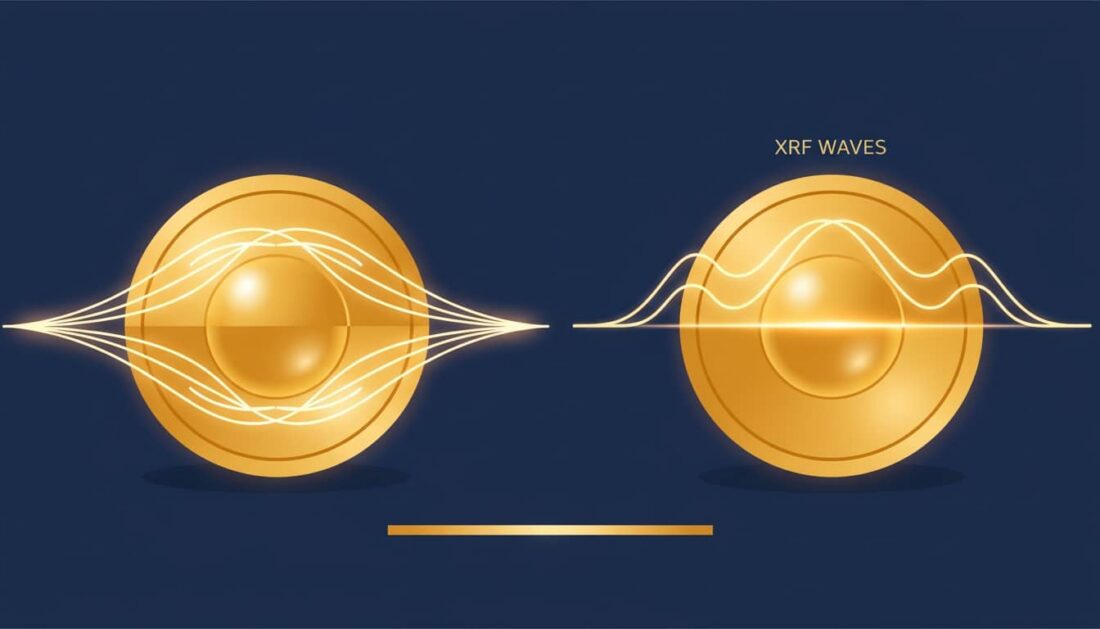
Home tests catch the vast majority of fakes. But what about the small number of better-made counterfeits that pass the basics?
That’s where electronic testing comes in — and it’s simpler than you might think.
Sigma Metalytics: The Go-To for Precious Metals Owners
The Sigma Metalytics Precious Metal Verifier is the tool that professional dealers, auditors, and even central banks rely on.
How does it work? It sends a signal through the metal and measures how the metal responds. Every type of metal — gold, tungsten, copper, silver — responds differently.
The device compares the reading to what real gold should look like and gives you a clear answer in about one second.
What makes it so useful in 2026?
- It reads through the entire coin — not just the surface — The PRO model checks both the outside and the inside at the same time. If someone wrapped a tungsten core in gold plating, the inside reading won’t match the surface — and the device flags it right away.
- It works through plastic packaging — No need to remove coins from holders, flips, or sealed cards. The signal passes right through.
- It checks weight and size automatically — The PRO version calculates whether the coin’s weight and thickness are consistent with real gold. That’s a built-in second opinion.
- Results in about one second — Place the coin, press a button, read the screen.
Is it worth owning one? If you hold a meaningful amount of physical gold and silver — or you plan to — it’s a strong tool to have on hand.
XRF Scanning: What It Does Well and Where It Falls Short
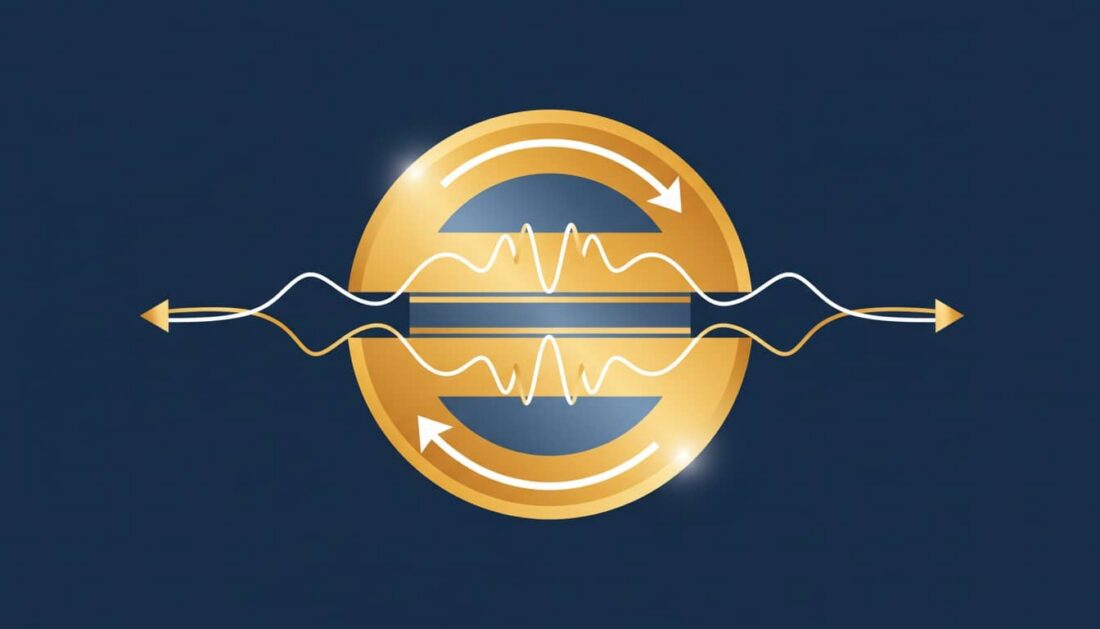
You may have heard of XRF — X-ray fluorescence. It’s the machine you’d find at a jewelry store or some coin shops.
XRF is great at one thing — telling you exactly what the surface of a metal is made of. If you want to confirm that a coin’s outer layer is 91.67% gold or 99.99% gold, XRF gives you a precise answer.
But here’s the catch.
XRF only reads the outermost layer — just a tiny fraction of the surface. What does that mean in practice?
A well-made fake with a thick gold coating over a tungsten core can look like pure gold on an XRF scan. The machine sees the gold on the surface and says “looks good.” But it can’t see what’s underneath.
That’s why more and more precious metals owners are choosing Sigma over XRF when it comes to catching the best-made fakes. Both tools have their place — but for tungsten-core counterfeits, Sigma catches what XRF can miss.
| Feature | Sigma Metalytics PMV PRO | XRF Scanner | Ultrasonic Tester |
|---|---|---|---|
| What It Measures | How metal responds to a signal (surface and core) | Surface chemical makeup | Internal metal structure |
| How Deep It Reads | Through the entire coin (up to 10mm) | Surface only (tiny fraction) | Full depth |
| Catches Tungsten Fakes | Yes | Not with thick plating | Yes |
| Works Through Packaging | Yes | No | No |
| Speed | About 1 second | 15-60 seconds | 30-60 seconds |
| Typical Cost | $700-1,500 | $15,000-50,000 | $1,000-5,000 |
| Best For | Coins and small bars | Surface purity confirmation | Large bars and hidden core issues |
Ultrasonic Testing
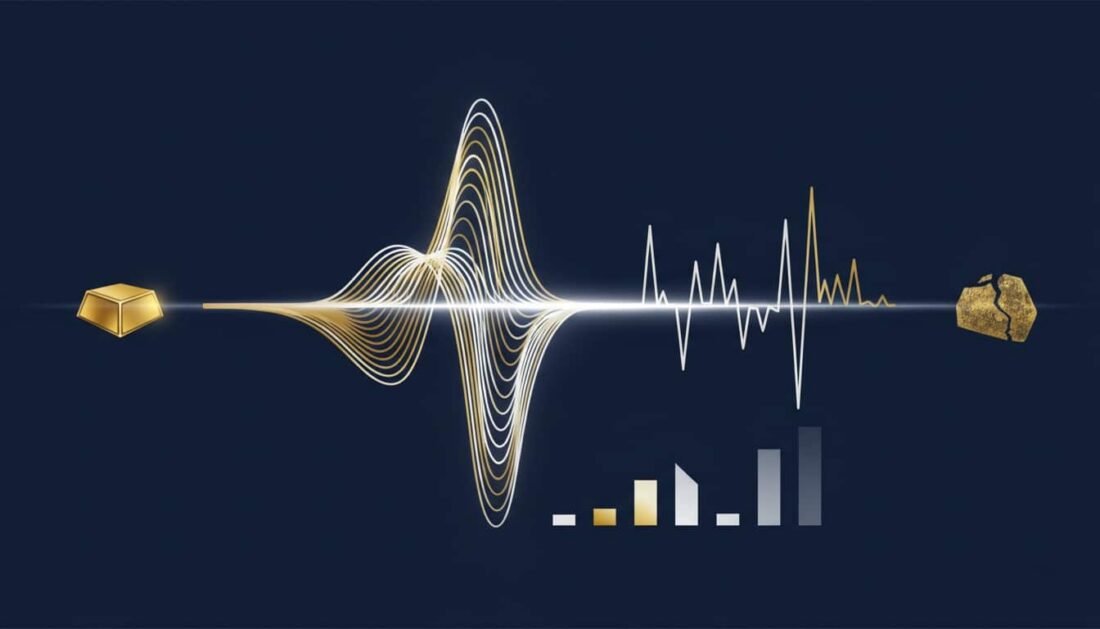
Ultrasonic testing sends sound waves through a metal piece and measures how they travel.
If there’s something inside that shouldn’t be — like a tungsten core hidden in a gold shell — the sound waves behave differently, and the test flags it.
This method works best for larger bars where other tools may not read deeply enough. If you own bars over 10 oz — or plan to — it’s worth knowing this option exists.
You’ll find ultrasonic equipment at professional dealers, refiners, and independent testing labs. It’s not a common home tool — but it’s there when you need it.
What the Mints Are Doing to Protect You
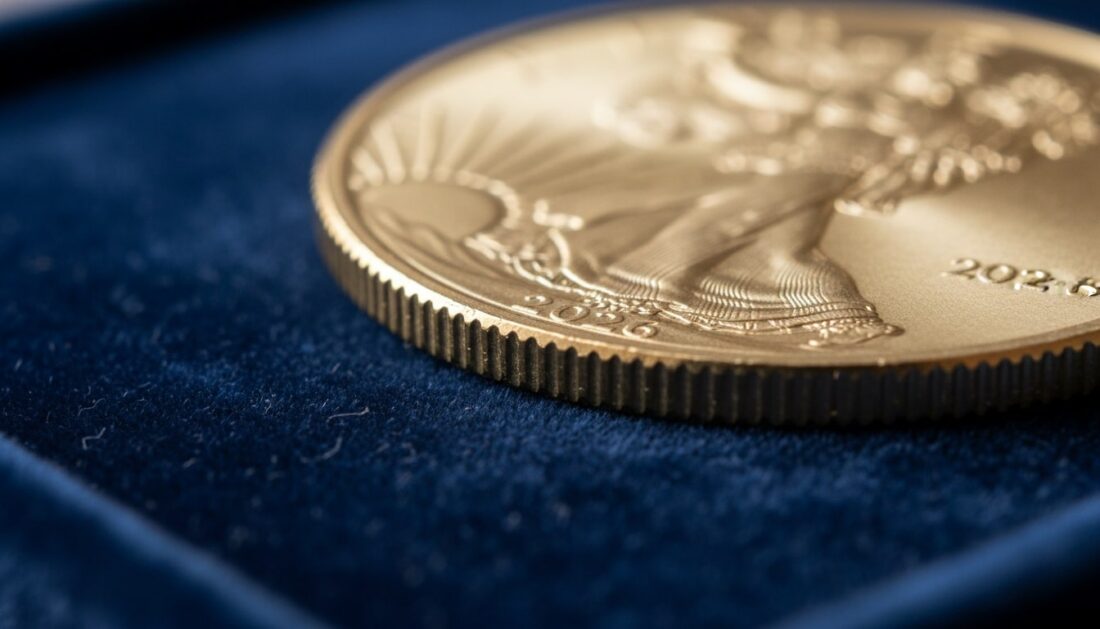
You’re not doing this alone.
The world’s major government mints are building anti-counterfeit features into every coin they produce. Knowing what those features look like gives you one more way to confirm what you’re holding.
U.S. Mint: 2026 American Eagle Security
The 2026 Gold American Eagle is one of the most recognized bullion coins in the world — and it comes with several built-in protections.
What should you look for?
- Interrupted edge reeding — Since the Type II design launched in 2021, one-ounce Gold Eagles have featured an interrupted pattern along the edge. It’s distinctly different from standard uniform reeding — and much harder to copy.
- Laser-engraved dies — For 2026, the U.S. Mint moved to laser-engraved master dies across all American Eagle varieties. The result? Sharper details. Cleaner lines. A level of precision that fakes struggle to match.
- Liberty Bell privy mark — The 2026 Proof Gold Eagles carry a special mark — a Liberty Bell with “250” — honoring the nation’s 250th anniversary. This is a one-year-only feature, which makes it an extra reference point for checking authenticity.
- Dual dating (1776-2026) — Proof editions carry dual dates for the first time in the series. Another visual detail that’s easy to check against official specs.
These are the kinds of features that make U.S.-minted coins a strong choice for long-term ownership — especially inside a Precious Metals IRA, where government-backed weight and purity standards matter.
Royal Canadian Mint: Bullion DNA Technology
The Royal Canadian Mint took things a step further with something called Bullion DNA.
Every Gold and Silver Maple Leaf features a tiny maple leaf — visible only under magnification — that’s laser-engraved into the die used to strike the coin. Inside that maple leaf are two digits showing the production year.
Each die gets registered in the Mint’s secure database. Authorized dealers can scan a coin with a special reader, and the device checks with the Mint’s servers to confirm the coin matches a real production die.
Think of it like a fingerprint. Each coin carries a unique mark that’s nearly impossible to copy.
The Maple Leafs also feature tiny grooved lines cut with extreme precision. These create a pattern that catches light differently on every single coin — not just for looks, but as another layer of protection built right in.
LBMA Good Delivery Standards for Bars
What about gold bars? If you own bars — or you’re thinking about them — the London Bullion Market Association sets the global standard for quality and authenticity.
LBMA Good Delivery bars must meet strict requirements:
- Minimum purity — 99.5% pure gold.
- Unique serial number — Stamped on each bar so it can be traced.
- Refiner’s hallmark — Identifies the producer. Only about 66 gold refiners worldwide currently hold LBMA accreditation.
- Year of manufacture — Required on all bars produced since 2019.
These are the same standards used by central banks and major buyers around the world. When you purchase from a dealer that sources from Good Delivery refiners, you’re getting a product that meets the highest recognized benchmarks.
Understanding how bar quality fits into your broader ownership picture is part of evaluating risks of precious metals ownership — and why authentication matters at every level.
Red Flags to Watch For Before You Buy
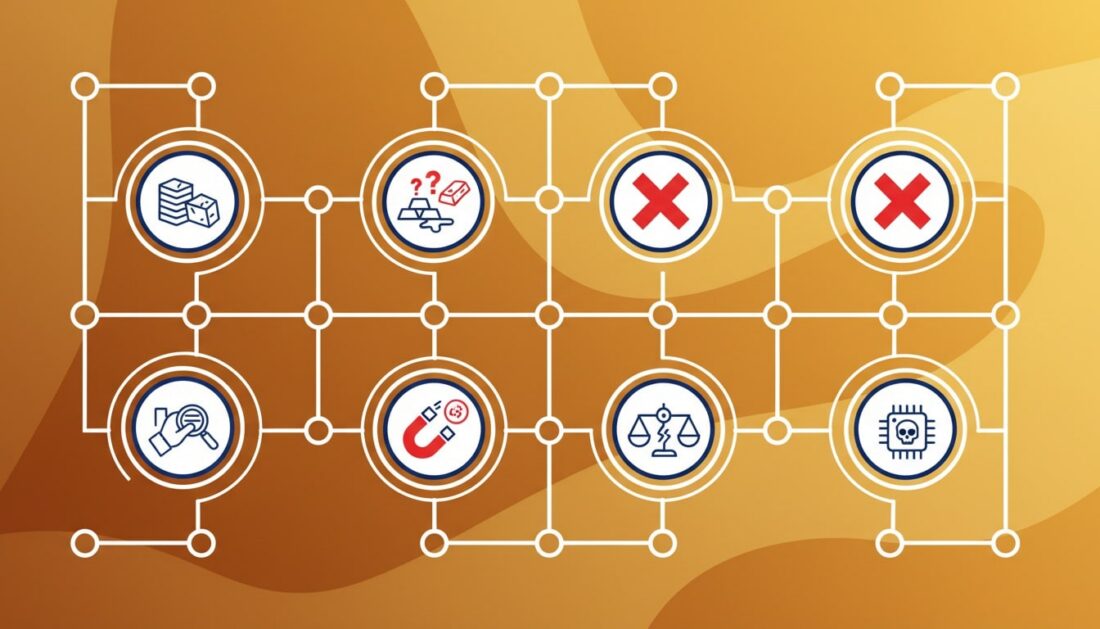
The best time to spot a problem isn’t when you’re testing at home. It’s before you make the purchase in the first place.
A few simple habits can keep you from ever needing to worry about fakes at all.
When the Price Doesn’t Add Up
Gold trades on a global spot market. Every legitimate dealer bases their pricing on that spot price plus a reasonable premium for manufacturing, distribution, and service.
So what does it mean when someone offers gold well below the going rate?
It means something’s wrong.
In 2026, premiums on common bullion coins like the Gold American Eagle typically run 3-7% above spot for individual purchases. If a one-ounce coin is priced hundreds of dollars below market — that’s not a deal. That’s a warning sign.
Other pricing red flags:
- “Liquidation” or “estate clearance” pricing from unknown online sellers — Real liquidation sales are handled through established dealers and auction houses, not random websites.
- Private sellers with limited history — You can’t test a coin through a screen. By the time it arrives, it may be too late.
- Wire transfer as the only payment option — Reputable dealers accept credit cards, checks, and more. Wire-only deals offer no recourse if something goes wrong.
When the Source Raises Questions
Where you buy matters just as much as what you buy.
No verifiable physical address? No clear return policy? No authentication guarantee? Those are signals worth paying attention to.
Reputable dealers stand behind every product they sell. They test with professional equipment. They offer clear documentation.
And they don’t need to pressure you into a quick decision — because the product speaks for itself.
If you’re working toward a Precious Metals IRA, knowing the full picture of costs helps you spot when something doesn’t add up. That’s one more reason understanding gold IRA fee structures is worth the time.
When the Product Looks Off
If you’re holding a coin or bar in person, here’s what to watch for:
- Soft or blurry details — Lettering that isn’t crisp, or surfaces that look washed out compared to official mint images.
- Seams or tiny bubbles — Signs of a cast fake rather than a coin struck by a mint.
- Wrong color or tone — Pure gold has a specific warm yellow tone. Too orange, too pale, or uneven across the surface? Worth a closer look.
- Uneven edge reeding — Real coins have uniform, precisely spaced ridges. Fakes often show shallow or irregular patterns.
- Missing or wrong hallmarks on bars — Compare against the refiner’s official hallmark design. Any mismatch is a red flag.
Knowing the right terms for what you’re looking at helps you ask better questions. Brighton’s precious metals glossary is a good place to start.
What to Do If Your Gold Fails a Test

One failed test doesn’t mean your gold is fake.
Equipment calibration, temperature, user error, and even normal manufacturing differences can all produce unexpected results. The key is to stay calm — and follow a clear process.
Step 1: Retest with a Different Method
If a coin fails the magnet test, follow up with weight and dimension checks. If the weight seems off, try the ping test.
Cross-referencing more than one test gives you a much clearer picture than any single check on its own.
Temperature matters, too. If your Sigma reading is borderline, let the coin reach room temperature and try again. Cold coins can produce readings outside normal ranges — even when the metal is real.
Step 2: Get a Professional Opinion
If more than one home test raises a concern — or if you just want peace of mind — take the piece to an established dealer or independent testing lab.
Many reputable dealers offer verification services using Sigma, XRF, or ultrasonic equipment. Some will check pieces for a small fee even if you didn’t purchase from them.
Independent testing labs can provide formal documentation of a coin or bar’s makeup. That paperwork becomes part of your ownership record — and it can be valuable for resale or insurance down the road.
Step 3: Report and Resolve If Confirmed Fake
If professional testing confirms a counterfeit, here’s what to do:
- Document everything — Photos, test results, purchase receipts, seller communications.
- Contact the seller — A reputable dealer will honor their authenticity guarantee. If the seller won’t respond or refuses a refund, that tells you something important.
- File a report with local law enforcement — Counterfeiting is a federal crime.
- Report to the U.S. Secret Service — If the item copies U.S. coinage, the Secret Service handles these cases.
- Notify industry organizations — Reporting helps protect other owners.
Here’s the reality, though. If you purchased from an established dealer, the odds of receiving a fake are extremely low. Professional dealers verify every piece with electronic equipment before it enters their records.
The 2026 Authenticity Checklist
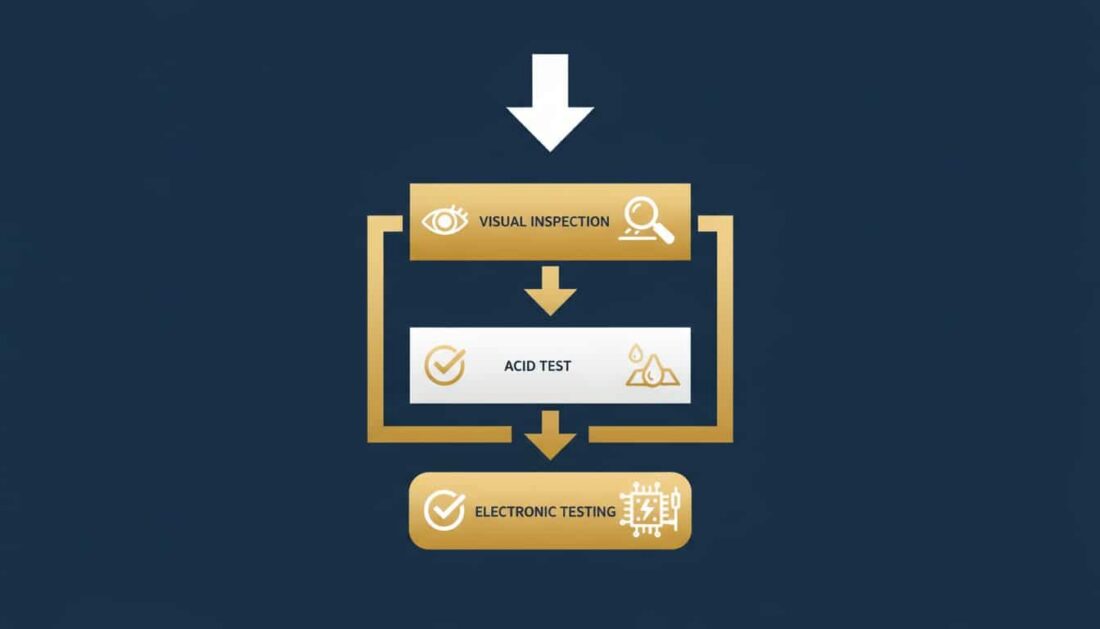
What does a complete verification process look like — start to finish?
The 7-Level Verification Hierarchy
Here’s the hierarchy experienced precious metals owners use in 2026, from quickest to most thorough:
- Level 1: Source verification — Did you buy from a reputable, established dealer? If yes, that’s your strongest protection right there. If no, work through every level below.
- Level 2: Visual inspection — Check hallmarks, design details, edge reeding, and overall finish against official mint images. Use a 10x loupe.
- Level 3: Magnet test — Quick pass or fail. If it sticks, stop — it’s not gold. If it passes, keep testing.
- Level 4: Weight and dimension check — The most revealing home test. Compare against official mint specs using a 0.01g scale and digital caliper.
- Level 5: Ping test — Listen for a clear, sustained ring. Use a smartphone app if you want a second opinion on the sound.
- Level 6: Electronic scan — Sigma Metalytics or similar. Reads through the entire piece to check that the inside matches the surface.
- Level 7: XRF or ultrasonic testing — For surface purity confirmation (XRF) or checking the internal structure of larger bars (ultrasonic).
| Verification Level | Where | Cost | Time | How Much Confidence |
|---|---|---|---|---|
| Source Verification | Before purchase | Free | N/A | Very High (reputable dealer) |
| Visual Inspection | Home | $10-20 (loupe) | 2-5 minutes | Low to Medium |
| Magnet Test | Home | $5-15 | 10 seconds | Low (catches crude fakes) |
| Weight and Dimensions | Home | $35-70 (scale + caliper) | 2-3 minutes | Medium to High |
| Ping Test | Home | Free (or app) | 30 seconds | Medium |
| Sigma Metalytics | Home or dealer | $700-1,500 (own) or small fee | 1 second | Very High |
| XRF or Ultrasonic | Dealer or lab | Professional fee | 15-60 seconds | Highest |
Most counterfeits fail at Levels 3 or 4. Better-made tungsten fakes take Level 6 or 7 to catch with certainty.
But here’s the point worth repeating — Level 1, buying from the right source, prevents more problems than all other levels combined.
What You Can Do
If you already own physical gold, running through Levels 2 through 5 takes less than ten minutes — and it costs under $100 in tools.
If you’re thinking about a first purchase — or adding to what you already own — the single best step is starting with a dealer who verifies every piece before it ships. That way, the testing has already been done for you.
Frequently Asked Questions
Can gold-plated items pass a magnet test?
Yes — if the metal underneath the plating is non-magnetic, like copper or brass, the item won’t react to a magnet at all.
That’s why the magnet test is only a starting point. It catches the cheapest fakes — the ones with steel or iron cores — but it won’t flag a copper-based counterfeit with gold plating.
Always pair it with at least one more check. Weight and dimension testing is a strong next step.
Does real gold make a specific sound when dropped?
It does — and this is the idea behind the “ping test.”
When tapped on a hard surface, genuine gold coins produce a long, clear, high-pitched ring that lasts several seconds. Fakes made from cheaper metals produce a shorter, duller thud that fades fast.
Smartphone apps can measure the sound and compare it to what real coins should sound like. They’re helpful — but things like protective capsules or the surface the coin sits on can throw off the reading.
Is the “bite test” a reliable way to check gold?
No — and it can damage your coin.
Pure gold is soft enough to show a tooth mark. But so are other soft metals like lead. More importantly, biting a coin scratches the surface and can lower its resale value.
There are much better ways to check — starting with weight and dimension verification. Why risk damaging a $5,000 coin when a $20 scale can tell you more?
What’s the difference between 24k and 22k gold coins?
24-karat gold is 99.99% pure — essentially pure gold with no added metals. The Canadian Gold Maple Leaf is the most well-known 24k bullion coin.
22-karat gold is 91.67% gold, mixed with small amounts of copper and silver for extra durability. The Gold American Eagle uses this blend. The added metals make the coin harder and more scratch-resistant.
Both are IRA-approved. Both carry full government guarantees of weight and purity.
The total gold content is the same — one troy ounce in a one-ounce coin. The 22k coin simply weighs a bit more because of the added metals.
How do I verify the serial number on a gold bar?
Every gold bar from an LBMA-accredited refiner carries a unique serial number stamped alongside the refiner hallmark, purity, and year of manufacture.
You can check this number against the refiner’s records or the certificate of authenticity from your dealer. A reputable dealer will have documentation linking your bar’s serial number to their records.
Can a fake gold coin weigh the same as a real one?
Yes — and that’s exactly why weight alone isn’t enough.
Tungsten weighs almost the same as gold. A tungsten-core fake can match the weight of a real coin nearly perfectly.
But here’s what it can’t do — match both the weight and the dimensions at the same time. If the weight is right, the thickness or diameter will be slightly off. Even fractions of a millimeter matter.
That’s why pairing a weight test with a dimension check is so effective. And for absolute certainty, electronic verification through Sigma Metalytics closes any remaining gap.
Why can’t XRF scanners catch all counterfeits?
XRF scanners read only the outermost surface of a metal — just a tiny fraction deep.
A well-made fake with thick gold plating over a tungsten core can look like pure gold on an XRF scan. The machine sees the gold on the surface but can’t see what’s underneath.
That’s why tools like the Sigma Metalytics Precious Metal Verifier — which read through the entire coin — are considered the stronger option for catching tungsten-core fakes.
What should I do if my gold fails a verification test?
First — one failed test doesn’t mean your gold is counterfeit. Equipment issues, temperature, and user error can all affect results.
Retest with a different method. If more than one test raises a concern, take the piece to a dealer or independent lab with professional equipment. Document everything along the way.
If professional testing confirms it’s fake, contact the seller, file a report with local law enforcement, and report to the U.S. Secret Service if the item copies U.S. coinage. A reputable dealer with an authenticity guarantee should resolve the issue quickly.
Conclusion
Verifying your gold in 2026 doesn’t require a chemistry degree or $50,000 worth of equipment. It takes a clear process — and the willingness to follow it.
Start with your source. A reputable dealer who tests every piece before it reaches you is your strongest defense.
Then build confidence with home checks — magnet, weight, dimensions, ping, visual inspection. For full certainty, electronic verification through Sigma Metalytics or a professional testing lab closes any remaining gap.
The goal isn’t fear — it’s confidence. Physical gold remains one of the most secure, tangible ways to preserve purchasing power. Precious metals may appreciate, depreciate, or remain unchanged depending on market conditions — but knowing how to verify what you own gives you the peace of mind that comes from being informed.
Ready to Own Gold You Can Trust?
If you’re thinking “this all makes sense, but I don’t have time to figure it out on my own,” you’re not alone. Most customers we work with felt the same way before they realized how straightforward the process can be with the right guidance.
That’s why we offer a complimentary consultation to walk you through your options — including our No Fee Precious Metals IRA, which covers custodial fees for the lifetime of the account on qualified purchases.
Our concierge service means you’ll have support at every stage of ownership — not just at the point of sale.
We’ll show you exactly:
- How the No Fee IRA works and whether you qualify
- The difference between U.S.-minted coins and foreign alternatives
- What to expect from the purchasing and delivery process
- How to roll over or transfer existing retirement funds
- What ongoing support looks like after your purchase
Learn About the No Fee IRA — no obligation, just actionable insights you can use whether you work with us or not.
Every coin and bar Brighton delivers has been verified with professional-grade equipment before it ships — because confidence in what you own starts with confidence in where you buy.