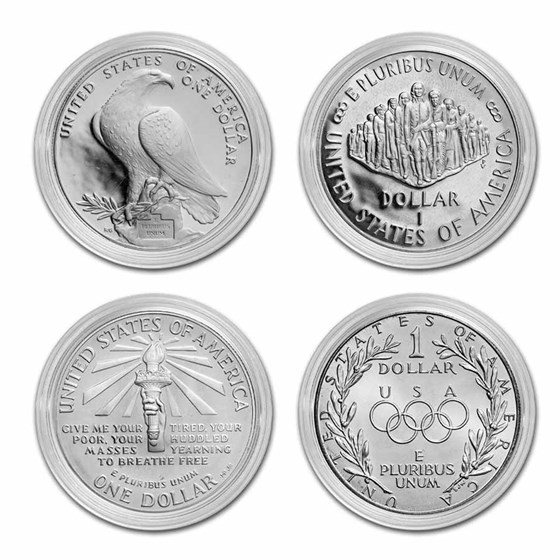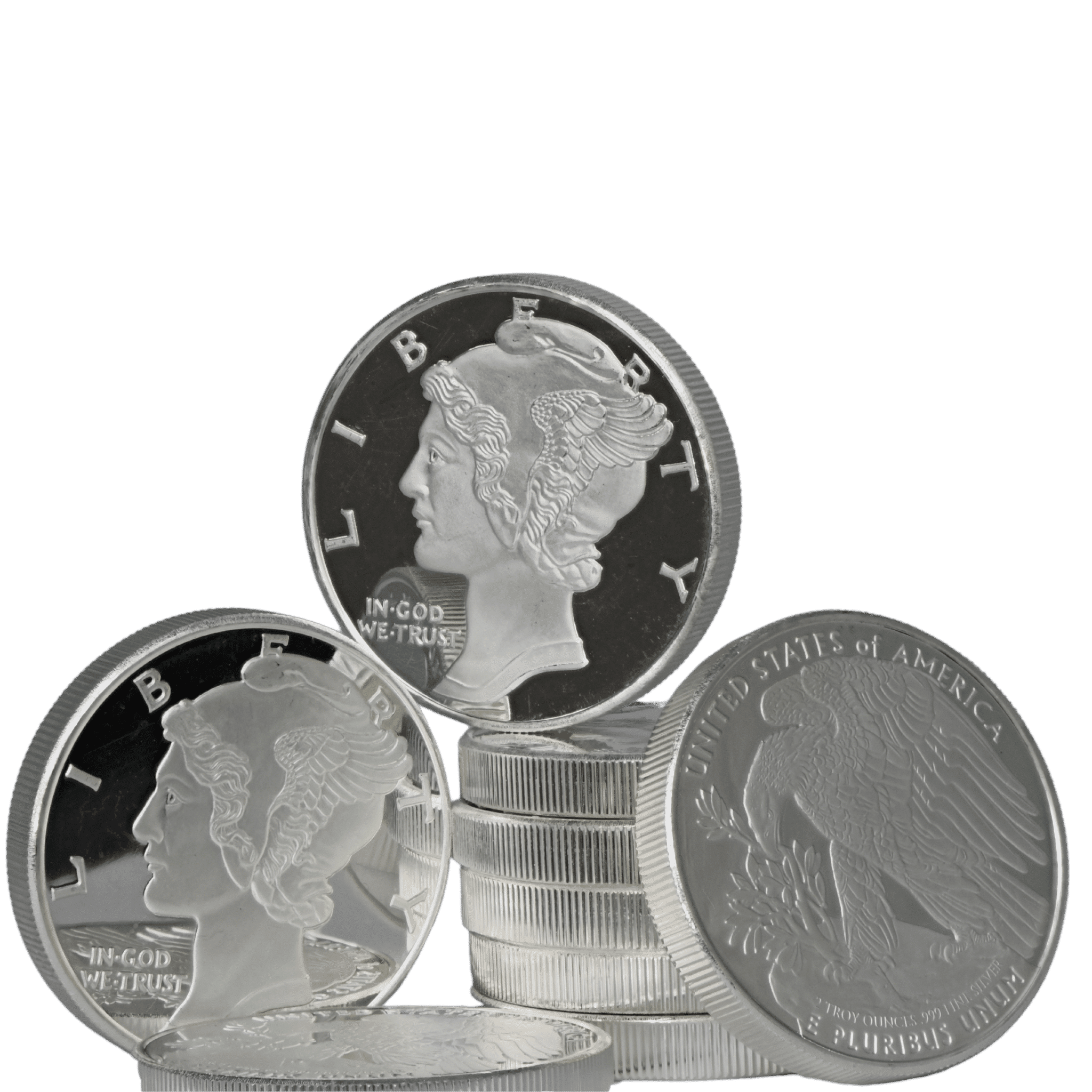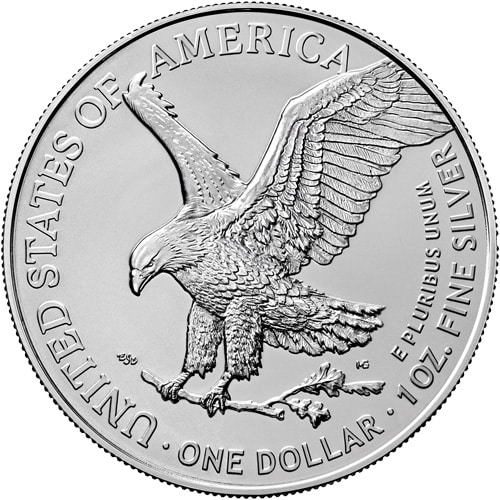
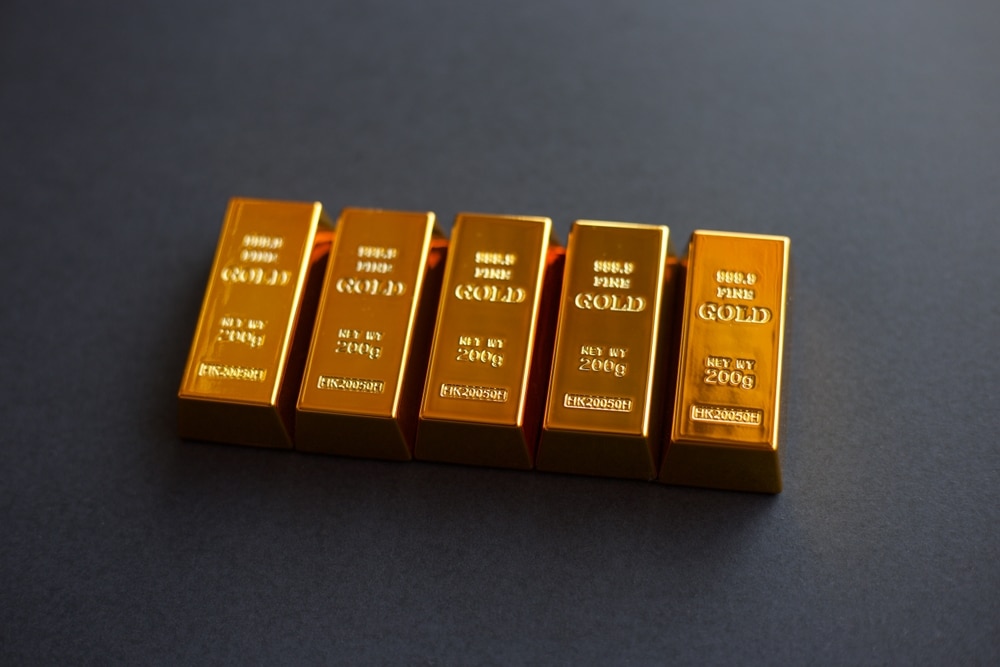
Gold just had one of its most telling weeks in recent memory—and not for the reasons mainstream financial media would have you believe. A flurry of critical developments—from Fidelity’s bold $4,000 gold forecast to clear cracks in the U.S. labor market and persistent inflation—has shaken the complacency that’s gripped markets for months. The message is simple: the system is wobbling, and physical assets like gold and silver are stepping forward as anchors of stability. At Brighton Enterprises, we believe this moment demands not just attention, but preparation.
A Volatile Week in Review: Gold Responds to Market Shifts
Monday – July 28, 2025:
Gold stumbled out of the gate as the U.S. dollar firmed and Treasury yields climbed. The catalyst? A new trade deal between the U.S. and the EU, imposing 15% tariffs on a wide range of European exports, including autos. That buoyed the dollar and pushed gold down $27.50 to $3,307.90. Meanwhile, silver held steady.
Tuesday – July 29, 2025:
As the Fed’s meeting kicked off, Fidelity stole the spotlight with a forecast that gold could reach $4,000 by 2026. August gold gained $13.10, closing at $3,323.00. The narrative is shifting from “if” to “when,” and institutions are no longer on the sidelines.
Wednesday – July 30, 2025:
Gold and silver retreated after stronger-than-expected GDP data (3% annualized growth). Gold dropped $26.20 to $3,354.70, silver lost $0.531. While headlines cheered, seasoned market participants recognize this data delays, not prevents, a dovish turn.
Thursday – July 31, 2025:
Profit-taking and futures pressure sent gold lower by $4.70 to $3,348.10. Silver was hit harder, falling to a four-week low at $36.69 after Trump’s surprise tariff exemption on refined copper triggered a copper selloff that spilled into other metals.
Friday – August 1, 2025:
The July jobs report was a wake-up call: only 73,000 jobs added vs. 106,000 expected, with a massive 258,000 in downward revisions to May and June. Gold surged $48.60 to $3,397.20. The softening labor market now points firmly toward rate cuts.
Cracks in the Labor Market: Gold Surges on Weak Jobs Data
Friday delivered one of the clearest signs yet that the U.S. economy may be cooling faster than many anticipated—and gold responded with authority. Spot prices jumped 1.3% to $3,333.25 an ounce as the July jobs report missed expectations by a wide margin, and previous months were sharply revised downward.
The U.S. added just 73,000 jobs in July, far below the 106,000 expected. But the real shock came from the revisions: May and June job gains were slashed by a combined 258,000. June’s final figure now stands at just 14,000 jobs added; May, 19,000. That’s not just a miss—it’s a message. The narrative of labor strength has been built on unstable ground.
The unemployment rate ticked up to 4.2%, and while that number met expectations, the broader trend now signals a weakening job market. These figures aren’t just numbers—they’re evidence that the foundation of the post-pandemic recovery may be cracking.
Gold’s sharp rally wasn’t a knee-jerk reaction. It was a realignment. Market participants, recognizing the implications of these job numbers, began pricing in slower economic growth, a softer dollar, and rising odds of a Federal Reserve pivot. If rate cuts materialize sooner than expected, gold stands to benefit further.
This isn’t just a one-day event. It’s a structural development that confirms what many of us have seen coming: debt, inflation, and now employment instability are converging to form a new economic reality. In such a climate, owning physical gold and silver isn’t optional—it’s essential.
Demand Dynamics: Retail Resurgence and Institutional Momentum
Gold demand in the second quarter of 2025 is sending a powerful message—one that defies conventional assumptions about pricing, timing, and market psychology. According to the World Gold Council, global demand climbed 3% year-over-year to 1,249 tonnes. That’s no small feat, especially considering prices are hovering near historic highs.
The most striking development is the surge in physical gold acquisitions by everyday people. Bar and coin demand hit a decade-high for the first half of the year, as more Americans, Europeans, and Asians alike turned toward tangible assets in a world where liquidity and trust are rapidly eroding. Exchange-traded funds (ETFs) linked to gold saw a stunning 170 tonnes of inflows—marking the return of serious capital to the gold-backed asset class.
Chinese demand in particular jumped 44% year-over-year, underscoring gold’s cross-cultural role as a stabilizing force in uncertain times. Meanwhile, Western market participants—who briefly flirted with tech stocks and crypto as stores of value—are now returning to gold-backed ETFs and physical holdings, signaling a more sober assessment of risk and resilience.
While central bank purchases eased slightly in Q2—down 21% YoY—they still clocked in at 166 tonnes, a robust number relative to historical averages. The slowdown is not abandonment; it’s a pause before the next phase of strategic accumulation. Long-term central bank trends remain clear: diversify away from the dollar, reduce exposure to debt-laden sovereigns, and build reserves in real money.
This resurgence is not just about price—it’s about principle. People are no longer chasing highs. They’re building foundations.
Sticky Inflation, Solid Gold
If you’re waiting for inflation to “come down” before considering gold, you may already be behind the curve. June’s PCE inflation data, the Federal Reserve’s preferred metric, came in with little surprise: core inflation rose 0.3% month-over-month and hit 2.8% annually—just above expectations. Headline inflation matched the previous month at 2.6%.
But beneath the surface, something more significant is brewing. Personal income rose modestly (+0.3%) while personal spending actually slowed (+0.3% vs. 0.4% forecast), suggesting that households are beginning to tighten their belts in response to high living costs. These aren’t just data points—they’re signals of fatigue in the consumer engine that’s long propped up the U.S. economy.
And how did gold respond? With quiet strength. Spot prices rose 1% to $3,307.80, despite the lukewarm inflation data. That resilience is telling. It suggests that the gold market is no longer reacting to every CPI or PCE print—but is instead being driven by a broader understanding of what’s coming: a softening economy, sticky inflation, and a central bank increasingly boxed in by political and fiscal pressures.
In short, the Fed’s elusive 2% inflation target remains just that—elusive. And gold’s steady gains in the face of this economic muddle are proof that people are positioning for what’s next, not what’s past. The yellow metal isn’t just reacting—it’s forecasting.
Fidelity’s $4,000 Forecast: A Glimpse Into Gold’s Future
Fidelity International made headlines this week with its bold—but well-supported—forecast that gold could reach $4,000 per ounce by 2026. The core of their thesis is one Brighton Enterprises has long held: the financial scaffolding of the global economy is crumbling under its own weight.
According to Fidelity’s head of macro strategy, the call is grounded in three major forces: an increasingly dovish Federal Reserve, a weakening U.S. dollar, and unwavering central bank gold demand. These aren’t minor market fluctuations. They are tectonic shifts—ones that Fidelity and Goldman Sachs both agree point toward a dramatic repricing of gold over the next 12 to 24 months.
Some portfolios have already doubled their previous gold allocations, and it’s not because these firms expect chaos tomorrow. It’s because they recognize a fundamental truth: the debt-fueled system can only bend so far before breaking. And when the reckoning comes, those with tangible assets will stand on firmer ground.
History supports this. Between 2001 and 2011, gold prices rose over 500% as low interest rates, global conflict, and currency instability drove demand. The same forces are now back in motion—alongside new ones like de-dollarization, CBDC implementation, and supply chain disruptions.
Fidelity’s $4,000 target isn’t a gamble. It’s a warning shot across the bow of conventional finance. As market participants search for value in a landscape of uncertainty, they’re rediscovering what we at Brighton have always known: physical gold isn’t a hedge—it’s a cornerstone.
Next Week’s Key Events: Economic Calendar & Precious Metals Outlook
Economic Calendar: August 4 – August 8, 2025
Monday, August 4
None scheduled
Tuesday, August 5
- 9:45 AM ET – S&P Final U.S. Services PMI (July)
- 10:00 AM ET – ISM Services Index (July)
Wednesday, August 6
None scheduled
Thursday, August 7
- 8:30 AM ET – Initial Jobless Claims (Week Ending August 2)
- 10:00 AM ET – Speech: Atlanta Fed President Raphael Bostic
- 3:00 PM ET – Consumer Credit Report (June)
Friday, August 8
None scheduled
What This Means for Precious Metals
- S&P Final U.S. Services PMI:
A strong reading may suggest economic resilience and temporarily reduce demand for safe-haven metals. A weak reading would reinforce gold’s defensive appeal.
- ISM Services Index:
If this data shows contraction, it could fuel safe-haven buying. Conversely, a robust print might stall upward momentum in gold and silver.
- Initial Jobless Claims:
Rising claims support gold and silver, signaling labor market weakness. Lower claims could create short-term headwinds for metals.
- Atlanta Fed President Bostic Speech:
A dovish tone could ignite further metals buying. Hawkish remarks may momentarily cap gains.
- Consumer Credit:
Soaring credit may hint at overextended households and short-term consumer confidence. A decline could imply growing caution and support precious metals.
Final Thoughts & Call to Action
The week ahead offers clarity, but the trend is already set: gold is rising not because markets are panicking, but because the fundamental drivers are strengthening. In a world increasingly reliant on monetary expansion and digital dependencies, the timeless value of physical gold and silver shines even brighter.
At Brighton Enterprises, we believe in owning assets you can hold—outside the system, above the noise. If you’re ready to learn more about protecting your purchasing power and building lasting wealth through physical metals, visit brightongold.com or call us at 844-459-0042.
We are not financial advisors. This content is for informational purposes only and should not be construed as financial advice. Please consult with a licensed professional for personalized guidance. This publication adheres to all SEC laws, rules, and guidelines.