
If you’ve ever wondered whether there’s a way to hold real, physical gold inside your retirement account—there is.
It’s called a self-directed IRA.
A self-directed IRA (SDIRA) is a type of individual retirement account that lets you own physical gold, silver, platinum, and palladium. You’re not limited to what a brokerage offers. You get to choose tangible assets—real metal you actually own—while still getting the tax advantages of a traditional retirement account.
Here’s the short version: you need an IRS-approved custodian to manage the account and an approved depository to store the metals. You can’t keep IRA-owned gold at home. That’s one of the most common misconceptions out there—and it can cost you thousands in taxes and penalties if you get it wrong.
Why do people explore this option? Because they want something real. Something they can hold. Something that isn’t dependent on paper promises or tied to what happens on Wall Street.
Physical gold and silver have held value for thousands of years. And when you hold them inside a retirement account, you get both the stability of tangible ownership and the tax benefits that come with an IRA.
In 2026, the IRS contribution limits for IRAs are $7,500—or $8,600 if you’re 50 or older. If you’re thinking about establishing a precious metals IRA, understanding how these accounts work is the first step toward making a confident decision.
This guide walks you through everything: IRS rules, custodian requirements, approved metals, storage options, and how to get started.
How a Self-Directed IRA Differs from a Traditional IRA
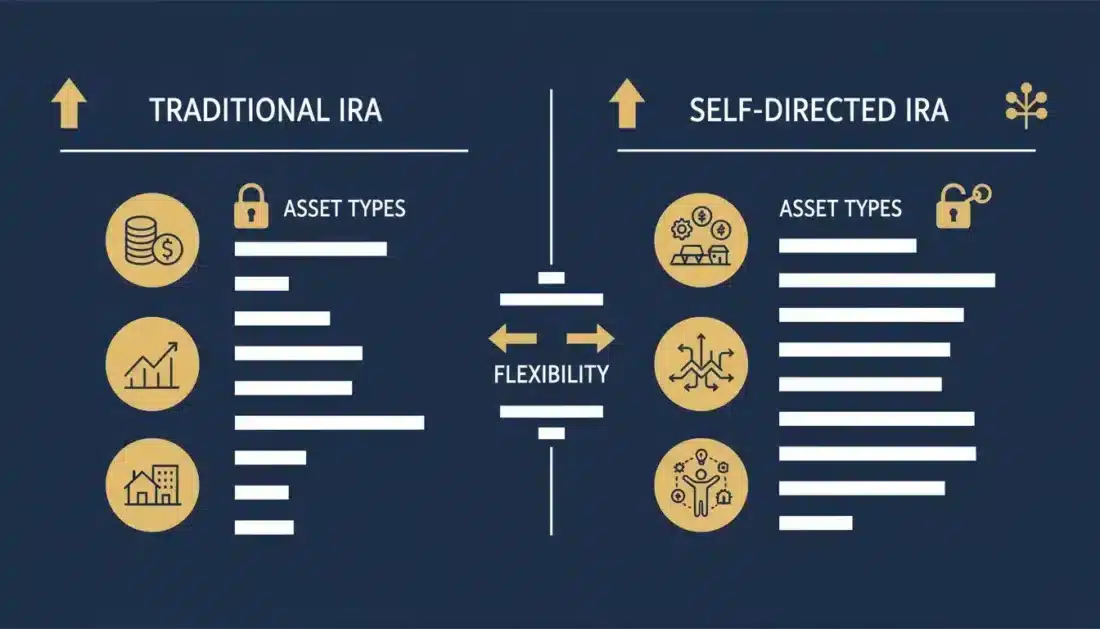
So what’s the actual difference between these two account types?
A traditional IRA—the kind most brokerages offer—limits you to the products that institution sells. That usually means paper-based options like mutual funds, ETFs, and certificates of deposit.
A self-directed IRA removes those restrictions.
It’s governed by the same IRS rules. You get the same tax treatment. But it lets you hold a broader range of things—including physical precious metals.
What You Can Hold in a Self-Directed IRA
The IRS permits several alternative options inside an SDIRA:
- Physical precious metals — Gold, silver, platinum, and palladium that meet IRS purity standards
- Real estate — Rental properties, commercial buildings, raw land
- Private equity — Ownership stakes in private companies
- Private lending — Notes and loans secured by other holdings
- Cryptocurrency — Digital assets (with the right custodian)
For customers focused on wealth preservation and tangible ownership, physical precious metals remain the most popular SDIRA choice.
The Tax Treatment Stays the Same
Whether you choose a Traditional SDIRA or a Roth SDIRA, the tax rules mirror standard IRAs.
With a Traditional SDIRA, your contributions may be tax-deductible depending on your income. Your metals grow tax-deferred. You pay taxes when you take distributions in retirement.
With a Roth SDIRA, contributions are made with after-tax dollars. But qualified distributions—including any gains—are completely tax-free.
The main difference isn’t how it’s taxed. It’s what you’re allowed to own.
| Feature | Traditional Brokerage IRA | Self-Directed IRA |
|---|---|---|
| What You Can Own | What the brokerage offers | Expanded options including physical precious metals, real estate, private equity |
| Tax Treatment | Tax-deferred (Traditional) or Tax-free (Roth) | Tax-deferred (Traditional) or Tax-free (Roth) |
| Custodian Type | Brokerage firm | Specialized SDIRA custodian |
| Physical Metals | Not permitted | Permitted (with approved storage) |
| Control | Limited to provider’s offerings | You choose the specific products |
IRS Rules for Holding Precious Metals in an IRA

The IRS has specific rules about what precious metals qualify—and how they must be handled.
Getting this right protects your account’s tax-advantaged status. Getting it wrong can mean taxes, penalties, and a disqualified account.
These regulations fall under Internal Revenue Code Section 408(m), which defines collectibles and carves out exceptions for certain precious metals.
Purity Standards for IRA-Approved Metals
The IRS requires minimum fineness levels for each metal:
- Gold — Must be at least 99.5% pure (.995 fineness)
- Silver — Must be at least 99.9% pure (.999 fineness)
- Platinum — Must be at least 99.95% pure (.9995 fineness)
- Palladium — Must be at least 99.95% pure (.9995 fineness)
There’s one notable exception. American Gold Eagle coins contain 91.67% gold (22 karat)—but they’re specifically approved by the IRS because they’re minted by the U.S. Treasury. The Taxpayer Relief Act of 1997 expanded IRA eligibility to include these coins alongside higher-purity options.
Approved Precious Metals Products
Not every gold coin or bar qualifies. The IRS permits specific products from government mints and accredited refiners:
- U.S. Mint Products — American Gold Eagles (bullion and proof), American Silver Eagles, American Gold Buffalos, American Platinum Eagles
- Foreign Government Coins — Canadian Maple Leafs, Austrian Philharmonics, Australian Kangaroos/Nuggets, British Britannias
- Bullion Bars — From COMEX, NYMEX, LBMA, or ISO 9000-certified refiners with proper hallmarks showing weight, purity, and refiner identification
Proof coins must be in original mint packaging with certificates of authenticity. Non-proof coins must be in brilliant uncirculated condition.
What’s NOT Allowed in an IRA
The IRS specifically prohibits collectibles. That includes:
- Numismatic or rare coins graded for condition
- Jewelry and decorative gold items
- Pre-1933 gold coins (unless they meet purity requirements)
- South African Krugerrands (they don’t meet the 99.5% gold standard)
- Privately minted rounds that lack proper certification
If you purchase metals that don’t meet IRS standards, the acquisition is treated as a taxable distribution. That means income taxes—and potentially a 10% early withdrawal penalty if you’re under 59½.
| Metal | Minimum Purity | Popular IRA-Approved Products |
|---|---|---|
| Gold | 99.5% (.995) | American Gold Eagle*, American Gold Buffalo, Canadian Maple Leaf, Austrian Philharmonic |
| Silver | 99.9% (.999) | American Silver Eagle, Canadian Silver Maple Leaf, Austrian Silver Philharmonic |
| Platinum | 99.95% (.9995) | American Platinum Eagle, Canadian Platinum Maple Leaf, Australian Platinum Koala |
| Palladium | 99.95% (.9995) | Canadian Palladium Maple Leaf |
*American Gold Eagles are 91.67% pure but specifically exempted by IRS rules.
The Role of Custodians in a Precious Metals IRA

You can’t simply buy gold coins and drop them into your IRA. The IRS requires a third-party custodian to hold and manage the account.
This is where the term “self-directed” can be a bit misleading.
You direct the purchases. You choose the metals. But the custodian handles the legal and administrative responsibilities that keep everything compliant.
What a Custodian Does
An IRS-approved custodian performs several critical functions:
- Account administration — Opens and maintains your SDIRA, processes contributions, handles paperwork
- IRS reporting — Files required forms, including annual account valuations and distribution reporting
- Transaction processing — Executes your purchase and sale instructions with precious metals dealers
- Depository coordination — Arranges storage at an approved facility and maintains records of your holdings
- Compliance oversight — Ensures your account follows IRS regulations to maintain tax-advantaged status
The custodian doesn’t give financial advice or recommend specific metals. They’re a neutral administrator—required by law to execute your instructions while keeping everything compliant.
Choosing the Right Custodian
Not all custodians work with precious metals. Most major brokerages don’t offer physical gold as an option. You’ll need a custodian that specializes in self-directed accounts.
When evaluating custodians, here’s what to look for:
- Experience with precious metals IRAs — Look for established track records, not newcomers
- Fee structure — Compare setup fees, annual maintenance fees, and transaction fees
- Depository relationships — Confirm they work with reputable, IRS-approved storage facilities
- Customer service — Responsiveness matters when you’re ready to make purchases or have questions
- Transparency — Clear fee disclosures without hidden charges
Reputable SDIRA custodians include Equity Trust Company, STRATA Trust Company, and similar specialized firms. They don’t sell metals or earn commissions on your purchases—their revenue comes from account administration fees.
Storage Requirements: Depositories and Your Options

Here’s something that surprises a lot of people: you can’t store IRA-owned precious metals at home.
Not in your safe. Not in a safe deposit box at your local bank. Not anywhere you personally control.
The IRS requires all IRA metals to be held at an approved depository—a specialized facility designed for secure storage of valuable holdings.
Why Home Storage Isn’t Allowed
The IRS views personal possession of IRA holdings as a taxable distribution. If you take your gold home, you’ve effectively “distributed” it to yourself—even if you intend to keep it for retirement.
The consequences can be severe:
- The entire value of the metals becomes taxable income
- If you’re under 59½, a 10% early withdrawal penalty applies
- Your IRA could be disqualified entirely—making the full account balance taxable
In the McNulty v. Commissioner case (2021), a couple stored their IRA coins at home and faced over $300,000 in taxes and penalties on a $730,000 account. The Tax Court ruled decisively against the “home storage” approach.
Despite misleading advertisements you may have seen, there’s no legal workaround. The IRS has specifically warned taxpayers to be wary of anyone claiming precious metals in an IRA can be stored at home.
Segregated vs. Non-Segregated Storage
When your metals arrive at an approved depository, you’ll choose between two storage methods:
- Segregated storage — Your specific coins and bars are kept separate from other customers’ metals. When you take a distribution, you receive the exact items you purchased. This option typically costs more—around $150–$300 annually.
- Non-segregated (commingled) storage — Your metals are stored with those of other account holders in a shared vault space. You own a specific quantity and type, but not specific serial-numbered items. This option is more affordable—often $100–$150 annually.
For customers who want certainty about receiving their exact metals upon distribution, IRS-approved gold storage in a segregated format offers that peace of mind.
Major IRS-Approved Depositories
Several facilities meet IRS requirements for storing retirement-account metals:
- Delaware Depository — Located in Wilmington, DE; one of the most widely used facilities
- Brink’s Global Services — International security company with vault locations nationwide
- Texas Precious Metals Depository — Located in Shiner, TX; offers both segregated and allocated storage
These depositories provide 24/7 security, comprehensive insurance coverage, and regular audits. They’re bonded and insured against theft, fire, and natural disasters.
How to Open a Self-Directed Gold IRA

The process is more straightforward than most people expect.
With the right guidance, many customers complete the entire setup within one to two weeks. Here’s how it works.
Step 1: Select Your Custodian
Start by choosing an IRS-approved custodian that specializes in self-directed IRAs and permits precious metals. Research their fee structure, depository relationships, and customer reviews.
Most custodians let you open an account online. You’ll provide basic information: name, address, Social Security number, and beneficiary designations.
Setup fees typically range from $50 to $100.
Step 2: Fund Your Account
You’ve got three options for putting money into your new SDIRA:
- Contribution — Add new funds up to the annual limit ($7,500 for 2026, or $8,600 if you’re 50+)
- Transfer — Move funds directly from an existing IRA to your new SDIRA. This is a trustee-to-trustee transfer with no tax consequences and no 60-day deadline.
- Rollover — Move funds from a 401(k), 403(b), TSP, or other qualified retirement plan. A direct rollover avoids taxes entirely. With an indirect rollover, you have 60 days to deposit the funds or you’ll face taxes and penalties.
If you’re executing a precious metals IRA rollover, a direct transfer is the safest approach. The funds move between custodians without ever touching your hands.
Step 3: Purchase IRS-Approved Metals
Once your account is funded, you’ll work with a precious metals dealer to select your gold, silver, platinum, or palladium. The dealer should understand IRA requirements and only offer products that meet IRS purity standards.
You’ll instruct your custodian to purchase the metals on behalf of your IRA. The custodian sends payment to the dealer, and the dealer ships the metals directly to your chosen depository.
Popular choices for IRA customers include American Gold Eagles, American Silver Eagles, Canadian Maple Leafs, and qualifying bullion bars from accredited refiners. If you’re interested in acquiring U.S.-minted gold coins, the American Gold Eagle remains the most recognized option.
Step 4: Arrange Depository Storage
Your custodian will coordinate shipping to an IRS-approved depository. You’ll select segregated or non-segregated storage based on your preferences and budget.
The depository confirms receipt, and your custodian updates your account records to reflect your holdings. From there, you’ll receive periodic statements showing your metals’ value based on current market prices.
| Step | Action | Typical Timeline |
|---|---|---|
| 1 | Select and apply with custodian | 1–2 business days |
| 2 | Fund account (transfer or rollover) | 5–10 business days |
| 3 | Purchase approved precious metals | 1–3 business days |
| 4 | Metals shipped to depository | 1–5 business days |
| Total | Account fully established | 2–3 weeks |
Understanding Gold IRA Fees and Costs
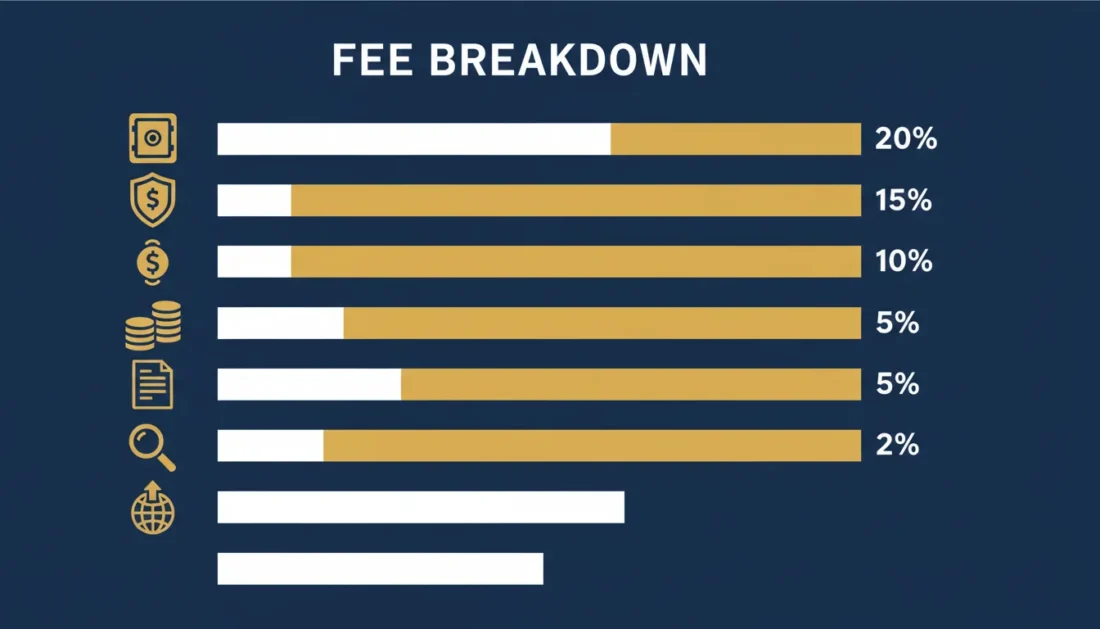
Precious metals IRAs involve fees that standard brokerage IRAs don’t. Understanding these costs upfront helps you plan appropriately.
Here’s the good news: most fees are flat-rate charges that don’t scale with your account size. That means the larger your holdings, the smaller the percentage those fees represent.
One-Time Setup Costs
When you open a new precious metals IRA, expect these initial charges:
- Account setup fee — $50 to $100 (covers application processing and account creation)
- Wire transfer fee — $25 to $35 (if funding by wire)
- Rollover processing — Often free for direct trustee-to-trustee transfers
Some custodians waive setup fees for larger initial purchases. It’s worth asking.
Annual Ongoing Fees
Each year, you’ll pay for account maintenance and storage:
- Annual maintenance fee — $75 to $300 (covers recordkeeping, IRS reporting, and account administration)
- Storage fee — $100 to $300 (varies by depository and storage type)
- Insurance — Usually included in storage fees, but verify with your custodian
For most customers, total annual fees fall between $200 and $400. That’s a known, predictable cost—unlike percentage-based fees that grow as your account grows.
Transaction Fees
When you purchase or sell metals, some custodians charge per-transaction fees:
- Purchase transaction — $25 to $100 per transaction
- Sale/liquidation — $25 to $100 per transaction
- Shipping to depository — Typically included in dealer pricing
A few custodians—like GoldStar Trust—don’t charge transaction fees for precious metals purchases. Compare fee structures before committing.
What About Dealer Markups?
In addition to custodian fees, you’ll pay a premium over the spot price when purchasing metals. This markup covers the dealer’s costs for sourcing, handling, and distributing the products.
Premiums vary by product type:
- Bullion bars — Lower premiums (typically 3%–5% over spot)
- Government-minted coins — Moderate premiums (5%–10% over spot)
- Proof coins — Higher premiums (can exceed 20% over spot)
Stick with bullion coins and bars rather than proof or collectible items. They offer better value for retirement savings.
2026 Contribution Limits and Tax Considerations
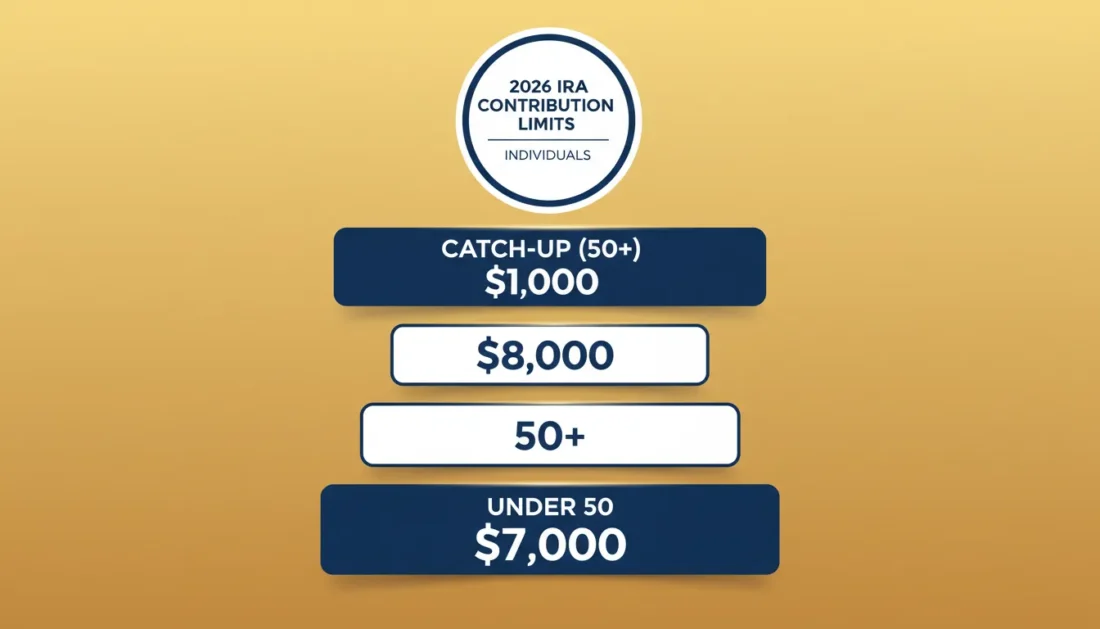
The IRS adjusts contribution limits annually for inflation. Knowing the 2026 numbers helps you maximize your retirement savings.
Contribution Limits for 2026
For self-directed IRAs (both Traditional and Roth), the limits are:
- Under age 50 — $7,500 maximum annual contribution
- Age 50 and older — $8,600 maximum (includes $1,100 catch-up contribution)
These limits apply to the total of all your IRA contributions combined. If you have both a Traditional IRA and a Roth IRA, your combined contributions can’t exceed these amounts.
For Roth SDIRA contributions, income limits apply:
- Single filers — Phase-out begins at $153,000 MAGI; no contributions above $168,000
- Married filing jointly — Phase-out begins at $242,000 MAGI; no contributions above $252,000
Traditional SDIRA contributions have no income limits, but deductibility may be reduced if you’re covered by a workplace retirement plan.
Rollovers Have No Limit
If you’re moving funds from an existing 401(k), 403(b), TSP, or IRA into your precious metals SDIRA, there’s no limit on the amount.
Rollovers and transfers aren’t considered contributions—they’re simply repositioning existing retirement funds.
That’s why many customers fund their gold IRAs through rollovers from previous employer plans rather than annual contributions.
Tax Treatment Comparison
| Account Type | Contributions | Growth | Distributions |
|---|---|---|---|
| Traditional SDIRA | Tax-deductible (if eligible) | Tax-deferred | Taxed as ordinary income |
| Roth SDIRA | After-tax (no deduction) | Tax-free | Tax-free (if qualified) |
With a Traditional SDIRA, you may reduce your taxable income now and pay taxes later in retirement. With a Roth SDIRA, you pay taxes upfront but enjoy tax-free distributions—including any appreciation in your metals’ value.
The right choice depends on your current tax bracket, expected retirement income, and personal preferences. A CPA or tax professional can help you evaluate both options for your specific situation.
Common Concerns and Misconceptions

Several myths circulate about precious metals IRAs. Let’s address them directly so you can make decisions based on facts—not misunderstandings.
“Gold IRAs Have High Fees”
It’s true that precious metals IRAs have fees standard brokerage IRAs don’t—custodian fees, storage fees, and transaction fees.
But here’s the context.
Annual fees for a precious metals IRA typically run $200 to $400 total. For a $50,000 account, that’s 0.4% to 0.8% annually. For a $100,000 account, it’s 0.2% to 0.4%.
Compare that to actively managed mutual funds with expense ratios of 0.5% to 1.5%—on top of any advisory fees you might pay. The “high fee” concern often comes from unfamiliarity rather than reality.
The key is working with custodians that charge flat fees rather than percentage-based fees that scale with your account value.
“You Can Store IRA Gold at Home”
This is categorically false—and potentially expensive if you believe it.
Despite aggressive marketing from some companies promoting “home storage” or “checkbook” IRAs, the IRS has clearly stated that IRA precious metals must be held by an IRS-approved custodian and stored at an approved depository.
Taking possession of IRA metals is treated as a distribution. That means taxes, potential penalties, and loss of your account’s tax-advantaged status.
The Tax Court has ruled against taxpayers who attempted home storage. Don’t risk your retirement savings on a scheme the IRS has explicitly rejected.
“Gold Doesn’t Generate Income”
This is accurate—physical gold doesn’t pay dividends or interest. But that’s not why people hold it.
Precious metals serve a different purpose in retirement planning. They’re held for wealth preservation, purchasing power protection, and as a counterweight to paper-based holdings that can lose value during market downturns or inflationary periods.
Gold’s value lies in its stability and tangibility—not income generation. Many customers allocate 5% to 15% of their retirement holdings to precious metals as part of a balanced approach, keeping the remainder in income-producing options.
“The Process Is Too Complicated”
Opening a precious metals SDIRA is actually straightforward.
Choose a custodian. Complete an application. Fund the account. Select your metals. Arrange storage.
With the right guidance, most customers complete the entire process in two to three weeks. The custodian and dealer handle the logistics—you just make the decisions.
If you’re unsure where to start, speaking with a knowledgeable precious metals specialist can clarify your options and answer specific questions about determining gold allocation for retirement.
Why Customers Choose Physical Gold for Retirement
Why do people choose physical precious metals for their retirement accounts?
It comes down to a few key reasons—and understanding them helps clarify whether this approach fits your goals.
Tangible Ownership
When you hold physical gold in your IRA, you own real metal—not a paper claim, not a derivative, not an electronic promise.
That gold exists in a vault with your name on it (or a quantity allocated to your account). You can eventually take physical possession of it when you reach retirement age. It’s a tangible holding in an increasingly digital financial world.
For customers who want something real backing their retirement, this matters.
Reduced Correlation to Paper-Based Holdings
Precious metals don’t move in lockstep with what happens on Wall Street. When equities decline, gold often holds steady or rises.
This isn’t guaranteed behavior—gold prices fluctuate too. But historically, precious metals have provided a counterweight during periods of market stress.
For customers concerned about having everything tied to paper-based performance, physical gold offers a different kind of exposure.
Protection Against Dollar Depreciation
The U.S. dollar has lost significant purchasing power over the past century. Gold, measured against that same dollar, has maintained—and often increased—its value over time.
Precious metals may appreciate, depreciate, or remain unchanged in the short term. But over decades, gold has served as a store of value against currency erosion.
For customers thinking about long-term purchasing power rather than short-term price movements, this is a meaningful consideration.
Tax-Advantaged Growth
Holding physical gold outside a retirement account means paying capital gains taxes when you sell—up to 28% for collectibles, which includes precious metals.
Inside an IRA, those gains grow tax-deferred (Traditional) or tax-free (Roth). That’s a significant advantage for long-term wealth accumulation.
Combining the stability of physical metals with the tax benefits of a retirement account creates an approach many customers find compelling.
Control Over Your Holdings
Unlike a 401(k), where your employer chooses the plan and the available options, a self-directed IRA puts you in the driver’s seat.
You choose the custodian. You choose the dealer. You choose the specific metals. You choose the storage arrangement.
That level of clarity and control appeals to customers who prefer making their own decisions about their retirement holdings rather than accepting limited options from a brokerage.
Frequently Asked Questions
Can I store my Gold IRA at home?
No. The IRS doesn’t allow you to store precious metals from your IRA at home or in a personal safe deposit box.
All IRA-owned gold and silver must be held at an IRS-approved depository under the oversight of a qualified custodian. Storing metals at home is treated as a taxable distribution—which could trigger income taxes plus a 10% early withdrawal penalty if you’re under 59½.
The Tax Court has consistently ruled against “home storage” schemes. Don’t risk your retirement savings on approaches the IRS has explicitly rejected.
What are the IRS rules for physical gold in an IRA?
Physical gold in an IRA must meet specific purity standards—at least 99.5% pure (with an exception for American Gold Eagles at 91.67%).
The gold must come from a national government mint or an accredited refiner. It must be stored in an IRS-approved depository and managed by a qualified custodian. Collectibles, jewelry, and most numismatic coins don’t qualify.
Purchasing non-approved metals triggers immediate taxation and potential penalties.
What is the difference between a self-directed IRA and a regular IRA?
A regular IRA limits your options to what the brokerage offers—typically paper-based holdings like mutual funds and ETFs.
A self-directed IRA expands your choices to include alternative holdings like physical gold and silver, real estate, and private equity. The tax treatment stays the same—you still get tax-deferred or tax-free growth depending on whether it’s a Traditional or Roth structure.
The difference is what you’re allowed to own, not how it’s taxed.
How do I open a self-directed IRA for precious metals?
It’s a four-step process.
First, select an IRS-approved custodian that specializes in self-directed accounts. Second, complete the application and fund your account through a contribution, transfer, or rollover. Third, work with a reputable precious metals dealer to purchase IRS-approved gold or silver. Fourth, arrange for your metals to be shipped to an approved depository for secure storage.
Most customers complete the entire process in two to three weeks.
What are the fees for a self-directed gold IRA?
Typical fees include a one-time setup fee ($50–$100), annual maintenance fees ($75–$300), and annual storage fees ($100–$300 depending on segregated vs. commingled storage).
Some custodians also charge transaction fees ($25–$100) when you buy or sell metals. These fees are generally flat-rate and don’t scale with account size at most custodians.
Total annual costs typically range from $200 to $400 for most customers.
Are there limits to how much gold I can put in an IRA?
Yes—for annual contributions. In 2026, the limit is $7,500 (or $8,600 if you’re 50 or older).
But if you’re rolling over funds from an existing 401(k) or IRA, there’s no limit on the rollover amount. The contribution limits apply to new money being added, not to transfers or rollovers from other retirement accounts.
What precious metals are approved for an IRA?
The IRS permits gold, silver, platinum, and palladium that meet minimum purity standards.
Gold must be 99.5% pure (except American Gold Eagles), silver must be 99.9% pure, and platinum and palladium must be 99.95% pure. Approved products include American Eagles, Canadian Maple Leafs, Austrian Philharmonics, and qualifying bullion bars from accredited refiners.
If you’re exploring options for adding silver to a retirement account, the same purity and sourcing rules apply.
Can I roll over my 401(k) into a gold IRA without penalties?
Yes—if you do it correctly.
A direct rollover (trustee-to-trustee transfer) avoids taxes and penalties entirely. The funds move directly from your old plan to your new gold IRA custodian without you ever touching the money.
With an indirect rollover, you receive the funds yourself and must deposit them into your new gold IRA within 60 days. Miss that deadline, and you’re looking at income taxes—plus a 10% early withdrawal penalty if you’re under 59½.
That’s why most people choose direct rollovers.
Taking the Next Step
A self-directed IRA isn’t right for everyone.
But for customers who want to hold physical gold and silver—real, tangible holdings they actually own—inside a tax-advantaged retirement account, it’s a straightforward path forward.
The IRS rules are clear: approved metals, approved custodians, approved storage. Follow those guidelines, and you get both the stability of precious metals and the tax benefits of an IRA.
The process doesn’t have to be complicated. Choose a reputable custodian. Fund your account. Select your metals. Arrange storage. With the right guidance, most customers complete setup within two to three weeks.
If you have questions about choosing IRS-approved gold coins or understanding the benefits of physical gold ownership, it’s worth taking the time to learn before you act.
Knowledge leads to confidence. Confidence leads to clarity and control.
And that’s exactly what you deserve when making decisions about your retirement.
If you’re thinking “this all makes sense, but I don’t have time to figure it out on my own,” you’re not alone. Most customers we work with felt the same way before they realized how straightforward the process can be with the right guidance.
That’s why we offer a complimentary consultation to walk you through your options—including our No Fee Precious Metals IRA, which covers custodial fees for the lifetime of the account on qualified purchases.
We’ll show you exactly:
- How the No Fee IRA works and whether you qualify
- The difference between U.S.-minted coins and foreign alternatives
- What to expect from the purchasing and delivery process
- How to roll over or transfer existing retirement funds
- What ongoing support looks like after your purchase
Learn About the No Fee IRA — no obligation, just actionable insights you can use whether you work with us or not.
Your retirement savings represent decades of hard work. A self-directed precious metals IRA offers one way to protect that work with something tangible—something real. That decision is yours to make.