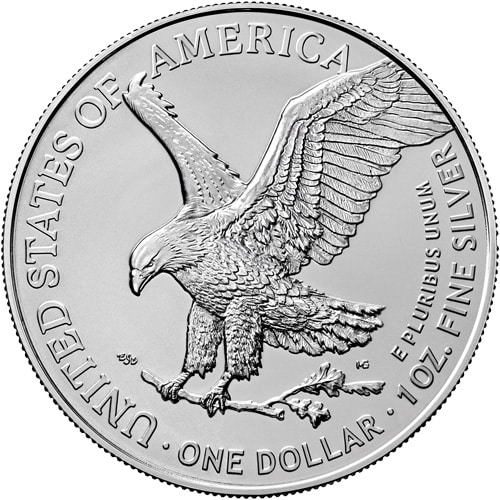

Markets didn’t just move this week—they revealed something deeper. Beneath the volatility in gold, silver, oil, and rates lies a system struggling to find footing, where shifting narratives are driving price action more than certainty.
Weekly Market Breakdown
Monday (3.30.26)
Gold and silver moved higher midday as safe-haven demand strengthened amid escalating tensions in the Middle East. Gold climbed roughly $36 toward $4,652, while silver advanced about $1.24 near $71. Supporting factors included rising oil prices and declining global bond yields. Federal Reserve commentary remained neutral, signaling rates are “in a good place,” while geopolitical developments continued to elevate risk levels.
Bottom line: Precious metals are responding to global uncertainty, but remain influenced by evolving rate expectations.
Tuesday (3.31.26)
Metals gained significant momentum, with gold rising nearly $90 and silver advancing over $3.50. A weaker dollar, higher oil prices, and falling bond prices created a favorable environment. Additionally, month-end and quarter-end positioning likely amplified volatility.
Bottom line: Market mechanics and geopolitical risk combined to accelerate upward momentum.
Wednesday (4.01.26)
Gold and silver extended gains, with gold nearing $4,809 and silver approaching $76. A softer dollar and declining yields supported the move. However, bond markets showed mixed signals—oscillating between inflation concerns and expectations of economic slowdown.
Bottom line: Conflicting macro narratives continue to drive uncertainty across markets.
Thursday (4.02.26)
Precious metals pulled back as the U.S. dollar strengthened and Treasury yields rose. Gold declined $121.70 to $4,690.90, while silver dropped $3.838 to $72.145. Despite ongoing geopolitical tensions, safe-haven demand softened.
Bottom line: Stronger currency and rate dynamics outweighed geopolitical support.
Friday (4.03.26)
Markets remained closed in observance of Good Friday.
Oil Markets Reflect Rising Global Pressures
The big picture
Oil markets are not just reacting to headlines—they are repricing risk across the global energy system. The recent surge reflects a shift from viewing disruptions as temporary to recognizing the possibility of sustained instability in one of the world’s most critical supply corridors. When energy markets begin to price in duration rather than disruption, volatility tends to persist rather than fade.
Driving the news
At the center of this move is the Strait of Hormuz, a narrow but essential passageway responsible for a significant share of global oil and gas flows. Escalating military tensions, combined with stalled or restricted tanker movement, have created a bottleneck that markets cannot ignore. Even partial disruptions in this region force traders, refiners, and governments to reassess supply assumptions, rerouting logistics and building contingency inventories.
By the numbers
- +13% — increase in U.S. crude prices
• ~$113 — WTI crude level
• ~$109 — Brent crude level
• ~20% — share of global oil flows via the Strait
• Near-zero — current tanker traffic flow
Why it matters
Energy is a foundational input across nearly every sector of the global economy. When oil prices rise sharply, the effects extend far beyond fuel—they influence transportation costs, manufacturing inputs, agricultural production, and ultimately consumer pricing. Sustained energy pressure can reinforce inflationary trends while also weighing on growth, creating a more complex environment for both policymakers and markets.
What to watch
- Whether tanker traffic resumes or remains constrained
• Signals of escalation or de-escalation in the region
• Strategic reserve releases or government intervention
• Shipping and insurance cost increases
• Broader inflation indicators tied to energy
The bottom line
Oil markets are transitioning from short-term reaction to longer-term risk assessment. As long as supply routes remain uncertain, elevated prices and volatility are likely to remain part of the broader economic backdrop.
Gold’s Pullback Raises Questions About Near-Term Direction
The big picture
Gold’s recent move highlights a classic dynamic: strong upward momentum followed by a period of recalibration. While prices have recovered above $4,700, the market is now navigating a critical phase where technical resistance, macro conditions, and investor positioning all intersect. This is less about a reversal—and more about determining the strength of the underlying trend.
Driving the news
The current environment presents two competing paths. On one hand, continued macro support—such as softer yields or a weaker dollar—could push gold through resistance levels. On the other, stronger economic data or rising rates could reinforce a consolidation phase or trigger a deeper pullback. Markets are effectively testing whether recent gains were driven by durable fundamentals or short-term momentum.
By the numbers
- ~$4,775 — current gold price
• $4,800 — key resistance level
• $5,200 — potential upside scenario
• $3,800 — possible correction target (~20% range)
• $53.50 — silver downside level
Why it matters
Short-term price movements often create noise, but they also provide insight into market structure. Periods like this help distinguish between speculative positioning and longer-term allocation. For investors focused on wealth preservation, understanding these phases is essential—because corrections, while uncomfortable, are often part of broader secular trends.
What to watch
- Gold’s ability to break and hold above $4,800
• The relationship between gold, yields, and the U.S. dollar
• Silver’s relative performance as a confirmation signal
• Commodity market direction, particularly energy
• Institutional positioning and inflows
The bottom line
This is a market in transition, not necessarily in decline. Pullbacks and consolidations are a natural part of price discovery, and they often set the stage for the next phase of a longer-term trend.
Rising Energy Costs Begin to Reach Consumers
The big picture
The effects of higher energy prices are beginning to move beyond commodity markets and into the real economy. What starts as a supply disruption in oil often evolves into broader cost pressures across global supply chains, gradually influencing the prices consumers see in everyday goods.
Driving the news
As oil shipment disruptions persist, the cost of petroleum-based inputs—such as plastics, synthetic fabrics, and industrial materials—continues to rise. Manufacturers are responding by adjusting pricing, increasing inventory levels, and preparing for potential shortages. These decisions reflect not just current conditions, but expectations that elevated costs may persist longer than initially anticipated.
By the numbers
- Up to 20% — increase in some exported goods
• 5% — rise in polyester-based product costs
• ~30% — polyester content in select goods
• 2 months — inventory stockpiling of key materials
Why it matters
When input costs rise, businesses are often forced to pass those increases along the supply chain. This can lead to higher retail prices, reduced margins, and shifts in consumer behavior. Over time, these pressures can contribute to broader inflation trends while also affecting demand, particularly in discretionary spending categories.
What to watch
- Duration and severity of supply disruptions
• Speed of price pass-through to consumers
• Inventory buildup versus depletion trends
• Sector-specific impacts (manufacturing, retail, logistics)
• Changes in consumer spending patterns
The bottom line
Energy-driven cost pressures are no longer isolated—they are spreading through the global economy. As these effects continue to unfold, they will play a meaningful role in shaping both inflation trends and overall economic conditions.
Next Week’s Key Events
Economic Calendar: April 6 – April 10, 2026 (ET)
MONDAY, April 6
• None scheduled
TUESDAY, April 7
• 12:35 pm — Chicago Fed President Goolsbee Speaks
• 3:00 pm — Consumer Credit
WEDNESDAY, April 8
• 2:00 pm — FOMC Meeting Minutes
THURSDAY, April 9
• 8:30 am — PCE Index
• 8:30 am — GDP (Second Revision)
• 8:30 am — Jobless Claims
FRIDAY, April 10
• 8:30 am — Consumer Price Index
• 10:00 am — Consumer Sentiment
Impact on Precious Metals Markets
Chicago Fed Speech
• Hawkish tone → pressure on metals
• Dovish tone → support for metals
Fed commentary shapes expectations around monetary policy.
Consumer Credit
• Rising credit → modest pressure on metals
• Declining credit → modest support
FOMC Minutes
• Hawkish signals → bearish for metals
• Dovish signals → bullish
Key insight into policy direction.
PCE Index
• Higher inflation → potential pressure
• Lower inflation → supportive
Fed’s preferred inflation measure.
GDP Revision
• Strong growth → pressure on metals
• Weak growth → supportive
Jobless Claims
• Rising claims → supportive
• Stable labor market → neutral to bearish
CPI Data
• Higher inflation → bearish short-term
• Lower inflation → bullish
Consumer Sentiment
• Strong sentiment → mild pressure
• Weak sentiment → mild support
Why Gold and Silver Still Matter
In a market defined by shifting narratives, gold and silver offer something fundamentally different—consistency. While currencies fluctuate and policy expectations evolve, physical precious metals have maintained their role as tangible stores of value across cycles. They are not dependent on a single institution, policy decision, or economic outcome, which is why they continue to serve as a stabilizing component in a well-balanced strategy. In periods of uncertainty or transition, that consistency becomes especially valuable.
Closing Perspective
This week’s volatility underscores an important principle: markets are constantly adjusting to new information, but the underlying drivers—economic conditions, monetary policy, and global stability—remain central to long-term outcomes.
Gold and silver have historically served as durable stores of value through periods of uncertainty, offering diversification and stability within a broader strategy.
Take the Next Step
If you’re looking to better understand how precious metals can fit into your long-term strategy, we invite you to continue exploring with Brighton Enterprises.
Visit brightongold.com or speak with a specialist at 844-459-0042 to learn more about building a resilient, well-balanced portfolio with physical gold and silver.
We are not financial advisors. This content is for informational purposes only and should not be construed as financial advice. Please consult with a licensed professional for personalized guidance. This publication adheres to all SEC laws, rules, and guidelines.